
The Importance of Eye and Ear Protection: Keeping Yourself Safe While Shooting
Joseph McLain Nov 07, 2026
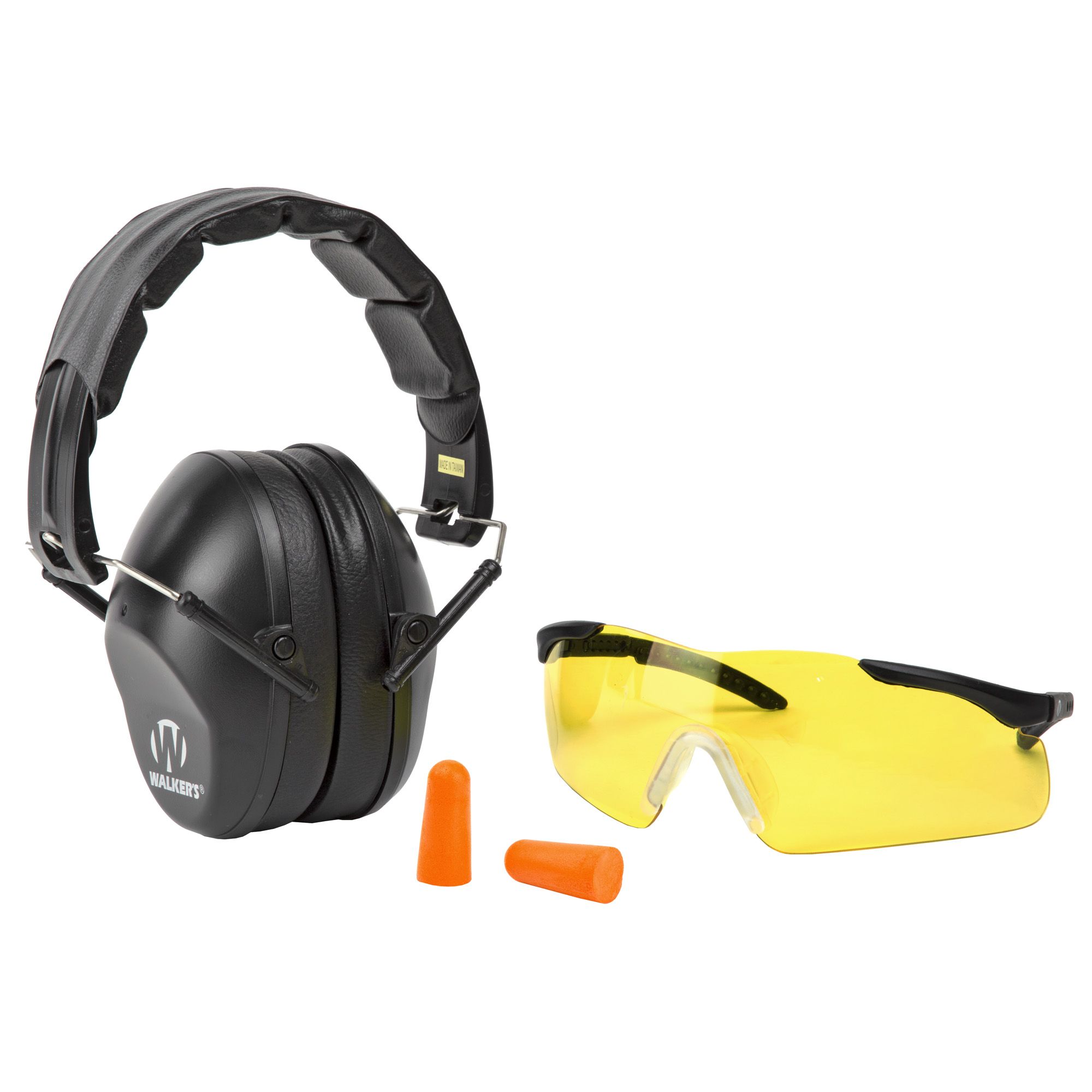
You are getting ready for a first trip to the range with your teenager. Are cheap foam plugs enough? Are electronic muffs worth it so you can hear the range officer? Will sunglasses do for eye protection? One of those is a real risk.
By the end you should understand what gunfire does to your hearing and what flying debris does to your eyes, how the kinds of protection compare, why fit matters more than the number on the package, and how indoor and outdoor ranges change the choice, so you can choose, fit and check protection for yourself and anyone you bring, including children.
Two risks, one rule
Every shot creates two hazards: A sudden, extremely loud noise and small objects moving fast, such as hot brass, bits of bullet jacket, unburned powder and debris kicked up from the ground. Both can cause injuries that happen in an instant and last a lifetime. It follows that eye and ear protection go on before the first shot and stay on until the last, for everyone on or near the firing line.
What gunfire does to your hearing
Sound is measured in decibels, and the scale climbs much faster than it seems: Every 10 decibels is ten times more sound energy. Ordinary conversation is around 60 decibels. Most firearms produce impulse noise, a very short, very loud burst, of roughly 140 to 175 decibels at the shooter's ear, depending on the firearm and cartridge. Public health agencies such as the CDC's National Institute for Occupational Safety and Health warn that impulse noise at those levels can damage the inner ear almost immediately.
Think of the hair cells in your inner ear as grass. Walking across a lawn once flattens a few blades that spring back; driving a truck across it in the same spot every day kills the grass. A loud shot can flatten those hair cells, and if the damage is severe or repeated, they do not grow back. That shows up in three ways. A temporary threshold shift is muffled hearing after shooting that fades over hours or days. Tinnitus is ringing or buzzing that may become permanent. Noise-induced hearing loss is a permanent loss of hearing, often of high-pitched sounds and speech clarity first.
The muffled feeling that fades is easy to shrug off, but it is a warning that your protection was not enough. Treat any ringing or muffled hearing after shooting as a sign to improve your protection next time.
Key idea: Hearing damaged by gunfire does not come back. Protection has to be on and properly fitted before the first shot, not after the first ring.
What debris does to your eyes
Ejected brass can bounce off a wall or a neighbor's partition and come back at your face. Fragments of bullet and jacket can splash back from steel targets or hard backstops. Unburned powder, gas and dust are thrown from the action and muzzle, and outdoors, wind adds grit and insects. Injuries range from irritation to scratched corneas to permanent loss of vision. Eye care organizations estimate that most eye injuries in general could be prevented with appropriate protective eyewear, and shooting is a setting where that protection is easy to wear.
Choosing hearing protection
Hearing protection is labeled with a Noise Reduction Rating, or NRR, in decibels. A higher number means more protection under test conditions, but the rating only applies when the device fits and seals properly. In everyday use, people often get less protection than the label suggests, mostly because of poor fit.
| Type | Strengths | Trade-offs | Good for |
|---|---|---|---|
| Foam earplugs | Inexpensive, small, high ratings when inserted deeply | Must be rolled and inserted correctly; block speech | Occasional shooters; layering under muffs |
| Passive earmuffs | Easy to put on and fit correctly; comfortable | Can bump a rifle stock; seal broken by glasses arms or hats | New shooters and general range use |
| Electronic earmuffs | Let you hear speech and range commands, then shut off loud sounds | Cost more; need batteries | Frequent shooters, instructors, anyone who needs to hear commands |
| Plugs plus muffs | The most protection | Two items to fit; muffles speech unless muffs are electronic | Indoor ranges, large or loud firearms, long sessions |
The table weighs protection, convenience and awareness. Foam plugs can protect very well but only when inserted properly, which takes practice. Muffs are easier to get right, so they suit beginners. Electronic muffs matter because a range is a place where you must hear commands such as "cease fire." Doubling up adds protection for the loudest settings, though the ratings do not simply add together. A rule that works for most people is to start with muffs, move to electronic muffs if you shoot often, and wear plugs under muffs indoors, with short-barreled or braked firearms, and during long sessions.
Good practice: If you wear glasses, check that the arms do not lift the muff cushions away from your head. Thin-armed shooting glasses and gel cushions help keep the seal.
Choosing eye protection
The most important thing to look for is an impact rating. Safety eyewear marked to the ANSI Z87.1 standard has been tested for impact, and a "Z87+" marking indicates the high-impact rating. Ordinary sunglasses and most prescription glasses are not built to stop a fragment, even if they look sturdy. Polycarbonate lenses are common because they resist impact and shattering.
Coverage is the second consideration. Brass and fragments can come from the side or bounce back from a partition, so wraparound designs that protect the sides of the eyes are the best everyday choice. Goggles that seal around the eyes give the most protection in dusty or windy conditions at some cost in comfort and fogging. If you need prescription correction, choose prescription safety glasses with an impact rating or over-the-glasses safety eyewear designed to fit over your own.
Lens color is a comfort choice. Clear lenses suit indoor ranges and low light; yellow or amber can increase contrast on overcast days; gray or polarized lenses reduce glare in bright sun; and photochromic lenses darken outdoors and clear indoors. Choose impact rating first, coverage second, color third.
Indoor and outdoor ranges
Indoors, walls and ceilings reflect sound back at you, and your neighbor's muzzle may be only a few feet away, so doubling up on hearing protection is wise. Ventilation and lead exposure also matter indoors; wash your hands and face after shooting, and do not eat or drink at the line.
Outdoors, the noise dissipates more, but wind, sun, dust and insects add to the eye risks, and long sessions make comfort important. Wraparound or sealed eye protection with appropriate tint works well, and good earmuffs or plugs are still essential, especially near loud rifles or muzzle brakes, which direct blast sideways toward people on either side. Our guide to shooting range etiquette explains what to expect at each kind of range.
Children and bystanders
Everyone near the firing line needs eye and ear protection, including people who are only watching. Children need gear that fits their smaller heads, because adult muffs and glasses leave gaps; youth-sized muffs and small-frame safety glasses are made for exactly this. Young children's hearing is especially vulnerable, so many parents use plugs and muffs together for them. Children also need close supervision to keep the gear on, because they will adjust it when it itches.
Common mistake: Telling a child to wear protection without explaining why. Children keep gear on when they understand that hearing cannot be repaired, and when they see the adults around them keeping theirs on too.
Gear people will actually wear
The best protection is the one that stays on. Muffs that pinch, glasses that fog or slip, and plugs that ache get pushed aside, and protection in the bag protects nobody. Try gear on before buying if you can, choose adjustable models for long sessions, and replace foam plugs rather than reusing them, and muff cushions when they harden or crack, because worn cushions no longer seal.
A five-minute fit check before your range trip
Protection only works when it fits, and five minutes at home proves it. A foam plug goes in properly when you roll it into a thin cylinder, reach over your head to pull the top of your ear up and back, slide the plug in and hold it while it expands. A helper speaking at normal volume from arm's length should then sound clearly dull and distant; if not, the plug needs to go deeper. With eye protection on, muffs should sit flush over the glasses arms with no gap, which a mirror shows, and the glasses should stay put when you look down and turn your head. Finally, a Z87 marking on the frame or lens confirms the eyewear is impact-rated.
Putting it together
Gunfire can damage hearing in an instant, and flying brass and fragments can injure eyes just as quickly, so protection goes on before the first shot for everyone on or near the line. For hearing, fit matters as much as the rating: Start with muffs, add electronic muffs if you shoot often, and double up indoors and with loud firearms. For eyes, choose impact-rated, Z87.1-marked eyewear with side coverage, then pick a tint for the light. Fit gear to children properly and lead by example, and treat any ringing ears as a sign to improve your protection.
Check your understanding
Try answering these before you open the answer. If you can decide what to do and explain why, you have it.
1. You are heading to an indoor range for an hour. What hearing protection do you choose, and why?
Plugs under muffs. Walls reflect the sound, neighbors are close, and doubling up adds protection, preferably with electronic muffs so you can still hear commands.
2. Two plugs have the same rating, but one is barely inserted. Which protects better?
The properly inserted one. The rating only applies when the plug seals the ear canal.
3. Your ears ring after shooting but feel normal by evening. Is that a reason to relax?
No. It is a warning that your protection was not enough. Repeated exposure can cause permanent tinnitus and hearing loss.
4. Your teenager wants to wear their good sunglasses at the range. Are they enough?
Usually not. Ordinary sunglasses aren't built to stop flying brass or fragments. Choose eyewear marked to the ANSI Z87.1 impact standard, ideally with side coverage.
5. You plan to let your 10-year-old borrow your muffs and shooting glasses. Why is that a problem?
Adult muffs and glasses leave gaps on a small head, and a child's hearing is especially vulnerable. Properly sized gear, checked for fit, and close supervision protect them.
Where to go next
With your gear sorted, shooting range etiquette explains how to fit in safely at your first range visit, and firearm safety for beginners covers the rules every habit is built on. If you are bringing a young shooter, 20-gauge shotguns for youth trap and skeet discusses fitting the gun to the shooter, and what suppressors are and how they work explains why a suppressor reduces but does not replace hearing protection.
If this article helped you, we invite you to sign up for email notifications of new blog articles.