
How to Choose the Right Everyday Carry Knife for Your Needs
Joseph McLain Nov 06, 2026
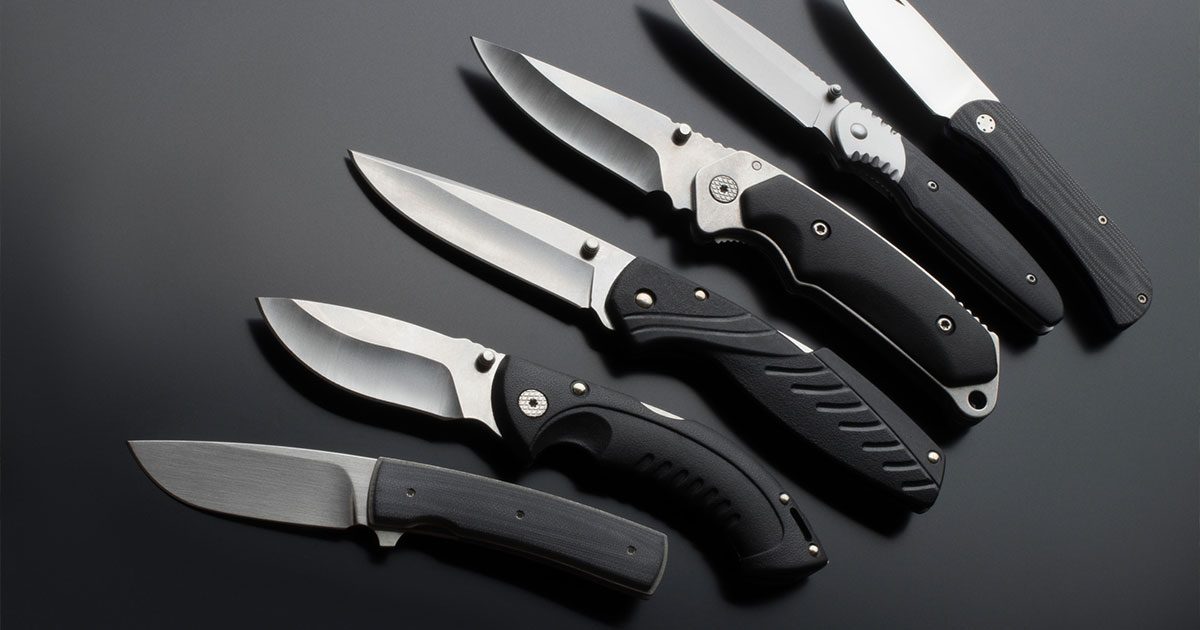
Dozens of folding knives look nearly alike. Most have a pocket clip, a pivot screw and a blade about as long as your finger, and the tags all promise premium steel and tough looks. An everyday carry knife, usually shortened to EDC, is the knife you carry every day for ordinary tasks, so it has to fit your life as much as your hand.
Five choices shape every folding knife: blade steel, blade shape, handle, size and weight, and the lock. None of them has one right answer. Each one gives you something and asks for something back, and the job you do most often decides which side of each choice you want.
Start with the job
A tiny, light knife disappears in your pocket, but it gives up some strength and reach. A big, stout knife handles hard work, but it tends to end up on the dresser instead of in your pocket. Because no knife wins every category, the first step is to name what you will actually use it for.
Most people fall into one of two groups. Everyday utility means opening packages, cutting cord and tape, trimming threads and slicing an apple at lunch. Outdoor and heavy work means camping, hunting camp chores, breaking down cardboard all day or cutting rope on the farm. If you are not sure you need a knife at all, our article on why you should have an everyday carry knife shows what one does in ordinary life.
Key idea: Decide the job before you look at a single knife. The job tells you which of the five choices matter most, and which ones you can safely ignore.
Blade steel: Edge, rust and sharpening pull against each other
The steel decides three things you will notice every week: how long the edge stays sharp, how well the blade resists rust and how much work it takes to sharpen. Those goals pull against each other. A steel that holds an edge for a long time is usually harder to sharpen, and a steel that shrugs off rust often gives up some edge-holding.
| Steel family | What it does well | What it asks of you | Examples |
|---|---|---|---|
| Budget stainless (8Cr13MoV, AUS-8, 14C28N) | Resists rust, sharpens quickly, costs little | Dulls sooner, so touch it up more often | Spyderco Tenacious, CRKT CEO, Kershaw Leek and Blur |
| Mid-range stainless (VG-10) | A good balance of edge, rust resistance and easy sharpening | Little; a solid all-around choice | Spyderco Delica 4 and Dragonfly 2 (many versions) |
| Tool steel (D2) | Holds an edge well at a modest price | Can spot with rust if put away wet; slower to sharpen | Common on budget and mid-priced folders |
| Powder steels (CPM S30V, S35VN, S45VN) | Long edge life with good toughness and rust resistance | Higher price; slower to sharpen by hand | Spyderco Paramilitary 2, Cold Steel Recon 1 |
| Rust-proof steels (H-1, LC200N) | Essentially don't rust, even around salt water and sweat | Edge holding is moderate | Spyderco Salt series, such as the Manix 2 Salt |
Makers change steels between versions of the same model, so check the spec sheet for the exact knife in front of you.
A quick example shows how the job decides. If you open feed bags and cut twine every morning and the knife lives in a damp pocket, a budget or mid-range stainless steel forgives a wet day and takes a fresh edge in a minute. If you break down boxes all day and want to sharpen less often, a powder steel earns its price. And if the knife lives in a tackle box or rides through sweaty summers, a rust-proof steel takes the worry away. Our guide to choosing the right knife blade steel goes deeper on the names.
Common mistake: Buying a steel for its name alone. A premium steel in the wrong shape or size for your job still ends up in a drawer, and a budget steel you keep sharp cuts better than a premium one you never sharpen.
Blade shape: Edge work and tip work
Blade shape decides how the knife behaves at the tip and along the edge. Three shapes cover most EDC knives.
- Drop point. The back of the blade curves gently down to the tip, leaving a strong point and a long, slightly curved edge. It slices well and does a little of everything, which is why it is the most common EDC shape.
- Tanto. An angular blade with a thick, reinforced point. It pierces tough material well, but its straight edge and sharp angle make it a weaker slicer.
- Wharncliffe and sheepsfoot. A straight edge with the back of the blade curving down to meet it. The straight edge gives clean, controlled cuts on a flat surface, much like a utility blade, and the point is easy to control.
Think about the work your hands do. Slicing tape, food or cord is edge work, where the drop point and Wharncliffe shine. Punching through tough material is tip work, where the tanto earns its place. Most days are mostly edge work, so if you are unsure, start with a drop point. Our article on knife blade shapes and grinds covers the other shapes.
Common mistake: Using the tip as a pry bar or screwdriver. Even a reinforced tanto tip is built for piercing, not twisting, and a broken tip can't be fixed by sharpening.
Handle: Grip when your hands are wet, cold or tired
The handle decides how securely you hold the knife when your hands are wet, cold or gloved. A slippery handle on a sharp blade is a safety problem, not just an annoyance.
- G-10. A tough fiberglass laminate with a textured, grippy feel, even when wet. The Spyderco Tenacious and Paramilitary 2 use it.
- Fiberglass-reinforced nylon (FRN or GRN). Molded plastic that is light, tough and inexpensive, often with texture for grip. The Spyderco Delica 4 and CRKT CEO use it.
- Aluminum and titanium. Slim, strong and finished-looking, but smoother and colder in the hand. The Kershaw Blur adds rubbery grip inserts to its aluminum handle for that reason.
- Carbon fiber. Very light and stiff, with a distinctive look, at a higher price.
If you work with wet or dirty hands, texture matters more than looks, and G-10 or textured FRN is the practical choice. If the knife is mostly for office and town, a slim metal handle carries neatly. The best test is your own hand, because no spec sheet can tell you whether a handle fits it. Our article on knife handle materials compares them in detail.
Size and weight: The knife you carry is the knife you have
A knife can only help you if it is with you. Too big or heavy, and it stays home. Too tiny, and it frustrates you on real jobs.
Most EDC blades run from about 2.5 to 3.5 inches, which handles everyday tasks while staying comfortable in a pocket. The Spyderco Dragonfly 2, with a blade a little over 2 inches and a weight around an ounce, sits at the small end. The Kershaw Leek and Spyderco Delica 4 sit near 3 inches. The Cold Steel Recon 1, with a blade around 4 inches, is a lot of knife for daily carry and suits outdoor work better.
Weight follows the same logic. Under about 4 ounces, most people forget the knife is there. The CRKT CEO and Delica 4 weigh well under that, and the Tenacious comes in right around it.
Here is a test that never lies. If you notice yourself taking the knife out of your pocket when you sit down, or leaving it behind on days you dress up, it is too big or too heavy for how you live. Move down a size before you give up on carrying.
The lock: What keeps the blade from closing on your fingers
On a folding knife, the lock keeps the blade open while you cut. That makes it a safety feature first, so reliability matters more than anything else about it.
- Liner lock. A springy strip inside the handle moves behind the blade to hold it open, and your thumb pushes it aside to close. It is simple and quick to use one-handed. The Tenacious, CEO and Kershaw Blur use liner locks.
- Frame lock. Like a liner lock, but the locking strip is part of the metal handle itself, which makes it thicker and stronger. The Kershaw Leek uses one.
- Back lock. A spring-loaded bar along the back of the handle locks into a notch in the blade, and you press the bar to close. It is a classic, very reliable design used on the Delica 4 and Dragonfly 2, and Cold Steel's Tri-Ad lock on the Recon 1 is a strengthened version.
- Maker-specific locks. Some brands use their own designs, such as Spyderco's Compression Lock on the Paramilitary 2 and Ball Bearing Lock on the Manix 2. Both let you close the knife without putting a finger in the blade's path.
Whatever the type, a lock should hold the blade firmly with no wobble and release only when you mean it to. Learn how yours closes, and keep your fingers out of the blade's path when you fold it. Our guide to knife safety tips for handling and carrying covers safe habits in more detail.
Matching the knife to the job
Now you can connect the five choices back to the job you named at the start.
| Your main job | What to prioritize | Models worth handling |
|---|---|---|
| Everyday utility in town and at work | Light weight, a 2.5- to 3.5-inch drop point or Wharncliffe, easy sharpening | Spyderco Delica 4, Kershaw Leek, CRKT CEO |
| Wet, sweaty or salty conditions | Rust-resistant steel and a grippy handle | Spyderco Manix 2 Salt, Spyderco Tenacious |
| Outdoor and heavy work | A strong lock, a thicker blade and a long-wearing steel | Spyderco Paramilitary 2, Cold Steel Recon 1 |
Some people also want a knife for self-defense. A knife is a tool first, and using one to defend yourself takes real training and brings serious legal scrutiny. Carry laws also vary by state and city. In Iowa, a knife with a blade longer than five inches counts as a dangerous weapon, and our article on Iowa knife laws explains what that means. For job-based picks, see the best everyday carry knives for different occupations.
Putting it together
The whole decision fits in one sentence. "I need a drop-point blade of about three inches in an easy-to-sharpen stainless steel, with a G-10 handle and a reliable lock, under four ounces, for opening feed bags and cutting twine." That sentence is a shopping list, and every part of it came from the job. When you are choosing, it narrows a wall of knives to two or three, and the last choice belongs to your hand: open and close each one, check that the lock engages with no wobble and see how the grip feels.
Check your understanding
Try answering these before you open the answer. If you can decide what to do and explain why, you have it.
1. Your knife rides in a damp jeans pocket on the farm, and you sharpen it yourself on a simple stone. Would you pay extra for a D2 or powder-steel blade?
Probably not. A good stainless steel such as VG-10 or 14C28N resists rust in a damp pocket and takes a fresh edge quickly on a simple stone. D2 can spot with rust if put away wet, and powder steels hold an edge longer but cost more and take more work to sharpen by hand.
2. Most of your cutting is tape, cord and the occasional apple. A friend suggests a tanto because it looks tough. What would you choose instead, and why?
A drop point or a Wharncliffe. Those jobs are edge work, and both shapes slice cleanly. The tanto's strength is its reinforced tip for piercing, which most daily cutting doesn't need.
3. You bought a knife with a 4-inch blade that weighs about 5 ounces, and you keep leaving it on the dresser. What does that tell you?
It is too much knife for how you live. A blade of 2.5 to 3.5 inches and a weight under about 4 ounces is easy to forget in a pocket, and a smaller knife you actually carry is better than a bigger one in the drawer.
4. Your cutting often happens with cold, wet or gloved hands. What should you look for in a handle?
Texture and grip over looks. G-10 or textured fiberglass-reinforced nylon holds well when wet, while a smooth metal handle can slip. A finger choil or guard that keeps your hand off the edge also helps.
5. When you open a knife you're considering and press on the back of the blade, it wiggles slightly in the handle. Should that worry you?
Yes. A good lock holds the blade firmly with no wobble. Play in a new knife can mean a poorly fitted lock or a loose pivot, and the lock is what keeps the blade from closing on your fingers. Choose another knife.
Where to go next
You can find Spyderco folding knives on our website, including the Delica 4, Paramilitary 2 and Manix 2 Salt, and anything listed there can be ordered if it isn't in stock.
If your job decides your knife, read the best everyday carry knives for different occupations to see how the choices change from one line of work to another. If you wonder whether a knife with added tools suits you better, multi-function knives with added features is the natural next step. And if you like to know why modern designs look the way they do, the history and evolution of EDC knives traces them back to ancient tools.
If this article helped you, we invite you to sign up for email notifications of new blog articles.