
The History and Evolution of EDC Knives: From Ancient Tools to Everyday Carry Essentials
Joseph McLain Nov 07, 2026
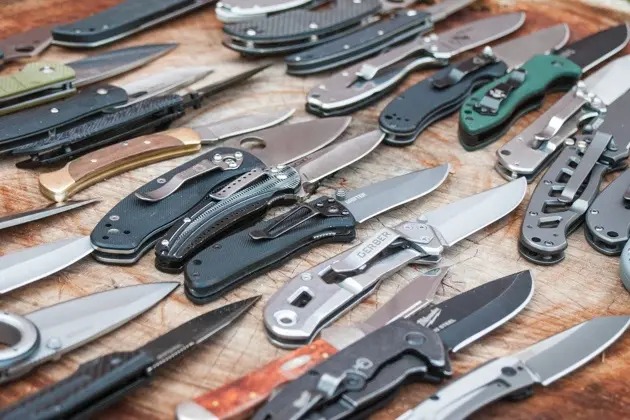
Lay a few folding knives side by side and no two look alike. A simple slip-joint pocketknife can ride in a pocket for fifty years, but it has no lock to keep the blade from folding onto your fingers, while modern knives lock open and offer hole-in-the-blade openers, spring-assisted designs and featherweight titanium handles. Each feature answers a problem knife makers faced along the way.
Tracing knives from stone tools to fixed blades, folders, locking folders and today's everyday carry (EDC) knife shows what each change solved. By the end you should be able to pick up any knife, recognize what each feature is for and decide which ones matter for the way you'll use it.
Strength against portability: The trade behind the whole story
Almost every major change in knife design is an attempt to have two things at once: A blade strong enough to trust and a tool small enough to carry everywhere. A fixed blade is as strong as a knife gets, because nothing moves between the edge and your hand, but it needs a sheath and is bulky to carry. A folding knife slips into a pocket but adds a hinge, and a hinge is a weak point.
Think of a ladder and a step stool. A ladder is sturdy because it is one rigid piece; a folding step stool fits in a closet but is only as safe as its latch. Most of knife history is people improving that latch.
Key idea: Every major step in knife design trades between strength and portability. Fixed blades give the most strength, folding knives the most portability, and good locks bring folding knives closer to fixed-blade confidence.
From flint to steel: The fixed blade
Knives are among the oldest tools people have made. The earliest were flaked from stone such as flint and obsidian, which can be shaped to a remarkably sharp edge, and they were used for hunting, butchering, preparing food and making other tools. Bronze, then iron, then steel followed, each tougher and easier to sharpen than the last.
For most of history, the knife people relied on was a fixed blade carried in a sheath. Its design changed little over thousands of years because it already did the hard part well: It could take heavy use without failing. What it could not do was disappear into a pocket. That limitation set up the next chapter.
The folding knife: Pocket-sized, but not yet safe
Folding knives date back at least to Roman times, when small knives with blades that pivoted into the handle let people carry a blade without a sheath. By the medieval and early modern period, folding knives were common across Europe.
Many traditional folders use a slip joint: A spring presses against the back of the blade and holds it open or closed by tension, but nothing locks it. That works well for light cutting, which is why slip-joint pocketknives remained everyday companions for generations. Under hard pressure, or if the knife is used the wrong way, the blade can fold back toward the fingers. The safe way to use one is to apply force only along the edge, never against the spine.
The lesson from this chapter still applies: A slip joint is fine for light, controlled cutting by someone who respects its limits, and a locking knife is the better choice for harder work.
Locking blades: Bringing folders closer to fixed blades
A lock places something solid behind the open blade so it cannot swing shut under pressure. Locking folders are not new; back locks, with a rocker bar along the spine of the handle, have been used for centuries. In the twentieth century, new lock designs and better materials made strong, one-handed locking folders practical for everyday carry.
| Mechanism | How it holds the blade | What it means in use |
|---|---|---|
| Slip joint | Spring tension, no lock | Fine for light cutting; can fold under pressure |
| Back lock | A rocker bar on the spine drops into a notch on the blade | Strong and simple; usually released with a button on the spine |
| Liner lock | A spring strip of the inner liner moves behind the blade's base | Easy one-handed closing; lighter construction |
| Frame lock | Part of the metal handle itself moves behind the blade | Similar to a liner lock with a thicker, stronger locking piece |
From top to bottom, the table is a ladder of confidence, with one caution: Any lock is only as good as its condition. A worn or dirty lock can fail to engage fully, so check that it snaps solidly into place every time you open the knife. Our guide to what makes a knife durable explains how to evaluate a lock, and knife safety tips covers safe opening and closing.
The modern EDC knife: One-handed and light
The modern everyday carry knife grew out of a simple demand: A compact folding knife you can open with one hand, lock securely, and carry comfortably all day. Two developments shaped it.
The first was the one-hand opening. Spyderco, founded in 1976, popularized the round hole in the blade that lets you swing the blade open with your thumb, and thumb studs and flippers do the same job in other designs. That matters when your other hand is holding a box, a rope or a fish.
The second was assisted opening. Kershaw's SpeedSafe design, made famous by knives such as the Ken Onion-designed Leek, uses a spring that finishes opening the blade once you start it with your thumb or a flipper. Assisted knives are fast, but they add parts and are treated differently from manual folders in some places' knife laws, so check local rules before carrying one.
Choose the opening method that feels most natural in your hand; manual and assisted openers both give one-handed use, and a manual opener has fewer parts to maintain.
Materials: Steel and handles
Modern blade steels balance three properties that pull against each other: Edge retention, how long the blade stays sharp; toughness, how well it resists chipping; and corrosion resistance, how well it resists rust. Powder steels such as CPM S30V and its successors hold an edge for a long time, while simpler steels may be easier to sharpen and tougher. No steel wins every category, so match the steel to your work and climate, and check the exact steel on the model you are buying, because makers change steels between versions. Our guide to choosing knife blade steel explains the trade-offs.
Handle materials such as G-10, a fiberglass laminate, carbon fiber and titanium are popular because they are strong and light, and a lighter knife is one you are more likely to carry. Textured handles also grip better when hands are wet or cold, which is a safety feature as much as a comfort one.
Common mistake: Using a folding knife as a pry bar. Even a strong lock and pivot are not built for sideways force. Keep the knife for cutting and use a tool built for prying.
Today's trends, and which ones matter
Some current trends change how a knife performs, and some change how it fits your life. Multi-function designs add bottle openers, screwdrivers or glass breakers, which help if you will use them and add bulk if you will not; our article on knives with added features explains the trade. Interchangeable handle scales and custom finishes let you personalize a knife. Minimalist designs focus on small, light knives that disappear in a pocket.
Put the lock, the opening method, the blade steel and the handle first, because they decide how the knife works, and treat personalization as a bonus.
Reading your own knife like a historian
Any knife in your hand tells the story. Closed, it shows its opening feature, a thumb hole, thumb stud or flipper. Opened slowly with the edge away from you and your fingers clear of the blade's path, it shows its lock, slip joint, back lock, liner lock or frame lock, which should engage fully with no blade movement under light pressure on the spine. The steel and handle material are usually marked on the blade or listed by the maker. Closed again with your fingers out of the blade's path, each feature can be matched to the problem it solves and the chapter of the story it comes from.
Putting it together
The history of the everyday carry knife is a long effort to combine the strength of a fixed blade with the convenience of a folder. Slip joints made knives pocket-sized; locks made folders trustworthy for harder work; one-hand openings and assisted designs made them quick to use; and modern steels and handle materials made them lighter and longer-lasting. When you choose a knife today, each feature on it is an answer to one of those old problems, and you can judge whether that answer matters for the work you do.
Check your understanding
Try answering these before you open the answer. If you can decide what to do and explain why, you have it.
1. What trade drives most of knife history?
Strength against portability. Fixed blades are strongest; folders are easiest to carry; locks narrow the gap.
2. Why is a slip joint not ideal for heavy work, and how do you use one safely?
It holds the blade open only with spring tension, so it can fold under pressure. Use it for light cuts and apply force only along the edge.
3. You're holding a ladder steady with one hand when you need to cut a zip tie. What feature makes that safe and possible, and what problem did it solve?
A one-hand opening, such as a thumb stud, hole or flipper. It lets you open the knife while your other hand holds the work, which earlier two-handed folders couldn't do.
4. A friend insists one premium steel is simply the best. How do you respond?
Steels balance edge retention, toughness and corrosion resistance differently, so the best choice depends on the work and the climate, and on the specific heat treatment.
5. Why check a lock every time you open a knife?
A worn or dirty lock may not engage fully, and a lock that fails lets the blade close on your fingers.
Where to go next
You can find pocket and fixed-blade knives on our website, and anything listed there can be ordered if it isn't in stock.
To turn this history into a buying decision, read how to choose the right everyday carry knife. What makes a knife durable explains how to judge locks and pivots, choosing knife blade steel goes deeper on steels, and why you should have an everyday carry knife shows how a knife earns its place in your pocket.
If this article helped you, we invite you to sign up for email notifications of new blog articles.