
Personal Defense Beyond a Firearm: Matching the Tool to the Problem
Joseph McLain Nov 06, 2026
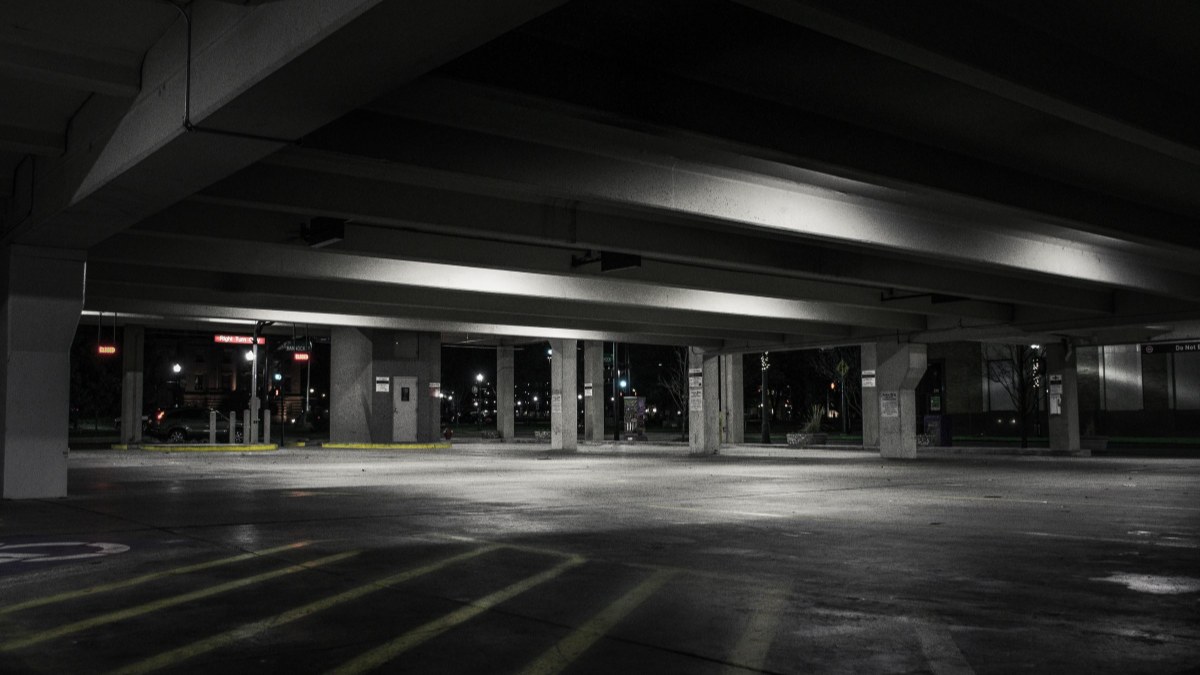
Picture a nurse finishing a night shift at a hospital in Cedar Rapids. The parking ramp is half lit, her car is on the third level, and last week a coworker had an uncomfortable encounter with a man who followed her to her car. The nurse has a permit and a pistol at home, but the hospital prohibits weapons, so the gun stays home. Walking toward the elevator at 3 a.m., she wonders what else, if anything, she could be doing.
Pepper spray can stop some attackers, an alarm can bring help, and awareness prevents more trouble than any tool. But none of those solves every problem, some create new ones, and each depends on conditions that are easy to overlook. Personal safety beyond a gun covers the places you cannot carry, the problems a gun cannot solve, and the many moments when force would be the wrong answer anyway.
By the end you should be able to match each safety measure to the problem it actually solves, recognize what each one depends on, and build a layered plan that works whether or not you are carrying a firearm.
Start with the outcome, not the tool
A safety plan goes wrong when it starts with a tool and then looks for situations to use it. A gun cannot explain to a stranger that they have mistaken you for someone else. It cannot light a dark walkway, call an ambulance, fix a broken lock or give you a ride home at 2 a.m. Many safety problems are solved long before any question of force comes up.
Start instead with the outcome you want, which is getting through the situation safely. If an argument in a parking lot is turning hostile, walking back into the store may solve the problem without anyone being proven right. If you feel unsafe walking to your car, asking for a security escort may matter more than anything in your pocket. If an angry former partner keeps showing up at your work, a plan involving your employer, victim services and police addresses a pattern that no single tool can fix.
None of this guarantees safety. People are sometimes attacked despite doing everything right, and the person who commits violence is responsible for it, not the victim. The goal is simply to give yourself more good choices, especially choices that do not require confronting anyone.
For each place and situation that worries you, ask first what outcome you want, and only then which tool or habit gets you there.
Every safety measure depends on something
Different measures solve different parts of the problem. A locked door slows entry. A light helps you see. A phone connects you to help. A family plan reduces confusion. Each is useful, and none is enough by itself.
Each one also depends on something. A phone needs a charge and a signal. An alarm needs someone nearby who hears it and responds. A lock works only if the door is actually locked. Think about what happens when several parts of your plan depend on the same thing. If your map, your emergency contacts, your ride app and your flashlight are all on your phone, a dead battery takes out all of them at once.
Think of it like a farmer who keeps a spare tire, a jack and a toolbox in the truck. Each one handles a different problem, and none helps if it is buried under feed sacks or the spare is flat. A safety plan is the same. Each piece has a job, and each piece has to actually be ready.
Key idea: For every part of your safety plan, ask what it depends on: Power, a signal, another person, or your memory under stress. If one failure would knock out several parts of your plan at once, add a backup that does not share that weakness.
List what each safety measure depends on, and make sure your plan still works if your phone dies or no one hears you.
Awareness: Notice behavior, not people
Useful awareness focuses on situations and behavior: Someone blocking your path to the exit, an argument getting louder, a person who keeps following after you change direction, or a place with no one around to help. It does not mean treating strangers as dangerous because of how they look, their race, a disability or the group they belong to. That kind of suspicion is unfair, and it also makes you worse at spotting real warning signs.
The point of awareness is to give you choices while they are still cheap. Noticing a problem early may let you stay inside the store while you wait for a ride, decline to step into an argument or pick a route with people around. You do not need proof that someone means harm before you change your plans. Leaving a party or crossing the street does not require evidence.
Nobody can scan every direction all the time, and many cues are ambiguous. A sustainable approach is to pay attention at the moments that matter most: Getting in and out of your car, entering and leaving buildings, using an ATM and walking through parking areas. Our article on situational awareness goes into more detail.
Watch for behavior that limits your options, pay closest attention during transitions, and act on discomfort without waiting for proof.
Communication can calm things, but it cannot control anyone
A short, calm sentence can clear up a misunderstanding, set a boundary or make it clear you are leaving. "I'm sorry, I think you've got the wrong person," or "I'm leaving now," often does more than winning an argument ever could. Keep it brief and focused on what you want to happen.
Communication has limits. You do not owe anyone a conversation once they become threatening. Being polite does not guarantee anything. Someone who is drunk, high, in a mental-health crisis or determined to cause harm may not respond the way you expect. Watch whether the situation is getting safer, and keep your path out in mind while you talk.
One point deserves special emphasis for people who carry. Threatening someone with a weapon to win an ordinary argument is not communication. It can turn a shouting match into a violent encounter, and in Iowa, intentionally pointing a firearm toward another person or displaying a dangerous weapon in a threatening manner can be an assault under Iowa Code 708.1. An argument about respect does not become an emergency just because one person is armed. Our article on walking away explains why leaving is often the strongest move.
Use calm, brief words to clarify or disengage, never use a weapon to win an argument, and leave when talking stops making things safer.
Lighting: It helps you see, not as much as advertised
Good lighting helps you see an entrance, a path, an address or a person standing near your car. That alone makes it worth having. Claims that a particular light will prevent violent crime need a closer look.
A 2022 review of half a century of street-lighting research, by Welsh, Farrington and Douglas, looked at 21 studies from four countries. It found that better street lighting was linked to significant reductions in total crime and property crime, but not a statistically significant reduction in violent crime. Interestingly, the effects were larger in studies that measured crime during the day as well as at night, which suggests that something more than visibility after dark, such as a sign that the neighborhood is cared for, may be part of the effect.
That research is about lighting whole streets and neighborhoods. It does not tell you that a brighter flashlight cuts your personal risk of assault by some percentage. A handheld light is valuable for what it plainly does, letting you see where you are going, who is near you and what is in someone's hands. Our article on lumens and candela explains how to choose one.
Use lighting to see and be seen, fix broken lights at home and work, and do not count on brightness to replace locks, people or a way out.
Getting help: Practice the information, not the call
Knowing you can call 911 is different from being ready to tell a dispatcher where you are and what is happening. Learn the address of your workplace, the parking ramp level or the building entrance you use. Know how to reach on-site security. Keep your phone charged, especially when you know you will be out late.
Learn your phone's emergency features from its instructions, such as quick-dial emergency calls and automatic location sharing. Do not place test calls to 911. Text-to-911 is available in many places but not everywhere, so check whether your county supports it rather than assuming. And have a plan for when your phone is not available, such as a staffed location or another person who can call.
If you are with family or friends, agree on a simple plan for getting separated, such as "If we get split up, meet at the front desk." Plans that involve children or someone who needs help should fit what those people can actually do. Our article on building a family emergency plan covers this in depth.
Know your location, know how to reach security, keep your phone charged, and agree on a meeting place with the people you are with.
Personal alarms: A signal, not a shield
A personal alarm makes noise to draw attention or signal that you need help. How useful it is depends on where you are, whether anyone hears it and how they interpret it. In a busy parking lot, people may think it is a car alarm. In an empty parking ramp at 3 a.m., there may be no one to hear it at all. A big decibel number on the package does not show that it prevents injury.
If you choose one, learn how it activates, how it is powered, how it attaches and how easily it goes off by accident. Someone with arthritis or limited hand strength may need a design that is easier to trigger. Test it according to the manufacturer's instructions, and replace the battery on schedule.
There is no strong evidence that consumer alarms reliably prevent assaults, but that does not make them useless. They are one possible way to call for help. Your plan should still work if the alarm sounds and nobody comes.
Treat an alarm as one way to call for help, not as protection, and keep the rest of your plan working without it.
Pepper spray: A real tool with real responsibilities
Pepper spray is often described as an easy middle option between doing nothing and using a gun. That description hides the fact that it is a chemical weapon with effects on the person sprayed, the user and anyone nearby. The National Capital Poison Center explains that pepper spray irritates the eyes, skin and airways, causing pain, tearing, coughing and trouble breathing, with effects usually lasting 20 to 30 minutes but sometimes hours. More serious injuries such as scratched corneas, wheezing and skin blisters are less common but possible, and people with asthma or COPD can have more severe breathing problems.
"Less lethal" means less likely to kill than a firearm. It does not mean harmless. It also does not mean guaranteed to work. Some people, especially those who are drunk, high or highly motivated, keep fighting after being sprayed. Wind can blow spray back into your face, and spray used indoors can affect everyone in the room. That is why the spray pattern matters when you buy. A stream or gel reaches farther and blows back less than a fog or cone, so it is the better choice for most people, and an established maker such as Sabre or POM is worth the few extra dollars for a canister you know will work.
Using pepper spray is still using force, and it requires legal justification like any other force. You may use reasonable force to defend against an unlawful attack, but spraying someone to punish them, settle an argument or make them do what you want is not self-defense. Our article on what makes a defensive shooting justified explains Iowa's justification rules, which apply to non-firearm force as well.
If you or someone else is exposed, the Poison Center advises getting to fresh air, removing contaminated clothing, washing with soap and water, and rinsing the eyes with room-temperature water for 10 to 15 minutes. Wheezing, trouble breathing, chest pain or eye pain that does not go away needs immediate medical care. Poison Control is available at 1-800-222-1222, around the clock.
Good practice: Buy an inert training canister from the same maker as your real spray and practice drawing and spraying it outdoors at a target. You will learn how far it reaches, how the wind affects it and how to work the safety under stress, without hurting anyone. Never spray a real canister at a person to "see how it works."
If you carry pepper spray, train with an inert canister, know the first aid, and use it only when force is truly justified.
Know the rules for what you carry
Permission to carry a firearm does not automatically answer questions about other weapons. Iowa's definition of a dangerous weapon, at Iowa Code 702.7, includes portable devices that direct an electric current designed to immobilize a person, so stun guns and similar devices are treated as dangerous weapons under Iowa law. Pepper spray is not specifically named in that definition, and it is widely carried in Iowa, but buildings, workplaces, schools and courthouses may have their own rules. Many employers, including hospitals, ban weapons of all kinds.
Federal rules matter when you travel. Airline passengers generally cannot bring pepper spray in carry-on bags, and checked-bag rules are limited and specific, so check the TSA's current guidance before you pack. Other states have their own rules on spray size, strength and who may carry it. Check before you go.
Storage matters too. Pepper spray in a purse or a car door pocket is within easy reach of children. Keep it where kids cannot get to it, check its expiration date, and replace it on schedule.
Before carrying any defensive tool, confirm it is legal for you and allowed where you are going, store it away from children and replace it before it expires.
Putting it together
Go back to the nurse in the parking ramp. Over the next week, she asks hospital security for an escort on nights when she parks on an upper level, and she starts parking closer to the elevator when she can. She keeps her phone charged, learns the ramp's level and section numbers so she can tell a dispatcher exactly where she is, and saves security's number in her phone. She buys a small, bright flashlight and an inert training spray, practices with it in her backyard, and then buys a real canister after checking that her employer allows it in her car. On the walk out, she puts her phone away, watches the area around her car as she approaches and keeps her keys in hand.
None of these steps is dramatic, and none guarantees anything. Together, they give her more ways to avoid trouble, see it coming, call for help and, if needed, defend herself, in a place where she cannot carry a gun.
Check your understanding
Try answering these before you open the answer. If you can decide what to do and explain why, you have it.
1. Your map, ride app, emergency contacts and flashlight are all on your phone. What is the weakness?
All of them depend on the same thing. If the phone dies, is lost or has no signal, you lose all four at once. Add backups that do not depend on the phone, such as a small flashlight, a written contact list or a plan to wait in a staffed location.
2. Your neighborhood association wants to spend its whole safety budget on brighter streetlights to stop muggings. What would you tell them?
Lighting is worth having, but don't expect it to stop muggings by itself. A 2022 review of 21 street-lighting studies found clear drops in total and property crime but no statistically significant drop in violent crime. Spend part of the budget on lights, and part on things that help people get help and get away, such as working locks, clear exits and a way to reach security or police.
3. Your teenage daughter wants pepper spray for her purse and says it's "totally harmless, so I can use it on anyone who bugs me." What do you teach her?
That it's a real weapon. "Less lethal" means less likely to kill, not harmless: it causes pain and breathing trouble, can scratch eyes and is more dangerous for someone with asthma. Using it is using force, so it's only for an actual attack, never for someone who's rude or annoying. Get her an inert training canister to practice with, and teach her the first aid.
4. Someone cuts in front of you in line and insults you. You have pepper spray. Can you use it?
No. An insult or a rude act is not an attack that justifies force. Using pepper spray to punish someone or win an argument is not self-defense and could lead to criminal charges. Disengage and leave.
5. You set off a personal alarm in an empty parking ramp at night. What should your plan include beyond the alarm?
A way to get help that does not depend on someone hearing it, such as calling 911 or security with your exact location, moving toward a staffed area or an exit, and other layers such as a light and the ability to defend yourself if necessary.
Where to go next
You can find pepper spray on our website, including keychain and lipstick-size canisters, and anything listed there can be ordered if it isn't in stock.
To sharpen the awareness that prevents most trouble, read situational awareness. For why leaving is often the strongest choice, see walking away. For choosing a light that actually helps you see, read lumens and candela. And for a household plan that ties everyone together, see building a family emergency plan.
If this article helped you, we invite you to sign up for email notifications of new blog articles.