
Knife Blade Shapes and Grinds: What Drop Point, Tanto and Hollow Grind Mean for You
Joseph McLain Nov 06, 2026
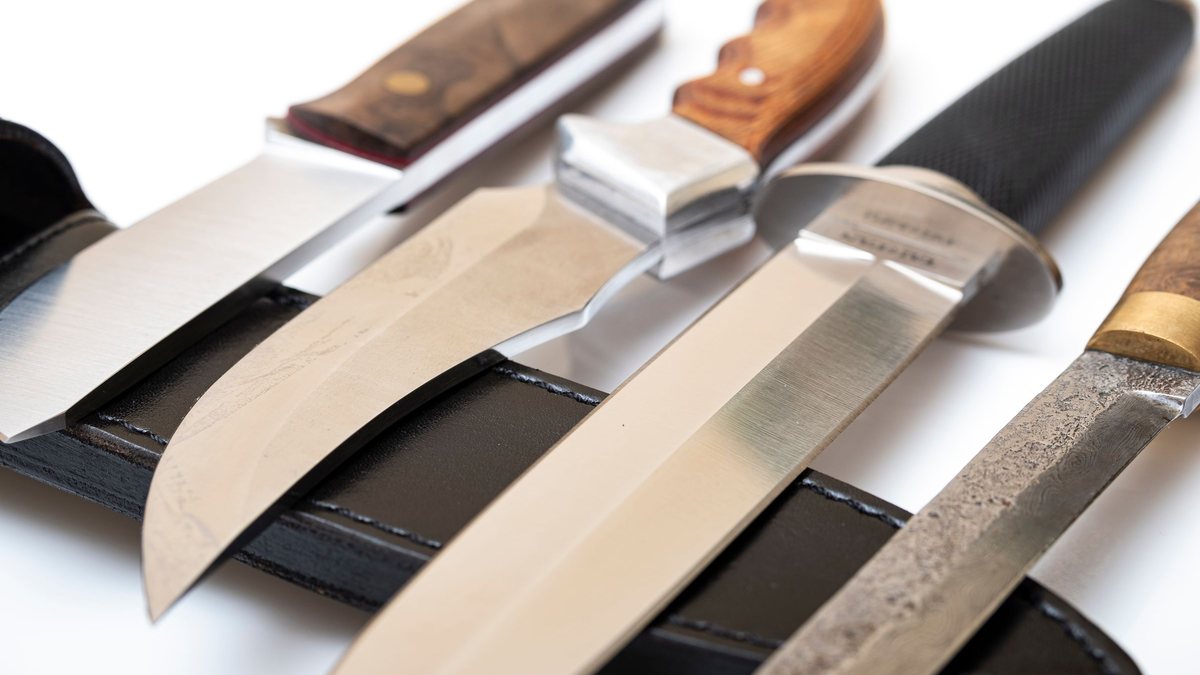
Picture yourself scrolling through a page of pocket knives. One listing says "drop point, flat grind." The next says "tanto, chisel grind." A third says "sheepsfoot, saber grind." They all look sharp, and the prices overlap, so the words start to sound like decoration.
They aren't decoration. The shape tells you where the point sits and how much curve the edge has, and the grind tells you how thin the blade is behind the edge. Together they predict how a knife will cut long before you hold it, and they explain why a construction worker, a deer hunter and someone who opens boxes all day can each swear by a different blade and each be choosing well for their own work.
The parts of a blade: The words that describe every shape
A few terms make every shape easier to understand.
- Spine. The thick, unsharpened back of the blade.
- Edge. The sharpened side that does the cutting.
- Belly. The curved part of the edge near the tip, which does the slicing when you rock or draw the blade.
- Point. Where the spine and the edge meet, which does the piercing and fine detail work.
- Grind. The shape of the blade's cross-section as it thins from the spine down to the edge.
Every shape is a different balance of these parts. A big belly slices well. A point near the middle of the blade's height is strong and controlled. A point near the spine is fine and sharp but easier to break. A straight edge pushes evenly. Read any shape by asking where the point sits and how much belly the edge has, and you can predict how the knife will cut.
Drop point and clip point: The everyday and hunting standards
Drop point. The spine curves gently down to meet the edge, which puts the point a little below the line of the spine. That leaves plenty of metal behind the point, so it is strong, and the edge has a generous belly. It is the most common shape on everyday and hunting knives because it does a little of everything well. Its weakness is that the point is not as fine as some other shapes for detail work.
Clip point. The spine looks as if it has been cut off, or clipped, near the tip, often with a slight concave curve, which makes a thinner, sharper point. The classic Bowie and many traditional pocket knives use it. It pierces and does detail work well, but the thin point breaks more easily if it is twisted or pried.
Think of the difference between a garden spade and a trowel. Both dig, but the spade, like a drop point, is built to take force, while the trowel, like a clip point, gets into small places.
Tanto: A strong point with a straight edge
A tanto blade has a nearly straight edge that turns at an angle, rather than a curve, to a second short edge near the point. The point itself is thick and close to the spine's line, which makes it very strong for piercing tough material. Many modern tactical-style folders come in a tanto version.
Its weakness is the belly. A tanto has almost none, so it is weak at slicing and draws poorly through food, rope or hide. The angle where the two edges meet is also harder to sharpen than a smooth curve. A tanto earns its place for punching into heavy plastic, cardboard bales or packaging, and loses it on most kitchen, camp and hunting chores.
Unless your work leans heavily on piercing tough material, a drop point does more of what you need.
Sheepsfoot and Wharncliffe: Straight edges for control
Sheepsfoot. The edge is straight, and the spine curves down to meet it, so there is almost no sharp point. It was made for trimming sheep's hooves, and today it is a favorite of people who cut near their own skin or near things they do not want to pierce, such as package contents, seat belts or rope near a person. It is also a good shape for teaching young people, because the rounded point makes accidental stabs much less likely.
Wharncliffe. The edge is also straight, but the spine curves down along most of its length to a sharp point at the bottom. The result behaves like a utility knife: Precise, controlled, straight cuts with a fine point for detail.
Both shapes push evenly along their whole edge, which is excellent on a cutting board or a box. Neither has a belly, so neither slices in long sweeping strokes or skins well.
Key idea: A straight edge gives control, and a curved belly gives slicing. Most shapes are a trade between the two, which is why no single shape is best at everything.
Spear point, trailing point and hawkbill: Specialized shapes
- Spear point. The spine and edge rise and fall evenly to a centered point. It is balanced and strong, and on a single-edged knife it is a good general shape. On a double-edged knife, it becomes a dagger, which Iowa law lists as a dangerous weapon.
- Trailing point. The spine curves upward so the point sits above the line of the handle, leaving a very large belly. It is a skinning and slicing shape, found on many fillet and skinning knives.
- Hawkbill. The edge curves inward like a hook. It pulls material toward you as you cut, which is useful for cutting carpet, linoleum, twine and roofing material, and awkward for nearly everything else.
Of these, the trailing point is the one most hunters and anglers will actually use, because its long belly is ideal for removing hide and skin. The hawkbill is a specialist's tool; if your trade calls for one, you already know it. Our guides to choosing a deer-season knife and fillet knives show these shapes in their natural jobs.
A specialized shape pays off only when the job it was designed for is the job you do most.
Blade grinds: How the blade thins to the edge
The grind is what you would see if you cut the blade in half and looked at the end. It decides how thin the blade is just behind the edge, and that, as much as the steel, decides how easily the knife slices and how much abuse it takes.
| Grind | What it looks like | Strengths | Trade-offs |
|---|---|---|---|
| Flat | Straight taper from spine or near it to the edge | Slices very well; easy to understand and sharpen | Thin edge can chip under hard use |
| Hollow | Concave faces, thin just behind the edge | Extremely keen slicing; common on hunting knives | Weaker edge; less suited to chopping |
| Saber | Flat spine area, bevel only on the lower part | Strong and durable; good for hard use | More metal behind the edge, so it slices less easily |
| Scandi | One wide, flat bevel with no secondary edge | Easy to sharpen on a stone; excellent for wood carving | Less forgiving on hard materials |
| Convex | Faces curve outward to the edge | Very strong edge for chopping | Harder to sharpen without practice |
| Chisel | Bevel on one side only, flat on the other | Simple, easy to sharpen, found on many tantos | Tends to steer the cut toward one side |
The table runs from thin to strong. Grinds near the top leave less metal behind the edge, so they glide through food, hide and rope. Grinds near the bottom leave more metal, so they take heavier work and chopping. For a pocket knife that mostly slices, a flat or hollow grind is the practical choice. For a camp or work knife that splits kindling and takes abuse, a saber or convex grind is worth the small loss in slicing.
Common mistake: Choosing the toughest shape and grind you can find "just in case." A thick tanto with a saber grind can take abuse, but it will make daily slicing harder, and you will reach for it less. Match the blade to the work you actually do.
Small details that make a difference: Jimping, swedges and thickness
Three details often appear in product listings.
Jimping is the row of small grooves cut into the spine where your thumb rests. Done well, it gives your thumb grip for controlled cuts. Done aggressively, it chews up your thumb on long jobs.
A swedge is a beveled, unsharpened strip along the top of the blade near the point. It thins the point for better piercing without adding a second sharp edge.
Blade stock thickness is the blade's thickness at the spine. Thicker stock is stronger, but it pushes material apart and cuts less easily. Most pocket knives sit around an eighth of an inch, and a thinner blade of the same shape will usually slice better.
These details are clues to how the blade will feel in use, not extras to collect.
Reading a listing: The three knives from the start
Go back to the three listings from the beginning, and each one now describes how the knife will behave.
Drop point, flat grind. A strong point a little below the spine, a generous belly and a blade that thins evenly to the edge. It slices well and handles everyday and hunting chores, and it is the safest choice if you aren't sure what you will cut.
Tanto, chisel grind. A thick, strong point and an edge with almost no belly, beveled on one side only. It punches into heavy packaging well, but it slices poorly and tends to steer the cut to one side. It is a specialist's knife, and a poor first knife.
Sheepsfoot, saber grind. A straight edge with no sharp point and extra metal behind the edge. It makes controlled push cuts on boxes, cord and rope near people without much risk of stabbing, and it holds up to hard use, but it won't skin a deer.
The friends from the start each chose well for their own work. The construction worker needs a tough point, the hunter needs belly and the coworker opening boxes needs control. The listing tells you which of those a knife was built for.
Putting it together
Blade shape and grind are two answers to the same question: What will this knife cut most? Start with the point and the belly. A drop point with a flat or hollow grind does the widest range of everyday and hunting jobs. A clip point gives a finer point, a tanto gives a tougher one, a sheepsfoot or Wharncliffe gives control and a trailing point gives a long slicing belly. Then let the grind fine-tune the balance between slicing and strength.
If you are unsure, start with a drop point and a flat grind. It is not the best at any one thing, but it is good at almost everything, and you will learn from using it which direction your next knife should go.
Check your understanding
Try answering these before you open the answer. If you can decide what to do and explain why, you have it.
1. A friend says tanto blades are the best because they are the strongest. What is missing from that argument?
A tanto's point is strong, but its almost straight edge has little belly, so it slices poorly. Most everyday, kitchen, camp and hunting jobs are slicing jobs, which a drop point does better.
2. Why might a sheepsfoot be a good choice for a parent teaching a child to use a knife?
The sheepsfoot has almost no sharp point, so it is much less likely to stab the child's hand or leg by accident, while its straight edge still cuts cord, string and food well.
3. Two knives have the same steel and the same drop-point shape. One has a hollow grind and the other a saber grind. Which slices better, and which takes more abuse?
The hollow grind slices better because it is thinner just behind the edge. The saber grind takes more abuse because it leaves more metal behind the edge.
4. You're choosing a knife for skinning deer, and you're torn between a tanto and a trailing point. Which suits the job, and why?
The trailing point. Its large belly slices in long, sweeping strokes, which is how hide is separated from meat. A tanto has almost no belly, so it would drag and tear instead of slicing.
5. A double-edged spear-point knife at a gun show catches your eye, and it looks like a single-edged spear point with a second sharp edge. Why should you check Iowa law before buying it to carry?
A double-edged spear point is a dagger, and Iowa's definition of a dangerous weapon lists daggers by name. That brings in extra rules for minors, carrying while intoxicated and other situations that don't apply to an ordinary single-edged pocket knife.
Where to go next
You can find pocket and fixed-blade knives on our website, and anything listed there can be ordered if it isn't in stock.
Shape is one part of choosing a knife, so how to choose the right everyday carry knife puts it together with steel, size and lock. The edge itself can be plain or serrated, and our guide to plain and serrated edges explains which cuts better and when. Because grind and angle decide how you sharpen, how to sharpen a knife is a good next step. And if a double-edged or very long blade appeals to you, read Iowa knife laws first.
If this article helped you, we invite you to sign up for email notifications of new blog articles.