
Astigmatism, Eye Dominance and Red Dots: Why the Dot Looks Wrong and What to Do
Joseph McLain Nov 07, 2026
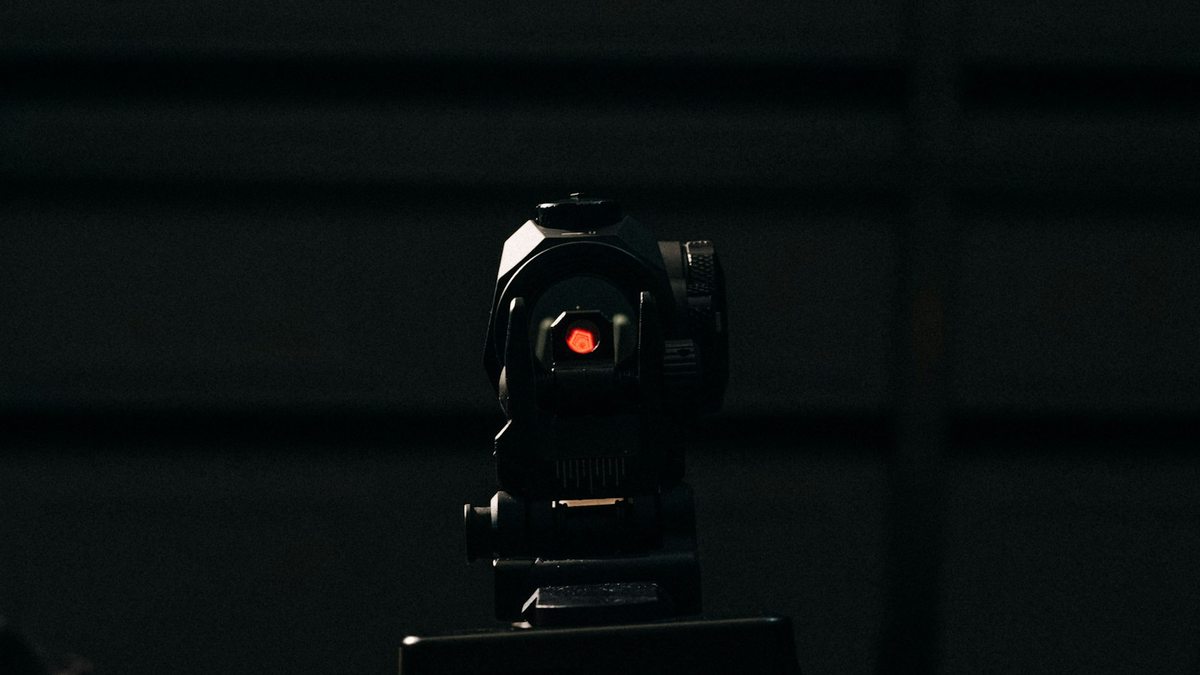
You finally put a red dot on your pistol or rifle, turn it on and look through it. Instead of a neat little dot, you see a comet with a tail, a starburst, two dots or a fuzzy cluster that looks like a bunch of grapes. You turn it off and on again. You clean the lens. Nothing changes. Meanwhile the same optic looks perfect to a friend.
Is the optic defective? Would a green dot or a prism sight fix it, or are red dots just wrong for your eyes? The answer depends on where the problem starts: a dot that looks wrong can come from the optic, the brightness setting, your eyes or the way your two eyes work together, and the fixes are different.
By the end you should understand what astigmatism is and how it affects a red dot, how to tell whether the problem is your eye or the optic, what eye dominance means and how cross-dominance and age affect your sights, so you can figure out why a dot looks wrong to you and choose a fix that works for your eyes.
What astigmatism is
The clear front surface of your eye, the cornea, and the lens behind it bend light so it comes to a sharp point on the back of your eye. In a perfect eye, those surfaces are curved evenly in every direction, like a basketball. With astigmatism, they are curved more in one direction than the other, more like the back of a spoon or a football. Light from a single point does not come to one sharp point. It spreads into a short line or smear.
Astigmatism is common, and many people have a mild amount without knowing it, because your brain smooths over it in daily life. A red dot is a tiny, bright point of light on a dark or busy background, which is exactly the kind of image that reveals it. That is why someone who sees fine for driving and reading can still see a smeared dot.
If you have ever been told you have astigmatism, or if you see halos and streaks around streetlights at night, assume your eye may be part of the reason a dot looks wrong.
Is it my eye or the optic? A simple test
Before you return an optic or give up on red dots, find out where the problem lives. There are two easy ways to check.
- Rotate the optic. With the firearm unloaded or the optic off the gun, turn the optic slowly while watching the dot; if the smear or tail turns with the optic, the optic is likely the cause, and if it stays pointing the same way, your eye is the cause.
- Use a camera. Take a photo of the dot through the optic with your phone; a camera does not have astigmatism, so a clean dot in the photo means the optic is fine and your eye is adding the smear.
Of these, the camera test is the quickest and most convincing. A dot that looks crisp in a photo and smeared to your eye is not a defective optic. Returning it for another of the same model will not help, but the fixes below might.
Key idea: If a camera sees a clean dot and you see a smeared one, the optic is working. The difference is in your eye, and the fix is in brightness, corrective lenses or a different type of sight.
Fixes for a smeared or starburst dot
Start with the simplest changes before you buy anything.
Turn the brightness down
A dot that is too bright blooms into a starburst for almost everyone, and much more for people with astigmatism. Think of a car's headlights at night. They look like a big, glaring star when they are close and bright, and like a crisp point when they are far away and dim. Set the dot just bright enough to see clearly against the target, not as bright as it goes.
Look through your corrective lenses
If you wear glasses or contact lenses that correct astigmatism, the dot should look much better through them. Some people wear prescription shooting glasses made with impact-rated lenses. If you do not have a correction, an eye exam may tell you whether one would help, both on the range and on the road. Our article on eye and ear protection explains why shooting glasses should be impact-rated.
Try a different color or reticle
Some shooters find a green dot looks crisper, partly because the eye is more sensitive to green and the dot can be run at a lower brightness. Others see no difference. A circle-dot or larger dot does not remove the smear, but it can make it less distracting.
Try a holographic or prism sight
Holographic sights create the reticle differently, and many people with astigmatism see them more cleanly. Prism sights have a reticle etched into the glass, much like a scope, which is in focus for most eyes and can be lit or unlit. Our article on red dots, holographic and prism sights compares them in detail. Prism sights are mainly made for rifles, so a handgun shooter's main options are brightness, corrective lenses and trying several pistol optics.
Try brightness and corrective lenses first, because they are free or something you may need anyway. Change sight types only if those do not solve the problem.
What eye dominance means
Most people have one eye the brain trusts more for aiming, just as most people have a dominant hand. That eye is your dominant eye. When you look at a target with both eyes open, your brain uses the dominant eye to decide where things line up.
This matters for any sight, but especially for red dots, because they are meant to be used with both eyes open. If you hold a rifle on your right shoulder but your left eye is dominant, your brain may line up the target with the wrong eye. You may see two dots, or the dot may seem to jump, or your shots may land to one side.
Here is a quick way to find your dominant eye. Hold your arms out and make a small triangle with your thumbs and first fingers. With both eyes open, look through the triangle at a distant object such as a doorknob. Close your left eye. If the object stays in the triangle, your right eye is dominant. If it jumps out, open your left eye and close your right; if it stays then, your left eye is dominant. Try it a few times, because some people's dominance is weak or changes with fatigue.
Good practice: Test your eye dominance at the beginning of the range session and again when you are tired. Some people's dominance shifts toward the other eye as their eyes fatigue, which can explain why groups drift late in a session.
Cross-dominance with handguns and rifles
Being cross-dominant means your dominant eye is on the opposite side from your dominant hand. It is more common than many people think, and it has workable solutions. The right one depends on the firearm.
With a handgun held in both hands in front of your face, the fix is usually simple. You can tilt your head slightly or move the gun slightly toward your dominant eye, keeping a comfortable, natural position. Many cross-dominant shooters do this without even noticing.
With a rifle or shotgun, your face is on the stock, so your eye is fixed to one side. You have three options.
- Shoot from the side of your dominant eye. Switching shoulders feels awkward at first, but it lets your dominant eye do the aiming, and many new shooters adapt quickly.
- Close or block the dominant eye. Closing one eye or placing a small piece of translucent tape on your shooting glasses over the dominant eye forces the other eye to aim.
- Train both eyes open with a red dot. Some shooters learn to use their non-dominant eye with the dot by practicing, but this does not work for everyone.
Of these, switching shoulders is the most complete fix for a new shooter, because it solves the problem permanently instead of fighting the brain every time. Experienced shooters with years on one shoulder often prefer the tape method. If you are just starting, try shooting from the side of your dominant eye before you build habits on the other side.
Age, presbyopia and why dots help older eyes
As people get older, the eye's lens stiffens and focusing up close becomes harder. This is called presbyopia, and it is why many people need reading glasses in their forties or fifties. For shooters, it shows up as a blurry front sight on a handgun. The front sight is only a couple of feet from your eye, and it simply will not come into sharp focus anymore.
Red dots help with this, because the dot appears at the same distance as the target. You look at the target, which your eyes can focus on easily, and the dot is there. Many shooters who struggled with iron sights shoot more confidently once they switch to a dot. Some also benefit from shooting glasses with a slightly different focus than their regular glasses, which an eye doctor can help with if you tell them what distance you need to see clearly.
If your front sight has gone blurry with age, a red dot is often a better answer than straining to see iron sights. Our article on iron sights, night sights and lasers covers other handgun sight options.
Diagnosing your dot and your dominant eye
A few minutes answers both questions. With any firearm unloaded, the action open, ammunition in another room and the muzzle in a safe direction, or with the optic removed from the gun, turn the dot on at medium brightness and look at a distant object, then take a phone photo through the optic and compare. A crisp dot in the photo means your eye is adding the smear. Lowering the brightness a step at a time shows the setting where the dot is as crisp as it gets while still easy to see. Three tries of the triangle test show your dominant eye. Together they tell you where the smear comes from, which eye should aim, and which fix to try first.
Putting it together
When a red dot looks wrong, start by finding out why. If the dot looks clean in a phone photo, the optic is working and your eye is adding the smear, often because of astigmatism. Lower the brightness, look through corrective lenses and, if needed, try a holographic or prism sight. If you see two dots or your shots drift, check your eye dominance, and choose a solution that matches the firearm: A small head or gun adjustment for a handgun, and switching shoulders or blocking an eye for a rifle or shotgun.
Your eyes change with age and fatigue, so revisit these questions every few years. An optic that suits your eyes is far more useful than the one with the best reviews.
Check your understanding
Try answering these before you open the answer. If you can decide what to do and explain why, you have it.
1. Your dot looks like a comet, but a phone photo through the optic shows a crisp dot. What does that tell you?
The optic is working. The smear comes from your eye, often astigmatism, so returning the optic for another of the same model will not help. Try lower brightness, corrective lenses or a different type of sight.
2. You turn the optic a quarter turn and the tail on the dot turns with it. What is the likely cause?
The optic, because the smear follows the optic rather than staying fixed to your eye. Contact the maker or the place you bought it.
3. You are right-handed and left-eye dominant, and you are learning to shoot a shotgun. What would you try first?
Shooting from your left shoulder, so your dominant eye does the aiming. If that does not work for you, closing or blocking the left eye with tape on your shooting glasses is the next option.
4. At 55, you can no longer get your pistol's front sight sharp. Why might a red dot help?
Because the dot appears at the target's distance, so your eye only needs to focus on the target, which it can still do easily, instead of a front sight a couple of feet away.
5. Why should you lower the brightness before deciding a dot is unusable?
Because an overly bright dot blooms into a starburst for almost everyone, and much more for people with astigmatism. The right brightness is just bright enough to see clearly against the target.
Where to go next
If you are choosing a rifle sight with your eyes in mind, read red dots, holographic and prism sights. For handguns, choosing optics for pistols explains the pistol options, and iron sights, night sights and lasers covers the alternatives if a dot is not for you. To protect the eyes you aim with, see eye and ear protection.
If this article helped you, we invite you to sign up for email notifications of new blog articles.