
Cartridges That Can and Can't Share a Gun: Avoiding the Wrong-Ammo Mistake
Joseph McLain Nov 07, 2026
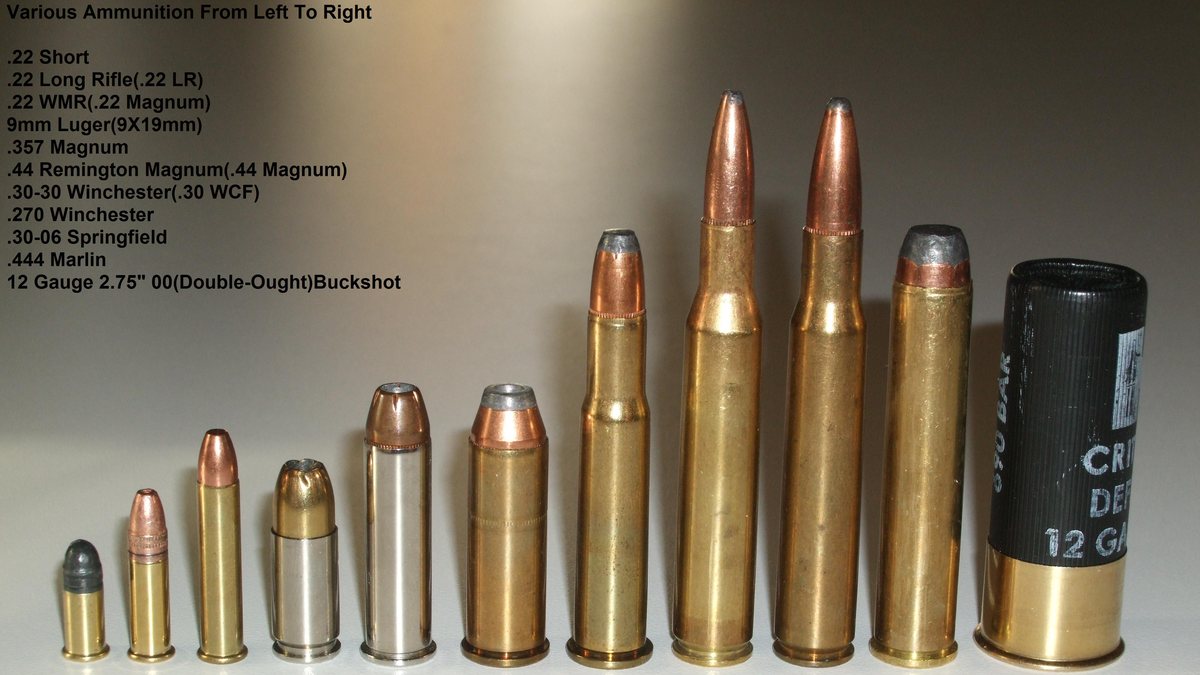
Picture a range day with a few friends. Someone has an AR in .223 and another in .300 Blackout. Another person brought a 12-gauge for clays, and their teenager brought a 20-gauge. Boxes are open on the bench, and loose rounds are rolling around in a coffee can. Somebody asks whether the .38s will work in your .357. Somebody else says, "If it fits, it fires."
Some cartridges really can share a gun; a .38 Special is perfectly at home in a .357 Magnum revolver. Others will fit where they don't belong, and then they fire. "Fits" and "safe" are different questions, and several of the most dangerous mix-ups are dangerous precisely because the wrong round slides in without any resistance at all.
By the end you should be able to read your gun's markings and the cartridge's headstamp, say whether the two belong together, and set up your range bench so a wrong round never reaches the gun.
How a gun and a cartridge are matched
Every gun is built around a specific cartridge. The chamber is cut to that cartridge's exact shape and length. The bore, the inside of the barrel, is sized to that cartridge's bullet. When the right round is fired, the case seals the chamber, the pressure is what the gun was designed to hold, and the bullet fits snugly in the barrel.
Two markings tell you whether a gun and a round belong together. The gun's barrel or slide is stamped with the cartridge it fires, such as "9mm Luger" or "12 GA 3 IN." The cartridge has a headstamp, the lettering on the flat bottom of the case, that names what it is. A shotshell has its gauge printed on the hull and the brass. The box tells you what the box was supposed to hold, and that is not always the same thing.
The industry group that sets ammunition standards, SAAMI, publishes a list of known unsafe firearm and ammunition combinations. It is a useful reference, but it is not a list of every way to get it wrong. Your habits have to cover the rest.
The barrel marking and the headstamp must match, and when you are unsure, the answer is no.
Safe in one direction: Pairs that can share
Some cartridges were designed as longer or more powerful versions of an older round. The newer gun can usually fire the older round, but not the other way around.
- .38 Special in a .357 Magnum. The .357 case is slightly longer, so a .357 Magnum revolver safely fires .38 Special, but a .357 Magnum round should never be forced into a gun chambered only for .38 Special.
- .44 Special in a .44 Magnum. It is the same relationship, so the Magnum gun shoots both, and the Special gun shoots only Special.
- .22 Short and .22 Long in a .22 Long Rifle. These generally fire safely in a .22 LR chamber, though they may not cycle a semi-automatic and the shorter cases can leave fouling that makes LR rounds harder to chamber later.
- .223 Remington in a 5.56 NATO chamber. This direction is generally fine, while 5.56 in a chamber marked only .223 raises pressure concerns, which our article on 5.56 NATO and .223 Remington explains.
- .45 Colt and .410 shotshells. These share only in guns specifically built and marked for both, and never in a gun marked for just one.
Notice the pattern. In each case, a gun built for the longer, stronger or more specific round was designed with the shorter one in mind. The reverse was never part of the design. That is why the direction matters.
Key idea: "It fits" is not evidence that it belongs. Many of the most dangerous mix-ups load smoothly, because the wrong round is smaller or shorter than the right one.
Only use a cartridge that the gun's marking or owner's manual names. Shared use goes in one direction only, from the gun built for more.
The .300 Blackout in a 5.56 or .223 AR
This is the mix-up that destroys rifles, and it is getting more common as more people own ARs in both calibers. The .300 AAC Blackout uses a case made from .223 brass. The base of the case is the same size, so it fits the same bolt and the same magazine. It even looks similar at a glance. But its bullet is about .30 caliber, while a 5.56 or .223 barrel is sized for a bullet about .22 caliber.
Load a .300 Blackout round into a 5.56 rifle, and it may chamber far enough for the bolt to close. When it fires, a bullet a third larger than the bore is being forced into a barrel too narrow for it. Pressure rises violently, and the rifle can come apart in the shooter's hands. Our article on the .300 AAC Blackout covers the cartridge itself.
Common mistake: Storing .300 Blackout and 5.56 in identical magazines. Because both fit the same magazine, a mixed-up mag goes straight into the wrong rifle. Use visibly different magazines for .300 Blackout, such as a different color or a bold paint band, and never load both calibers at the same bench at the same time.
If you own both, make .300 Blackout ammunition and magazines impossible to mistake by color and location, and check the headstamp of every round you load.
A 20-gauge shell in a 12-gauge shotgun
This is the classic shotgun accident, and it happens to experienced hunters. A 20-gauge shell is small enough to slide right past a 12-gauge chamber and into the barrel, where it stops a few inches down. From the chamber, the barrel can look empty. The hunter then loads a 12-gauge shell behind it and fires. The 12-gauge payload slams into the stuck 20-gauge shell, the barrel can burst, and the shooter's hand is right there.
It usually happens in the field, where a hunter carries both gauges, or when a family member's 20-gauge shells end up in the same coat pocket. In the United States, 20-gauge shells have traditionally been yellow, which helps, but not every brand follows that custom. Color is a hint, not a safeguard.
If a shell seems to disappear when you load it, or a shot sounds or feels wrong, stop. Unload the gun, open the action and look through the barrel from the breech end. Our article on misfires, hangfires and squib loads explains how to handle a shot that doesn't sound right.
Carry one gauge at a time, and if you hunt with someone using a different gauge, keep each person's shells in their own pocket or box.
Rimfire and handgun mix-ups
The same "it fits, so it fires" problem shows up in smaller guns.
- .22 Long Rifle in a .22 Magnum (WMR). The LR round drops into the larger magnum chamber, and its thinner case can split when fired, sending hot gas back toward the shooter, so SAAMI lists this combination as unsafe.
- .22 Long Rifle in a .17 HMR. The rims are similar, so the round may chamber, but the bullet is far too big for the .17 bore.
- 9mm in a .40 S&W. A 9mm round can sometimes go into a .40 chamber and fire, often rupturing the case, which SAAMI also lists as unsafe.
- .380 ACP in a 9mm. A .380 can drop into a 9mm chamber because it is shorter, but the gun was not designed for it, so it may fire poorly, fail to cycle or rupture the case.
In each case, the wrong round is smaller or shorter than the right one and slips in without resistance. That is what makes it easy to miss. The gun doesn't refuse it. Our article on rimfire and centerfire cartridges explains why rimfire cases are especially thin.
Never rely on a round "fitting" as proof that it belongs. Rely on the headstamp and the barrel marking.
Shotshells longer than the chamber
A shotgun's barrel is stamped with its chamber length, such as 2¾ inch, 3 inch or 3½ inch. That number refers to the shell's length after it has been fired and its crimp has opened. A longer shell can often be loaded into a shorter chamber. When it fires, the crimp unfolds into the tapered section ahead of the chamber instead of into open space, and pressure rises sharply.
A shorter shell in a longer chamber is generally safe, though it may not cycle a semi-automatic. Our article on shotgun shell length and markings explains how to read both the shell and the barrel.
Never fire a shell longer than the chamber length stamped on the barrel.
Habits that make mix-ups nearly impossible
Almost every wrong-ammunition accident starts with mixed ammunition in one place. The habits that prevent them are simple, and they work because they don't depend on catching the mistake at the last second.
- One caliber on the bench. Put away the ammunition for one gun before you bring out the next.
- Original boxes. Keep cartridges in labeled boxes instead of loose in a can, a bag or a pocket.
- Read the headstamp. Check it when you load a magazine, especially with ammunition someone gave you.
- Mark magazines. Color-code magazines for calibers that share a magazine, such as .300 Blackout and 5.56.
- Stop when something feels off. If a shot sounds weak, recoil feels different or a round chambers oddly, stop and check before firing again.
Of these, one caliber on the bench does the most work, because a wrong round that isn't there can't be loaded.
Separate first, then verify.
Putting it together
A gun is built for one cartridge, and the barrel marking and the headstamp tell you what that is. A few pairs share safely in one direction, from the gun built for more. The dangerous mix-ups, such as .300 Blackout in a 5.56, a 20-gauge in a 12-gauge, a .22 LR in a .22 Magnum or a 9mm in a .40, all share one feature. The wrong round fits easily. That is why habits matter more than knowledge in the moment. Keep calibers separated, keep ammunition in labeled boxes, read headstamps and stop when anything feels different.
Check your understanding
Try answering these before you open the answer. If you can decide what to do and explain why, you have it.
1. Your revolver is stamped ".38 Special." A friend offers you .357 Magnum rounds. Can you shoot them?
No. A .357 Magnum revolver can fire .38 Special, but a .38 Special revolver was not built for .357 Magnum pressures. Sharing only goes one way, from the gun built for more.
2. You own an AR in 5.56 and another in .300 Blackout, and both use the same black magazines. A loaded magazine turns up in your range bag and you're not sure which caliber it holds. The rounds look about the same. What do you do?
Don't load it into either rifle until you've read the headstamp on the rounds. A .300 Blackout round fits a 5.56 magazine and can chamber in a 5.56 rifle, and its .30-caliber bullet in a .22-caliber bore can blow the rifle apart. Then mark your .300 Blackout magazines so this can't happen again.
3. While loading your 12-gauge in the field, a shell seems to drop out of sight. What should you suspect, and what do you do?
Suspect a 20-gauge shell has slipped into the barrel. Point the gun safely, unload it, open the action and look through the barrel from the breech end before loading anything else.
4. A bucket of mixed range brass and loose rounds includes some .22 rounds. Can you use them in your .22 Magnum rifle?
Only rounds whose headstamp or markings identify them as .22 WMR. A .22 Long Rifle round can chamber in a .22 Magnum and split when fired. Loose rounds of unknown identity shouldn't be fired at all.
5. You're at the range with a .380 pistol and a 9mm pistol, and both boxes are open on the bench. Your friend says it's fine because you'll be careful. What's the better plan, and why?
Shoot one gun, put its ammunition away, then bring out the other. A .380 round will drop into a 9mm chamber, and being careful depends on catching the mistake at the last second. A wrong round that isn't on the bench can't be loaded.
Where to go next
For the most common rifle question about interchangeable ammunition, read 5.56 NATO and .223 Remington and .308 Winchester and 7.62×51 NATO. To recognize and handle a shot that doesn't sound right, see misfires, hangfires and squib loads. And for the numbers on a shotshell box and barrel, read shotgun shell length and markings.
If this article helped you, we invite you to sign up for email notifications of new blog articles.