
Winchester White Box Target & Practice Ammunition
Joseph McLain Nov 07, 2026
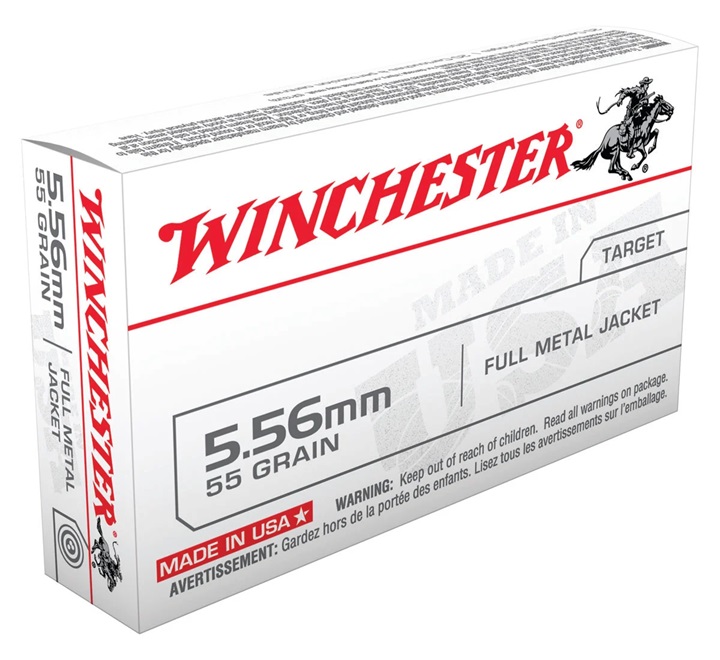
You are holding a plain white box with the Winchester name on it. It is one of the least expensive boxes you can buy and one of the easiest to find. Is it good enough for your range day, and when should you spend more?
That depends on what the box has to do. By the end you should be able to decide whether it suits your range day and know when to spend more.
White box is dependable practice ammunition in the same class as Federal American Eagle, Remington UMC and CCI Blazer Brass, so buy whichever of those is in stock at a fair price and runs well in your gun. If you carry, pick the bullet weight that matches your carry load. Don't carry it for defense, hunt with it or expect match accuracy from it; those jobs call for ammunition built for them.
What the plain white box is telling you
Winchester's white-box ammunition, marketed under names such as "USA" and "Target & Practice," has been a fixture on gun store shelves for decades. The plain packaging is the message: This is standard, brass-cased training ammunition built to be shot in quantity at a price that makes regular practice affordable. It is aimed at new shooters, at instructors and students who fire hundreds of rounds in a class, and at anyone who simply wants to shoot often.
Think of it as the plain flour of ammunition. It is not the specialty flour a baker buys for one particular bread, but it is dependable, widely available, and exactly what you want when you are making a lot of everyday food. Most of your shooting life is practice, and practice is where white-box ammunition earns its place.
Key idea: White-box ammunition is built for repetition, not for maximum precision or defensive performance. Skill comes from repetition, and repetition costs money, so an affordable, dependable practice load is a tool for getting better.
How it is built and why that keeps the price down
Winchester makes ammunition in the United States, and the white-box lines are produced in very large runs for big retailers, sporting goods stores and online sellers. Scale is the first reason the price stays low and the boxes stay easy to find.
The second reason is what the line leaves out. Most white-box loads use full metal jacket (FMJ) bullets, a lead core covered by a copper jacket that does not expand. FMJ bullets are inexpensive to make, feed smoothly in most semi-automatic firearms and do not deform much when they hit paper or steel. The cases are ordinary brass rather than nickel-plated, and the primers are the boxer type, a separate cup pressed into the base of the case, which is standard for American centerfire ammunition and makes the brass reloadable. Our article on FMJ and TMJ bullets explains the bullet in more detail.
The third difference is tolerance. Match ammunition is made with tighter control over bullet weight, powder charge and case dimensions so every round leaves the barrel at nearly the same speed. Practice ammunition is made to industry standards but without that extra sorting. A little more variation from round to round means bullets land in slightly different places, so groups open up a bit. At typical practice distances that difference is usually small compared with the shooter's own variation, which is why practice ammunition makes sense for most range work.
What is in the lineup
The white-box lines concentrate on the most popular handgun calibers and the most common rifle training cartridges. Typical offerings include 9mm Luger in 115-, 124- and 147-grain FMJ, .40 S&W, .45 ACP 230-grain FMJ, .380 ACP and .38 Special, along with .223 Remington and 5.56 NATO 55-grain FMJ for AR-15s and .308 Winchester for larger rifles. Offerings change over time, so check the box for the exact cartridge, bullet weight and bullet type.
A grain is a small unit of bullet weight; 7,000 grains make a pound. In 9mm, for example, the 115-grain load is common and economical, while the heavier 124- and 147-grain loads recoil a little differently and may better match the bullet weight of the defensive ammunition you carry. That is a useful reason to choose one weight over another. If you carry a 124-grain defensive load, practicing with a 124-grain FMJ keeps the feel of recoil and the point of impact closer to what you will experience with your carry ammunition.
If you shoot an AR-15, read the marking on your barrel before buying .223 or 5.56. The two look alike but are loaded to different pressures and chambered differently, and a rifle marked only .223 Remington should not be fed 5.56 NATO. Our article on 5.56 NATO and .223 Remington explains why.
Accuracy: Separating the ammunition from the shooter
Most new shooters blame the ammunition for groups that are really caused by the trigger press. The only way to know is to test both. Shooting from a solid rest removes most of your own movement, so the group size reflects mainly the firearm and the ammunition. Shooting the way you normally do adds your own movement back in. Comparing the two tells you which one is limiting you.
Picture weighing yourself on two scales. If both say the same thing, the scale is not the problem. If your rested group is small and your normal group is large, the ammunition is not the problem either; your technique is. In practice, most shooters find that inexpensive practice ammunition groups well enough from a rest that their own technique is the larger factor. When your rested groups shrink to the point that the ammunition is the limit, that is the time to try a higher-grade load.
Reliability and handling a round that does not fire
FMJ bullets have a smooth, rounded nose that slides easily up the feed ramp, which is one reason practice ammunition generally runs well in semi-automatic pistols and rifles. Any mass-produced ammunition, budget or premium, can occasionally produce a round that does not fire or one that sounds weaker than the rest. The right response is the same regardless of brand.
If you press the trigger and hear a click, keep the muzzle pointed downrange and wait at least 30 seconds before opening the action, in case the round is slow to ignite. Then remove it and set it aside away from your other ammunition. If a shot sounds or feels noticeably weaker than the others, stop. A weak round may have pushed the bullet only partway down the barrel, and firing another round behind it can damage the firearm and injure you. Unload, lock the action open and look through the barrel, or ask the range officer for help, before firing again.
Safety: A click or a weak-sounding shot is a signal to stop and check, not to keep pulling the trigger. Wait 30 seconds after a click, and confirm the barrel is clear after any shot that sounds different.
How it compares with other budget lines
| Line | Maker | How it relates to Winchester white box |
|---|---|---|
| American Eagle | Federal | A direct competitor in the same price class |
| UMC | Remington | A direct competitor in the same price class |
| Blazer Brass | CCI | A direct competitor, brass-cased and reloadable |
| Range Dynamics | Fiocchi | A direct competitor from an Italian ammunition maker that also produces in the United States |
| Defensive lines such as Winchester's own premium loads | Various | A different class: Built for expansion, not volume |
The table falls into two parts. The first four rows are true alternatives that compete on price and availability, so the sensible choice is whichever is in stock at a fair price and runs well in your firearm. The last row is a different category entirely; defensive ammunition costs more because its bullets are engineered to expand and penetrate consistently. Our comparison of American Eagle, White Box, UMC, PMC Bronze and Blazer Brass goes deeper on the budget lines.
Where it fits, and where it does not
White-box ammunition is built for range training, plinking, classes and casual local matches. It is a sensible choice any time the goal is trigger time at a reasonable cost.
It is not built for defense. FMJ bullets do not expand, so they tend to pass through a target and retain energy beyond it, which is the opposite of what you want in a home or public place. Even the occasional basic hollow point in a budget line is not engineered and tested the way dedicated defensive ammunition is. Nor is it built for hunting, where the bullet must expand reliably to kill cleanly; check the Iowa DNR's regulations, which require expanding bullets for some game. And it is not built for precision competition, where match ammunition's tighter tolerances matter.
Practice with affordable FMJ, but carry, defend and hunt with ammunition designed for that job. Then practice enough with your defensive or hunting load to confirm it feeds and hits where you aim.
Putting it together
Winchester's white-box ammunition is dependable, widely available practice ammunition built to make regular shooting affordable. Its FMJ bullets feed well and its brass is reloadable, and its tolerances are good enough that, for most shooters, technique limits accuracy long before the ammunition does. Choose a bullet weight close to your defensive load if you carry, read your rifle's barrel marking before buying .223 or 5.56, and handle any click or weak shot with a pause and a check. Use it to build skill, and switch to purpose-built ammunition when the job is defense, hunting or match precision.
Check your understanding
Try answering these before you open the answer. If you can decide what to do and explain why, you have it.
1. A new shooter in your family wants to get good with a 9mm this summer but is on a tight budget. Why does white box make sense for most of that practice?
Because skill comes from repetition, and repetition costs money. White box is affordable and easy to find, so the budget buys more trigger time, and its FMJ bullets feed reliably in most semi-automatics. Save the expensive defensive ammunition for confirming the carry load.
2. Your groups are about five inches at 15 yards with white box, and you're tempted to buy pricier ammunition. How do you find out whether the ammunition is really the problem?
Shoot one five-shot group from a solid rest and one the way you normally shoot, at the same distance. If the rested group is much smaller, your technique is the larger limit, and better ammunition won't fix it. If the rested group is also large, try another load.
3. You carry a 124-grain defensive 9mm load. Which practice load weight makes sense, and why?
A 124-grain FMJ, because it recoils more like your defensive load and tends to hit closer to the same point.
4. A shot sounds noticeably weaker than the rest. What do you do?
Stop, unload, lock the action open and confirm the barrel is clear before firing again, because a bullet may be stuck in the bore.
5. Your brother-in-law keeps a box of white-box FMJ next to his bedside pistol because "a bullet's a bullet." What would you tell him?
That FMJ doesn't expand, so it tends to pass through and keep going, which is dangerous inside a home with family and neighbors around. Defensive hollow points are engineered and tested to expand and penetrate consistently. Practice with the FMJ, keep a proven defensive load in the gun.
Where to go next
To see the budget lines side by side, read how to choose between American Eagle, Winchester White Box, Remington UMC, PMC Bronze and Blazer Brass. Ammunition quality explains what you get as you move up from practice to match and hunting grades. If you shoot an AR-15, 5.56 NATO and .223 Remington explains the barrel marking that decides what you can safely buy, and selecting personal and home defense ammunition shows what to carry instead of practice FMJ.
If this article helped you, we invite you to sign up for email notifications of new blog articles.