
Choosing the Right Ammunition for Suppressors
Joseph McLain Oct 24, 2026
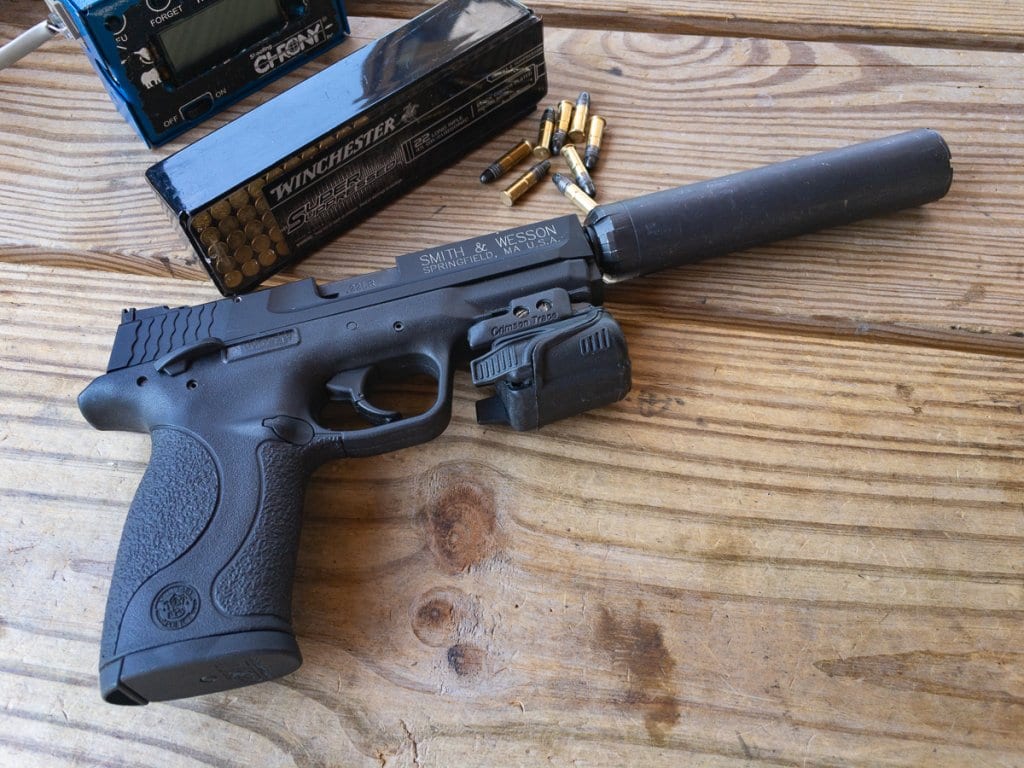
You mount a new suppressor on your rifle and shoot the ammunition you always shoot. The shot is quieter, but a sharp crack is still there. Or you try a box of gentle subsonic ammunition, and your semi-automatic stops cycling after a couple of shots. One friend says any ammunition works with a can; another says you need special ammunition for everything. Both surprises come from the ammunition.
A suppressor offers noise reduction, recoil mitigation and enhanced shooting comfort, but only when it is paired with the right rounds. By the end of this article you should be able to explain what makes a shot loud, choose among subsonic, supersonic and suppressor-specific loads for .22 LR, 5.56mm, pistols and rifles, and test your choice.
Two kinds of noise, and why ammunition decides how quiet you get
Every shot makes noise in two ways. The muzzle blast is the burst of hot, high-pressure gas that rushes out behind the bullet. A suppressor works by trapping and cooling those gases, which takes the edge off the blast (see what suppressors are and how they work for the details). The supersonic crack is different. Sound travels at approximately 1,125 feet per second at sea level, and a bullet faster than that makes its own sharp crack in flight, much like the tip of a bullwhip. A subsonic bullet stays below that speed and never makes the crack. Because the bullet creates it, a suppressor cannot mitigate it.
Key idea: A suppressor quiets the gas, and only the ammunition can quiet the crack. For the quietest shot you need both.
| Question | Subsonic | Supersonic |
|---|---|---|
| Speed | Below about 1,125 fps at sea level | Above the speed of sound |
| Noise with a suppressor | Drastically reduced, with no crack | The crack remains audible, which limits noise reduction |
| Trajectory and energy | Lower muzzle energy and a more pronounced arc, which can affect long-range performance | Higher velocity, flatter trajectory and increased energy transfer on impact |
| Best fit | Noise-sensitive uses such as home defense or hunting | Long-range or high-energy applications, even with a suppressor |
Read the table as a trade. Velocity buys a flatter trajectory and more energy, and it costs you the crack. Think of tossing a ball across a field. A hard throw flies nearly straight, while a slow lob needs a high arc because gravity has more time to pull it down. A subsonic bullet is the lob, so at distance it needs more holdover, meaning you aim higher to make up for the drop. Its slower speed also gives subsonic ammunition minimal recoil, which improves accuracy and comfort.
The rule is simple. If quiet is the priority, choose subsonic. If reach or energy matters more, choose supersonic, and the suppressor still reduces the blast. Either way a suppressed firearm is not silent, so keep wearing hearing protection (see eye and ear protection), and zero with the ammunition you will actually shoot. Our guide to sighting in rifles at different distances covers drop and holdover.
Why subsonic ammunition can make a semi-automatic stop cycling
A semi-automatic firearm uses part of each shot's energy to eject the empty case and load the next round, and gas pressure from the burning powder is the power source. Subsonic loads send the bullet out slower, so they produce less gas pressure, and the action may not get enough push to finish its travel. Picture a pinball plunger. Pull it all the way back and the ball reaches the top every time. Pull it only part way and the ball stalls.
You can fix this by changing the ammunition to a load with tailored pressures, or by adjusting the firearm (more on that for 5.56mm rifles below). Either way, test the load in your own firearm, because watching it cycle is the only real proof. A bolt-action rifle, which you cycle by hand, does not have this problem.
What suppressor-specific ammunition adds
Ammunition marketed as "suppressor-specific" is often subsonic by design, but it goes further and is tuned for the whole system of bullet, firearm and suppressor.
- Optimized powder. It often burns cleaner, which reduces carbon buildup (sooty residue) in the suppressor and firearm and means you clean less often.
- Bullet design. The projectile may be optimized for stability and accuracy at subsonic velocities, and some designs minimize the risk of baffle strikes, when a bullet grazes the suppressor's internal components.
- Consistent performance. Precision manufacturing gives uniform velocity and pressure, which is critical for reliable cycling and accuracy.
- Noise signature. It is engineered to sound quieter overall, sometimes with reduced muzzle flash for tactical applications.
Compared with regular subsonic ammunition, that adds up to cleaner operation, enhanced accuracy and improved cycling. The clean powder and consistent pressure are the features you will notice most, because fouling and failures to cycle are the problems shooters actually run into.
It costs more, so use if-then rules. If you shoot high volume, the reduced fouling saves maintenance time. If you hunt or shoot for precision, the stability and accuracy offer noticeable benefits. If your use is tactical, such as low-light or covert operations, reduced muzzle flash and optimized noise suppression help. And if your firearm struggles to cycle standard subsonic rounds, tailored pressures can improve reliability. If none of those fits, regular subsonic ammunition may serve you well.
Four checks before you buy ammunition for a suppressor
- Firearm compatibility. Make sure your firearm is rated for subsonic or suppressor-specific ammunition, then test it for cycling and accuracy, particularly in semi-automatics.
- Suppressor ratings. Confirm your suppressor is rated for the caliber and pressures of your ammunition. Some are optimized for subsonic use, while others handle both subsonic and supersonic rounds.
- Purpose. For maximum noise reduction, choose subsonic or suppressor-specific ammunition. For long-range or high-energy work, supersonic may be more appropriate, even with a suppressor.
- Budget. Suppressor-specific ammunition is typically more expensive than standard subsonic, so balance cost with how often you shoot and what you want to accomplish.
Compatibility and ratings come first because they protect you and your equipment. Purpose and budget are your judgment calls. This article covers ammunition, not the rules for owning a suppressor, so confirm current federal and state requirements with the relevant agencies or a qualified professional.
Common mistake: Assuming a suppressor that fits your muzzle can handle any load in that caliber. Check its rating against the specific ammunition.
Three details on the box tell you most of what you need. Weight comes first. Heavier bullets, such as 147-grain for 9mm or 220-grain for .300 AAC Blackout, are often used to maintain subsonic velocities, because a given powder charge pushes a heavy bullet more slowly than a light one (see bullet weight in rifle rounds). Clean-burning powder reduces fouling in suppressors and firearms and extends maintenance intervals. Purpose decides the rest. For self-defense or hunting, prioritize controlled expansion (Hornady Sub-X is one example). For high-volume target shooting, cleaner options like Winchester Super Suppressed or Federal Syntech Suppressor are excellent choices.
Suppressed ammunition for .22 LR firearms
The .22 LR is one of the most popular suppressor cartridges thanks to its inherent low noise, affordability and wide availability, and many standard .22 LR rounds are already subsonic. It is a friendly place to learn. For more on the cartridge, see General Considerations for .22 LR Ammunition Selection.
| Load | Type | What it offers |
|---|---|---|
| CCI Quiet-22 | Subsonic, 710 fps | One of the quietest .22 LR options available, and perfect for plinking and small game hunting |
| Aguila SuperExtra Subsonic 40gr | Subsonic | A heavy-for-caliber bullet at subsonic speeds for excellent accuracy and noise reduction |
| Eley Subsonic Hollow Point | Subsonic hollow point | Known for precision, and ideal for hunting small game |
| Winchester Super Suppressed .22 LR | Suppressor-specific | Clean-burning, reduces fouling and maintains accuracy |
| Federal Champion Target 40gr Standard Velocity | Standard velocity | Not marketed as subsonic, but typically below the sound barrier, which makes it budget-friendly |
The loads fall into three groups. Dedicated subsonic rounds (CCI Quiet-22, Aguila, Eley) are chosen for quiet, and Aguila and Eley for accuracy and precision. Winchester Super Suppressed is chosen for cleanliness, and Federal Champion Target is the budget path. At 710 fps, Quiet-22 sits well over 400 fps below the 1,125 fps line.
Standard .22 LR below 1,125 fps is often quiet enough for suppressor use, but dedicated subsonic rounds further enhance noise reduction. Be careful with "typically" on a standard-velocity load, because box speed and barrel speed may differ. Also, .22 LR is inherently dirty, so suppressor-specific ammunition, which burns cleaner, reduces fouling and prolongs maintenance intervals. Our guide to CCI's .22 product line shows where Quiet-22 fits.
Suppressed ammunition for 5.56mm rifles
Suppressing a 5.56mm rifle is trickier because most standard 5.56 ammunition is supersonic by design. A suppressor reduces the blast, but the crack remains. Subsonic or suppressor-specific ammunition can improve noise reduction, with trade-offs in velocity and energy. Four loads are worth knowing.
- Hornady Subsonic 75gr 5.56 NATO. Designed for suppressed shooting, with quieter operation and improved cycling. The heavier bullet enhances stability and energy at subsonic velocities.
- Discreet Ballistics 5.56 Subsonic 77gr. Tailored for suppressed AR-15 platforms, with a clean-burning powder and consistent performance.
- Atomic Tactical Cycling Subsonic 5.56mm. Designed to cycle reliably in semi-automatic rifles, balancing sound reduction with functionality.
- Sellier & Bellot 5.56 NATO 55gr (standard load). Not subsonic, but a high-quality round that works well suppressed when noise reduction is not the top priority.
The first three are built for quiet, and the fourth is the practical exception. A good standard load still benefits from the suppressor, because the blast shrinks even though the crack stays. Confirm advertised velocity and ratings before assuming any load is subsonic in your barrel. For more on the cartridge, see A Guide to 5.56mm Ammunition.
Two special considerations apply. First, semi-automatic rifles may struggle to cycle subsonic 5.56 reliably without adjustments, such as installing a lighter buffer or modifying the gas system. Ask a qualified gunsmith or the manufacturer before altering anything. Second, supersonic 5.56 can still benefit from a suppressor, even if the crack persists.
Top suppressor-specific ammunition for pistols
Pistol suppressor loads follow one pattern, which is heavy bullets to stay subsonic, clean powder to keep things tidy, and consistent pressure to cycle the slide.
| Product | Calibers | Bullet weights mentioned | What sets it apart |
|---|---|---|---|
| Federal Syntech Suppressor | 9mm, .40 S&W, .45 ACP | 147-grain (9mm) | A polymer-coated bullet reduces friction, minimizes lead fouling and extends barrel life, and clean-burning powder ensures reliable cycling |
| Hornady Subsonic | 9mm, .40 S&W, .45 ACP | 147-grain (9mm), 230-grain (.45 ACP) | Consistent pressures and excellent accuracy, and its XTP bullet enhances terminal performance for self-defense and hunting |
| Winchester Super Suppressed | 9mm, .40 S&W, .45 ACP | 147-grain (9mm), 230-grain (.45 ACP) | Clean-burning powders minimize fouling, and jacketed lead core bullets are optimized for quiet, consistent performance |
| Federal American Eagle Suppressor | 9mm, .40 S&W, .45 ACP | 147-grain (9mm), 230-grain (.45 ACP) | Excellent value with high-quality components, and clean-burning powder reduces residue in firearm and suppressor |
| Remington HTP Subsonic | 9mm, .45 ACP | Heavier projectiles | Subsonic velocities and controlled expansion balance noise reduction with effective terminal ballistics, aimed at self-defense |
Check the weights first. The same heavy bullets, 147-grain in 9mm and 230-grain in .45 ACP, appear almost everywhere, which is the sign of a load built to stay subsonic. Then let your purpose pick. For self-defense or hunting, choose the controlled-expansion lines (Hornady Subsonic and Remington HTP Subsonic). For high-volume practice, the cleanliness and value of Federal Syntech Suppressor, Winchester Super Suppressed and Federal American Eagle Suppressor fit better. To see how Syntech compares with its siblings, read Federal Syntech: Ammunition Reimagined.
Top suppressor-specific ammunition for rifles
Rifle loads follow the same logic with more calibers and larger bullets, and the weights again show how each stays subsonic.
| Product | Calibers | Bullet weights mentioned | What sets it apart |
|---|---|---|---|
| Hornady Sub-X | 5.56mm, .308, .450 Bushmaster, .45-70 | 190-grain (.308), 410-grain (.45-70) | Heavy bullets with patented expansion technology for reliable terminal performance at subsonic speeds, ideal for hunting and tactical use, with stable performance and consistent accuracy |
| Winchester Super Suppressed | 5.56mm, .350 Legend, .450 Bushmaster | 200-grain (.350 Legend) | Clean-burning powder and jacketed bullets reduce fouling, with consistent cycling and excellent noise suppression, optimized for heavier loads to stay subsonic |
| Federal American Eagle Suppressor | 5.56mm, .300 AAC Blackout, .308 | 220-grain (.300 AAC Blackout), 168-grain (.308) | Known for reliable cycling and consistent ballistics, and its clean-burning design helps maintain suppressor efficiency over extended sessions |
| Discreet Ballistics | 5.56mm, .300 AAC Blackout | 220-grain (.300 AAC Blackout) | High-end and precision-loaded, exceptionally clean-burning and accurate, with excellent stability and noise suppression |
| Atomic Tactical Cycling Subsonic | 5.56mm, .308 | Not listed | Engineered to cycle reliably in semi-automatic rifles, optimized for gas-operated firearms, with bullet weights that ensure subsonic speeds and excellent accuracy |
Start with your caliber, since it narrows the field fast. A hunter who wants a bullet that expands at subsonic speed will look at Hornady Sub-X first, and our article on hunting with suppressors shows how that plays out in the field. If you run a semi-automatic and cycling worries you, Atomic Tactical Cycling Subsonic is built around that problem, and Federal American Eagle Suppressor is known for reliable cycling. For a premium, precision-loaded .300 AAC Blackout, Discreet Ballistics is the high-end choice.
Keeping a suppressed setup running well
Suppressors and firearms accumulate fouling over time. Even with cleaner-burning suppressor-specific ammunition, routine maintenance is critical for performance. Then practice with different loads, because every firearm and suppressor pair has its own preferences. Use subsonic rounds for noise-sensitive applications like home defense or hunting, and suppressor-specific ammunition for high-volume or precision shooting.
Try this: A three-load suppressed test
- Choose three loads in your caliber, such as a standard subsonic round, a suppressor-specific round and a standard supersonic round, and confirm your firearm and suppressor are rated for each.
- Wear hearing protection, keep the muzzle downrange and shoot the same number of rounds from a steady rest with each load.
- For each load, write down whether every round cycled, how large the group looked, and whether the shot sounded like a soft thump or a sharp crack.
- If you have a chronograph, a device that records bullet speed, check whether the subsonic loads really stay below about 1,125 fps in your firearm.
- Drop any load that fails to cycle, and keep one for quiet practice and one for work that needs more energy or accuracy.
You will know it worked when you can name the load that cycles and groups best in your setup, and can explain what made the others less suitable, whether the crack, the fouling or the cycling.
The right ammunition makes all the difference with a suppressor. Subsonic rounds give significant noise reduction, and suppressor-specific ammunition adds cleaner operation, better accuracy and improved cycling. Know your firearm, your suppressor and your needs, and choose to support safety, performance and enjoyment.
Putting it together
Both friends are partly right. A suppressor works with most ammunition, but supersonic loads still crack, and some subsonic loads will not cycle a semi-automatic. Decide first whether you want maximum quiet or full power, choose subsonic or supersonic accordingly, confirm that the suppressor is rated for the cartridge, and test that the load cycles reliably and groups well in your own suppressed firearm.
Check your understanding
Try answering these before you open the answer. If you can explain it in your own words, you understand it.
1. A friend says a suppressor makes any ammunition quiet. What does a suppressor reduce, and what can only the ammunition fix?
A suppressor traps and cools gases and reduces the muzzle blast. It cannot mitigate the supersonic crack, which comes from a bullet traveling faster than about 1,125 feet per second at sea level. Only a subsonic or suppressor-specific load removes the crack.
2. Your semi-automatic rifle will not cycle a subsonic 5.56 load. Why, and what are two ways to address it?
Subsonic loads create less gas pressure, so the action may not receive enough energy. Switch to a load with tailored pressures, or adjust the rifle with a lighter buffer or a modified gas system, ideally with a qualified gunsmith.
3. Why do so many suppressor loads use heavy bullets such as 147-grain 9mm or 220-grain .300 AAC Blackout?
A given charge pushes a heavier bullet more slowly, so heavy bullets help maintain subsonic velocities while keeping meaningful energy.
4. You plan a long, budget-minded day of suppressed .22 LR plinking. Which loads would you consider, and what should you verify?
Federal Champion Target 40gr Standard Velocity is budget-friendly and typically stays below the sound barrier, but verify that in your firearm. Winchester Super Suppressed burns cleaner if fouling worries you, and CCI Quiet-22 is one of the quietest.
5. A suppressor threads onto your rifle. Is that enough to know it can handle your ammunition?
No. Confirm it is rated for the caliber and pressures of the specific ammunition. Some are optimized for subsonic use, while others handle both subsonic and supersonic rounds.
Where to go next
If you hunt, Hunting with Suppressors shows how these choices meet real field conditions. Since .300 AAC Blackout appears so often in the rifle table, Understanding the .300 AAC Blackout explains why shooters pair it with suppressors. And for a closer look at the heavy bullets on so many boxes, bullet weight is the natural next read.
Examine our selection of ammunition here and if there's something you're interested in and don't see, text us! We'll add anything to our inventory; we just need to know what you'd like.
If you found this informative, we invite you to sign up for email notifications of new blog articles.