
Speer's 9mm Lineup: A Comprehensive Guide
Joseph McLain Nov 07, 2026
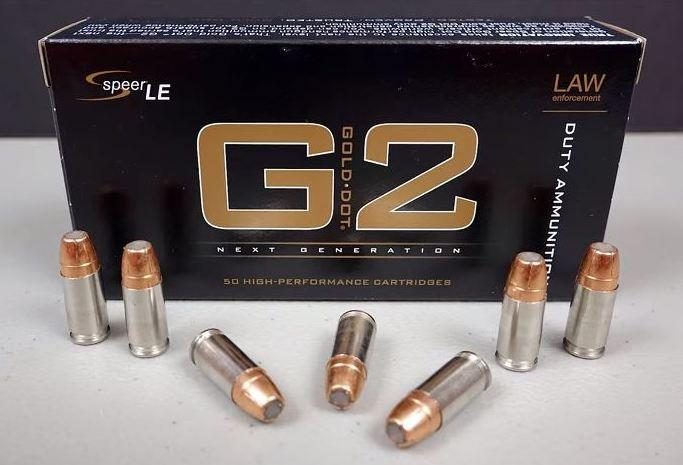
You're holding a compact 9mm and looking at Speer's boxes: Gold Dot, Gold Dot Short Barrel, Gold Dot G2, Gold Dot Carry Gun, Lawman. They're all 9mm, and the labels don't tell you which one belongs in your pistol, or whether you need the +P version.
By the end you should be able to pick the Speer defensive load that suits your pistol's barrel length and pressure rating, choose a Lawman practice load that recoils and hits like it, and know when the +P label matters.
The short answer
For a compact or full-size 9mm, carry Speer Gold Dot 124-grain (standard pressure). For a very small pistol with a barrel around 3 to 3.5 inches, carry Gold Dot Short Barrel 124-grain +P if your pistol is rated for +P, or Gold Dot Carry Gun 135-grain if it isn't. For a duty-size pistol or a carbine, Gold Dot G2 147-grain is the heavy-bullet choice. Practice with Speer Lawman in the same weight as your carry load.
Why Gold Dot has the reputation it does
A defensive hollow point has to do two things: open up, so it makes a wider wound, and keep enough weight to go deep enough, 12 to 18 inches in the FBI's gelatin test, to reach the heart and lungs from a bad angle. Most hollow points are a lead core inside a copper jacket, and on a hard hit the two can separate, leaving a lighter core that stops short.
Gold Dot was built to prevent that. Speer forms the jacket onto the core by plating copper onto it, a process it calls Uni-Cor, so jacket and core are bonded and can't come apart. The bullet opens and keeps its weight, through clothing and through the barriers police have to shoot through, such as car doors and windshields. That's why Gold Dot has been a standard police duty load for decades, and that record in real shootings, not just in gelatin, is the best reason to trust it.
Gold Dot G2 takes a different approach to the main thing that makes hollow points fail: clothing. Fabric can pack into an open cavity like a cork and keep the nose from opening. The G2's shallow cavity is filled with a rubbery elastomer, so there's no empty space to plug, and the filling pushes the nose open on impact.
Key idea: Bonding keeps a hollow point in one piece so it goes deep enough; a filled or protected cavity keeps clothing from plugging it so it opens. Gold Dot does the first, G2 does both.
Why barrel length changes the load
Think of the barrel as a runway: the longer it is, the more time the powder has to push the bullet, and the faster the bullet leaves. A micro-compact with a 3-inch barrel sends the same cartridge out noticeably slower than a 4-inch pistol. A hollow point needs speed to open, so a bullet designed for a longer barrel may open less from a short one.
Speer answers that two ways. Gold Dot Short Barrel 124-grain +P is loaded to higher pressure so that, from a 3.5-inch barrel, it leaves about as fast as a standard 9mm does from a longer one, and its bullet is designed to open at that speed. Gold Dot Carry Gun 135-grain is also built for carry-size pistols, with a heavier bullet designed to open at short-barrel speeds, and it isn't marked +P in Speer's catalog.
- If you carry a compact or full-size 9mm, such as a Glock 19 or SIG P320, choose Gold Dot 124-grain standard pressure, because your barrel gives the bullet the speed it was designed for, and you don't need +P's extra recoil.
- If you carry a micro-compact such as a SIG P365 or Glock 43X and your manual allows +P, choose Gold Dot Short Barrel 124-grain +P, because it restores the speed the short barrel takes away.
- If your small pistol isn't rated for +P, choose Gold Dot Carry Gun 135-grain, because it's built for short barrels at standard pressure.
- If you carry a duty-size pistol, or shoot a 9mm carbine, consider Gold Dot G2 147-grain. The heavy bullet handles the higher speed of a long barrel without opening too fast, and its filled cavity resists plugging.
If you're not sure, start with Gold Dot 124-grain standard pressure. Then prove it in your pistol.
What +P means, and when to say no
A +P load is loaded to higher pressure for more speed. Speer's Gold Dot 124-grain +P and Short Barrel +P use that speed to help the bullet open. The cost is more recoil, more muzzle flash and more wear on the pistol over many rounds. Use +P only if your pistol's manual says it's rated for it. A pistol that isn't rated for +P can be damaged by it, and many small pistols aren't.
Common mistake: Choosing +P because "more power" sounds better. In a compact or full-size 9mm, standard-pressure Gold Dot already reaches the right depth and opens well. +P earns its place in short barrels, and only in pistols rated for it.
Prove it in your pistol
Before you trust any defensive load, fire at least 50 rounds of it through the pistol you'll carry, using every magazine you'll carry, loaded full. With eye and ear protection on, shoot some slowly at 7 yards to see where they hit compared with your sights. One malfunction may be the gun or your grip; clean it and try again. A second with the same load means try another: from Gold Dot 124 to Short Barrel, or to Carry Gun. Replace carry rounds at least once a year by shooting them. Our guide to testing and rotating carry ammunition covers the details.
Lawman: Practice that matches
You'll fire far more practice ammunition than carry ammunition, so it should recoil and hit like your carry load. Speer's practice line, Lawman, comes in 115, 124 and 147 grains with a total metal jacket (TMJ) bullet. A TMJ covers the whole bullet, including the base, where ordinary full metal jacket leaves lead exposed. That means less lead vaporized by the burning powder, which matters most at indoor ranges.
- If you carry Gold Dot 124 or Short Barrel 124 +P, practice with Lawman 124-grain.
- If you carry Gold Dot G2 147, practice with Lawman 147-grain flat nose.
- If you carry Carry Gun 135, Lawman 124 is the closest match; shoot both once on the same target to see how close they land.
Shoot a few rounds of your carry load and your practice load at the same target at 7 yards once. If the groups land within an inch or two of each other, practice with confidence.
Check your understanding
Try answering these before you open the answer. If you can decide what to do and explain why, you have it.
1. You carry a SIG P365, and its manual allows +P. Gold Dot 124 standard or Gold Dot Short Barrel 124 +P?
Short Barrel +P. Your short barrel slows the bullet, and the +P load restores the speed it needs to open reliably. It's designed for exactly your situation.
2. Your small older 9mm's manual says not to use +P. Which Speer load do you carry?
Gold Dot Carry Gun 135-grain. It's built for short barrels without +P pressure. Prove it with 50 rounds in your pistol before you carry it.
3. A friend with a full-size Glock 17 insists on Gold Dot 124 +P "for more power." What do you tell him?
His long barrel already gives standard Gold Dot 124 the speed it was designed for. +P adds recoil, flash and wear for little gain in his gun. Standard pressure is the better choice unless he has a specific reason.
4. You practice with Lawman 115 and carry Gold Dot G2 147. What's wrong with that pairing?
They're the lightest and heaviest weights, so they recoil and may hit differently. Practice mostly with Lawman 147-grain so your practice matches what you carry.
5. A different maker sells a 9mm hollow point "for short barrels" with no test data. How do you judge it?
Look for an independent gel test from a barrel about as short as yours, through heavy clothing, that shows about 12 inches or more on every shot, then prove it in your pistol. That's the standard Speer's short-barrel loads were built to meet.
Where to go next
You can find Speer 9mm ammunition on our website, including Gold Dot, Gold Dot Short Barrel, Gold Dot G2, Gold Dot Carry Gun and Lawman, and anything listed there can be ordered if it isn't in stock.
For the full story of the Gold Dot bullet, read Speer Gold Dot in detail. To see how other makers answer the same questions, compare Federal's 9mm lineup and Hornady's 9mm lineup. And to learn when +P is worth it, see +P ammunition.
If this article helped you, we invite you to sign up for email notifications of new blog articles.