
Understanding Rifle Bullet Types: Choosing the Right Ammunition for Hunting, Target Shooting, and Long-Range Precision
Joseph McLain Nov 07, 2026
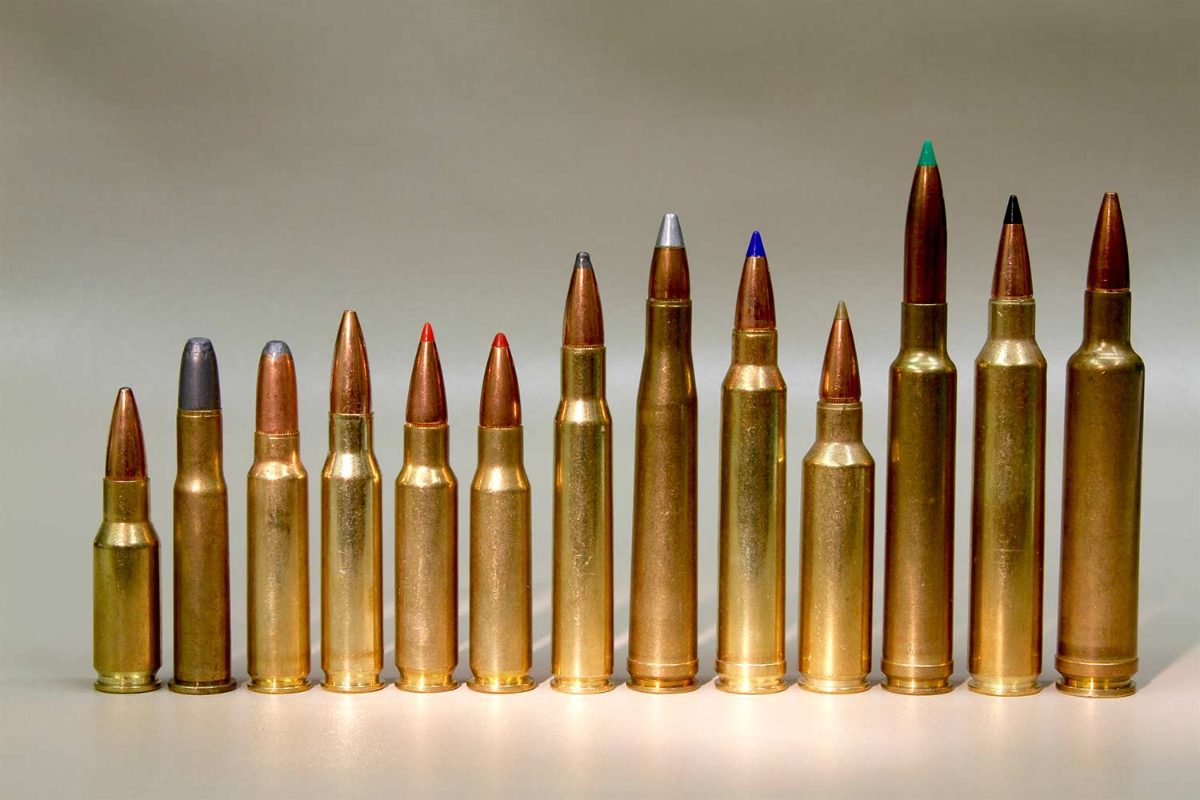
It is a week before deer season, and you are choosing ammunition for your rifle's caliber. The boxes say FMJ, soft point, polymer-tipped, bonded, BTHP and ELD-X. They all fit your rifle, but they won't all behave the same way when they reach the animal or the target. Is a plain soft point all you need, or is a premium bonded bullet worth the price? Knowing the names isn't the same as understanding them.
By the end you will be able to look at a box, think about the rifle, the target and the conditions, and predict how that bullet will behave, then choose among full metal jacket, soft point, hollow point, tipped, ballistic tip and bonded bullets for hunting, target shooting or long-range precision.
Four trade-offs that every rifle bullet makes
Every bullet balances four ideas, and no bullet maximizes all of them at once.
- Accuracy in flight. How well the bullet resists wind and holds a flat trajectory.
- Expansion. How much the bullet mushrooms or fragments in tissue.
- Penetration. How deep it goes before stopping.
- Weight retention. How much mass it keeps instead of breaking apart.
Four design drivers decide where a bullet lands among those trade-offs. Construction is the first, and it covers FMJ, soft point, bonded, monolithic copper and more. Shape and ballistic coefficient (BC) is the second, and pointy, boat-tail designs usually fly flatter and drift less in the wind. Sectional density (SD) is the third, which is bullet weight relative to its diameter, and higher SD tends to mean better penetration on game. The fourth is impact velocity, because the same bullet can behave very differently at 50 yards and at 400 yards. We will keep coming back to these four, so this becomes a framework you can use and not a vocabulary list.
Here is a simple picture. A nail goes straight through a board and is still a nail afterward. A pat of soft butter pressed against a wall flattens out and stops. Bullets live somewhere between those two extremes, and construction tells you where.
Key idea: A bullet is designed for a job, and its name tells you the job. Match the construction to what the bullet has to do on arrival, then match the shape and weight to how far it has to travel.
Full metal jacket: Built to keep its shape
A full metal jacket (FMJ) bullet has a lead core encased in a hard metal jacket, usually copper. It is designed for deep penetration and tends to keep its shape without expanding on impact. Think of the nail. FMJ passes through targets easily, which is exactly what you want when punching clean holes in paper or steel (within safe velocity limits for steel). It is also often more affordable than expanding bullets, so it is great for zeroing, drills and high-volume range work.
The same behavior becomes a problem when the bullet has to work on an animal. FMJs do not expand, which reduces their effectiveness in hunting situations, and over-penetration, where the bullet passes through and strikes something unintended, is a concern in hunting and home-defense settings. Picture a deer hit with an FMJ. You might punch a narrow hole through the animal, get a poor blood trail, and face a long tracking job or lost game. That is ineffective, in many places illegal, and certainly unethical. Many states restrict or prohibit FMJ for big-game hunting because of poor terminal performance and the ethical concern of wounding instead of killing cleanly. Always check your local regulations, and see The Legalities of Hunting in Iowa and Neighboring States as a starting point. For personal defense, FMJ is rarely the best answer, and expanding bullets are generally preferred where legal.
If the target is paper or steel, FMJ makes sense. If the target is alive, choose a bullet designed to expand.
Soft point: The classic deer bullet
A soft point (SP) bullet has a soft lead tip exposed at the nose. That exposed lead deforms and spreads on impact, which gives controlled expansion and more tissue damage than an FMJ. The key difference from a hollow point is that an SP retains more mass as it expands, so it penetrates deeper than many hollow points. That balance makes it effective on medium and some large game, such as deer or elk.
What they give up is speed. SP bullets don't always offer the ultra-fast energy dump of specialized hollow points or ballistic tips, which can be a drawback on small game or when instant shock is the priority.
Think of a hunter in brushy woods, taking shots from 50 to 200 yards. An SP handles moderate angles and bone better than a fragile varmint bullet, and it is very forgiving at the moderate velocities of typical .243, .270, .308 and .30-06 hunting loads. If you are unsure where to start for whitetail deer at moderate ranges, a quality SP is almost never a bad choice.
Hollow point: Built to open fast
A hollow point (HP) has a hollowed-out tip that promotes rapid expansion on impact. It transfers energy quickly and creates a large wound channel. That makes it effective for stopping threats or quickly taking down small game and varmints. Rapid expansion also helps keep the bullet in the target, which reduces the risk of pass-through shots in many scenarios.
What they give up is penetration. Standard HP designs may not penetrate deeply enough on larger or thick-skinned game, especially at close range, where expansion is extreme. They are best for self-defense (where legal) and for varmints, where rapid incapacitation is needed and deep penetration is not.
Common mistake: Assuming every bullet with a hollow tip is a hunting bullet. Many match bullets look like hollow points (HPBT or OTM), but the cavity is often a manufacturing feature, not a dedicated expansion cavity. These "open tip match" bullets are designed for accuracy, not predictable expansion on game. A true hunting HP or an ELD-X-type design is very different from a pure match HP.
Tipped and ballistic tip bullets: Flying flat and opening on cue
Tipped bullets
A tipped bullet has a polymer tip that sharpens the nose and helps start expansion. It blends sleek aerodynamics with the expansion of a hollow point. The polymer tip and streamlined profile increase ballistic coefficient, which reduces wind drift and drop at longer ranges. On impact, the tip is driven back into the core, starting rapid expansion and strong energy transfer.
The cost is a risk of over-expansion at close range. At very high impact velocities, which are common with close shots from fast calibers, some tipped bullets can expand violently and not penetrate as deeply as needed on bigger animals. That makes the matching of bullet to animal important.
- Varmints such as coyotes and prairie dogs. Light, thin-jacketed tipped bullets like the V-Max are designed to fragment rapidly, which is great for quick kills and minimal ricochet risk on small targets.
- Big game such as elk and larger deer. Choose tipped bullets built on hunting platforms, such as ELD-X, Trophy Bonded Tip or Terminal Ascent, and not fragile varmint designs.
Tipped bullets suit long-range precision and hunting scenarios that need both accuracy and rapid expansion, such as deer, antelope and varmints. The varmint list matters most here, because choosing a varmint bullet for an elk is the surest way to misuse this category.
Ballistic tip bullets
A ballistic tip bullet is a specific kind of tipped hollow point, engineered for aerodynamics and controlled expansion. A polymer tip sits over a cavity to improve BC and protect the nose. Sleek boat-tail shapes and polymer tips resist drag and wind, which makes these bullets excellent for long-range accuracy. When the tip drives into the cavity, expansion starts. Better hunting designs tune the jacket thickness so the bullet does not simply erupt on impact. The potential drawback is over-expansion at high velocities and close ranges, where some designs expand too quickly and fail to reach the far side of larger animals.
These bullets are ideal for long-range hunting and precision shooting, especially in open country where shots may be 300 or more yards and you need a flat trajectory plus reliable terminal performance. Compare a ballistic tip with a traditional soft point in the same caliber and weight. The ballistic tip may shoot flatter and expand more dramatically at distance. If you often shoot beyond about 250 to 300 yards, a ballistic tip or ELD-style bullet often gives you a more forgiving trajectory and better performance in wind. Our article on Federal ELD-X ammunition looks at one of the best-known designs.
Bonded bullets: Built to hold together
A bonded bullet has a lead core chemically or mechanically bonded to the jacket. That bond reduces the risk of jacket separation and promotes deep penetration with high weight retention. Bonded bullets keep their mass after expanding, so they drive deeply even through bone and heavy muscle. They are also less likely to fragment, which makes them ideal for big game and quartering-angle shots, where the animal is turned and the bullet has to travel through more and tougher tissue. The downside is cost, because more complex manufacturing usually makes them more expensive than standard cup-and-core bullets.
Bonded bullets are ideal for elk, moose, bear and large hogs, where deep penetration and structural integrity are critical. They are worth the money in two situations. The first is heavier animals or steep angles, such as shots that might go through shoulder bones or have to reach the vitals from behind the last rib. The second is the "one load for everything" hunter, who might meet both deer and larger animals on the same trip.
Good practice: If you might see more than one kind of animal on a trip, a bonded bullet gives you margin for error. Choose it to protect against the shot you hope you never have to take, not just the one you expect.
Product lines by bullet type
| Bullet type | Line | What to know |
|---|---|---|
| FMJ | Federal American Eagle .223 Remington / .308 Winchester | Reliable and affordable FMJ rounds, excellent for range practice in popular rifle calibers |
| FMJ | Winchester White Box FMJ | A staple for rifle target shooters, with consistent performance in 5.56 NATO and .308 Winchester |
| FMJ | PMC Bronze .223 Remington | Budget-friendly FMJ option with solid accuracy and reliability for high-volume shooters |
| Soft point | Federal Power-Shok Soft Point | A reliable and affordable hunting round with traditional cup-and-core performance, which has taken a huge number of deer and other game |
| Soft point | Hornady InterLock® SP | The InterLock ring mechanically locks the core and jacket together for excellent weight retention and controlled expansion |
| Tipped | Hornady V-Max | Known for incredible accuracy and explosive expansion, ideal for varmint hunting and longer shots where pelt damage is not a concern |
| Tipped | Federal Trophy Bonded Tip | A bonded core with a polymer tip for deep penetration and reliable expansion on big game, including tougher animals |
| Hollow point | Hornady ELD-X® | Technically a tipped hollow point. A Heat Shield tip and a sophisticated cavity and jacket design give controlled expansion at a wide range of impact velocities, excellent for long-range precision hunting |
| Hollow point | Federal HST | Primarily famous as a handgun self-defense bullet. Rifle offerings bring similar controlled-expansion principles to defensive applications |
| Ballistic tip | Hornady Precision Hunter (ELD-X®) | Pairs match-grade aerodynamics with hunting-grade expansion and is engineered to expand consistently from close to extended ranges |
| Ballistic tip | Nosler Ballistic Tip | A long-time standard for deer-size game, with excellent accuracy and energetic expansion on medium game |
| Bonded | Federal Fusion | An electro-chemically bonded jacket and core for uniform expansion and great weight retention, at a price point often lower than other premium bonded bullets |
| Bonded | Hornady InterBond® | Hornady's bonded design, delivering excellent terminal performance on large game with high weight retention |
Read this table by bullet type, not by brand. Hornady, for example, shows up under soft point, tipped, hollow point, ballistic tip and bonded, which tells you the brand name does not predict what a bullet does. Construction does. The ELD-X appears twice because it fits two descriptions, a tipped hollow point on its own and the bullet inside the Precision Hunter line.
Bullet weight in practice: Examples in 5.56mm, .350 Legend and .450 Bushmaster
Weight, measured in grains, significantly affects trajectory, penetration, recoil and how the bullet behaves on impact. The best choice depends on your use case, whether that is target shooting, hunting or long-range precision. For the full explanation of how those trade-offs work, see Understanding Bullet Weight in Rifle Rounds. The table below shows three weight classes in three popular cartridges.
| Weight class | Strengths | Trade-offs | Example bullets |
|---|---|---|---|
| Lightweight (about 40 to 55 grains in 5.56/.223) | High velocity and flat trajectory, reduced recoil and quick follow-up shots, excellent for small game and varmints with appropriate bullet construction | Less retained energy at longer ranges, reduced penetration on larger animals | Federal American Eagle 55-grain FMJ, affordable, reliable and perfect for range practice. Hornady Varmint Express 55-grain, a tipped varmint bullet combining high velocity with explosive terminal performance on small game. |
| Midweight (about 55 to 77 grains in 5.56/.223) | Good balance of speed, wind resistance and terminal performance, versatile for target shooting and smaller-to-medium game with proper bullet design | Slightly more recoil than lighter bullets, though still mild in 5.56 | Federal Gold Medal Sierra MatchKing 77-grain, a classic match load with outstanding consistency and precision. Hornady Frontier 68-grain BTHP, versatile for precision target use and small-to-medium game where local regulations and bullet construction allow. |
| Heavyweight (about 180 to 250+ grains in straight-wall hunting calibers) | Maximum energy transfer and deep penetration, larger wound channels and better momentum at typical hunting distances | Increased recoil, more pronounced drop at longer ranges, requires good range estimation and dope (your recorded drop and wind data) | Federal Non-Typical 180-grain SP (.350 Legend), great penetration and controlled expansion for deer at moderate ranges. Hornady Custom 250-grain FTX (.450 Bushmaster), a flex-tip design that allows safe use in certain magazine types, with controlled expansion and powerful energy transfer on deer and larger game. |
Here is how to use the table. Lightweights in the 40 to 55 grain range are common for high-volume target shooting and are typically effective to about 300 yards for most recreational shooters. To stretch a 5.56 beyond about 300 yards, heavier 69 to 77 grain bullets typically give better stability and reduced wind drift, especially from faster twist barrels (1:7 or 1:8). The heavyweights are for deer, hogs and larger game from cartridges like the .350 Legend and .450 Bushmaster, which are usually loaded with 150 to 250+ grain bullets and are designed for the shorter-range, hard-hitting shots common in thick cover or straight-wall-only zones. If you want to compare those two cartridges and the .400 Legend, see Ballistics Comparison of .350 Legend, .400 Legend and .450 Bushmaster.
Ballistic coefficient, sectional density and twist rate: Three numbers that tie it together
Ballistic coefficient (BC) measures how efficiently a bullet flies through the air, and a higher BC resists drag and wind better. That means a flatter trajectory and less wind drift, especially past about 300 yards. Match and long-range hunting bullets such as the ELD-X, ELD Match and many boat-tail tipped bullets are designed for high BC.
Sectional density (SD) is bullet weight relative to diameter. Picture a long, thin javelin and a big, light beach ball. The javelin concentrates its weight in a narrow front and drives forward, and the beach ball does not. For a given caliber, a heavier bullet usually has higher SD and penetrates better, which matters on larger animals.
Barrel twist rate is how quickly the rifling spins the bullet, written as a ratio such as 1:7 or 1:10. Longer, heavier bullets need a faster twist to stabilize fully, and if your twist is too slow for the bullet's length, accuracy suffers. Many AR-15s with a 1:7 or 1:8 twist stabilize 69 to 77 grain bullets well, which makes them viable for longer-range shooting. A .223 with a slower 1:12 twist may prefer lighter bullets of 40 to 55 grains. Our guide to barrel twist rate shows how to find and read yours.
How to choose your bullet
Begin by asking what exactly you are trying to do. This table starts you in the right neighborhood.
| Your job | Bullet types to look at |
|---|---|
| Punching paper or ringing steel at the range | FMJ or match bullets |
| Varmints or predators | Tipped varmint bullets or HPs designed for rapid expansion |
| Whitetail-sized game at moderate range | Soft points, quality tipped hunting bullets or basic bonded bullets |
| Larger game (elk, bear, big hogs) or tough angles | Bonded or heavy premium hunting bullets such as Trophy Bonded Tip, InterBond, Fusion or ELD-X |
Once you know the job, adjust for the animal and the distance. For close-range, heavy-boned animals, lean toward bonded or tougher cup-and-core bullets. For longer-range hunting at 300 or more yards, favor high-BC tipped hunting bullets like the ELD-X or similar. For small, thin-skinned animals, varmint bullets that expand rapidly reduce ricochet risk and provide quick, humane kills. If clean, humane kills are the standard you hold yourself to, our article on hunting ethics explains why this matching matters.
Then choose a weight for your rifle and range. Check your barrel twist first. Don't fight physics. Pick bullet weights that are widely reported to stabilize well in your twist. For most 5.56/.223 rifles, 40 to 55 grain bullets suit practice or varmints up to about 300 yards, and 69 to 77 grain match or hunting bullets suit shots beyond about 300 yards or in more wind. For .350 Legend and .450 Bushmaster, stick with the heavyweight hunting bullets those cartridges were designed around, especially for deer and hogs.
Confirming your choice at the range
Before you trust a bullet on game or in a match, write down what you expect from it based on its construction, weight and intended job. Then, with eye and ear protection on and the muzzle downrange, zero your rifle from a steady rest with the exact load you plan to use, and shoot it at several distances to learn its drop and wind drift. Notes on temperature, distance and holdover turn that session into knowledge. You have chosen well when the bullet lands where you predicted at a distance you haven't shot yet, and it does what you expected on the target.
Putting it together
A quality soft point is still an excellent deer bullet at moderate range, and bonded or tipped bullets earn their price on bigger game, longer shots or poor angles. Match the construction to the animal, the shape to the distance and the weight to your twist, use expanding bullets for game where the law requires them, and confirm the load groups and lands where you aim before the season.
Check your understanding
Try answering these before you open the answer. If you can decide what to do and explain why, you have it.
1. A friend wants to hunt deer with FMJ bullets because they penetrate deeply. What is wrong with that plan?
FMJ bullets do not expand, so they may punch a narrow hole through the animal, leave a poor blood trail and risk lost game. That is ineffective, unethical and, in many places, illegal. Many states restrict or prohibit FMJ for big-game hunting, so always check local regulations.
2. A friend has a box of BTHP match bullets that look like hollow points, and he plans to use them on deer. What would you tell him?
The open tip on a match bullet is usually a manufacturing feature, not an expansion cavity. Match bullets are built for accuracy, not for predictable expansion on game, so he should choose a bullet designed for hunting.
3. You hunt open country where shots may be 300 or more yards. Why consider a ballistic tip or ELD-style bullet over a traditional soft point?
Their higher ballistic coefficient gives a flatter trajectory and less wind drift, and they are designed for reliable expansion at distance.
4. Why might a hunter who could meet both deer and elk on one trip choose a bonded bullet?
Bonded bullets keep their weight after expanding and are less likely to fragment, so they drive deeply through bone and heavy muscle. That gives a margin for error on larger animals or steep angles.
5. Your AR-15 has a 1:12 twist, and 77-grain match bullets group poorly. What is the likely reason?
Longer, heavier bullets need a faster twist to stabilize. A slower twist may do better with lighter bullets of 40 to 55 grains.
Where to go next
To see how shape changes what the bullet does in flight, read Understanding Bullet Shapes for Rifle Rounds. For a view of how all of these choices show up as group size on paper, try How Ammunition Affects Your Accuracy. If bonded bullets caught your eye, Federal Fusion Ammunition is the natural deep dive. And if the heavyweight straight-wall bullets are what you need, our guide to .350 Legend ammunition compares Hornady and Federal offerings.
If this article helped you, we invite you to sign up for email notifications of new blog articles.