
Range Ammo: Maximizing Your Range Time with Affordable, Reliable Ammunition
Joseph McLain Nov 07, 2026
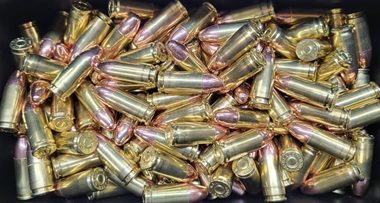
You have a free Saturday and a pistol that deserves five hundred rounds of practice. A premium box costs enough that you will ration every shot, while a bulk pack lets you shoot all morning. Is practice ammunition all the same, or should you train with exactly what you carry? Which is the smarter buy depends entirely on what you are trying to do.
By the end you should know what range ammunition is and what it isn't, how seven of the most common lines compare, and how to choose the one that fits your firearm and your budget.
Why your practice ammunition should not be your best ammunition
Skills come from repetition, and repetition costs money. Premium defensive or match ammunition can be cost-prohibitive for shooters who practice often or attend high-round-count courses and competitions, so a different category exists. Range ammo is ammunition designed for high-volume practice and training. It is made up of budget-friendly cartridges that meet basic reliability and moderate accuracy needs without the advanced ballistic features of higher-tier loads. Think of the scuffed basketball a player keeps for the driveway. You shoot a thousand shots with it so the game ball only comes out when the game does.
Three practical traits define the category. It costs less per round, which turns directly into more trigger time without a heavy financial burden. Most of it uses reloadable brass cases, which lowers long-term costs for reloaders, the shooters who reuse spent cases to build new ammunition. And it is easy to find, sold in large quantities or bulk packs at big-box retailers, sporting goods stores and online.
Inside the box, range ammo typically uses standard pressure loads with full metal jacket (FMJ) or simple jacketed hollow point (JHP) bullets. An FMJ is a lead core wrapped in a metal jacket and is not designed to expand, while a JHP has a hollow nose that is meant to open up. These bullets are engineered to be reliable and serviceable, with accuracy suited to training. How tightly any of them groups depends on your firearm as much as the ammunition, so measure it in yours rather than trusting a single number. Rifle groups are usually described in MOA, or minute of angle, and a rough rule is that 1 MOA is about 1 inch at 100 yards. Our article on understanding MOA explains the idea in more detail.
Is that accurate enough? For practicing fundamentals, yes. When you are still working on your grip, sight picture and trigger press, the shooter is usually a bigger source of group size than this ammunition is, which is why range ammo is perfect for fundamentals even though it lacks the terminal performance of premium self-defense or match rounds. Reliable feeding and extraction plus moderate accuracy make it well suited to practice drills and local competitions.
What range ammo gives you and what it does not
Every line in this guide shares the same basic recipe. All offer reloadable brass cases, all use basic FMJ or simple JHP bullets, and all deliver practice-grade accuracy. None incorporates advanced defensive features such as bonded cores or specialized expansion technologies. That is not a flaw, because those features add cost, and you do not need them to learn to press a trigger.
Seasoned shooters report three things worth knowing. Most lines show near 100 percent functionality in well-maintained firearms, which is why they are reliable for high-volume use. There is some velocity variation from round to round. That variation is more than acceptable for casual target practice and skill-building, but it is the reason these rounds are not intended for serious long-range precision competition, since bullets leaving at slightly different speeds land at slightly different heights downrange. Our article on how ammunition affects your accuracy shows exactly how that works. Finally, cleanliness is about average for budget lines, so regular cleaning after extended shooting sessions is recommended to keep your firearm running well.
Key idea: Range ammo is a tool for building skill at a price that lets you do it often. Use it for what it does well, and step up to different ammunition when the job changes to defense, hunting or precision work.
The seven main range ammo lines side by side
A few abbreviations first. HP is hollow point, BTHP is boat-tail hollow point, SP is soft point, and XM193 is a 5.56 mil-spec load. Every line in the table is budget-friendly with reloadable brass, so the columns below show what actually differs.
| Brand | Typical bullet types | Accuracy (general) | Reputation |
|---|---|---|---|
| Remington UMC | FMJ, some JHP | Practice-grade for pistols and rifles | Long heritage, consistent volume production |
| Blazer Brass | FMJ, some JHP, reliable and affordable | Practice-grade for pistols and rifles | CCI brand reputation, good reliability |
| Federal American Eagle | FMJ, occasional JHP and XM193 (5.56), versatile range ammo | Practice-grade for pistols and rifles | Highly available, trusted by many shooters |
| Hornady Frontier | FMJ, BTHP (especially 5.56), some SP, designed with a focus on 5.56 loads | Practice-grade, built mainly for AR rifles | Strong synergy with Lake City brass, mil-spec focus |
| Winchester White Box | FMJ, basic JHP, a staple for training | Practice-grade for pistols and rifles | Widely recognized, big-box staple |
| Fiocchi Range Dynamics | FMJ, some HP, consistent for standard calibers | Practice-grade for pistols and rifles | Italian brand that also makes ammunition in the U.S., known for consistency |
| PMC Bronze | FMJ, some JHP, SP, reliable and cost-competitive | Practice-grade for pistols and rifles | South Korean brand, widely used in volume training |
Notice how little the accuracy column separates these lines. Hornady Frontier stands apart because it is built around 5.56 for AR rifles. The real differences are the bullet menu and the reputation. American Eagle is the only line listing XM193, and some lines include minor hollow-point loads for defensive practice or small-game use, although none is engineered for advanced defensive performance. If two lines look equal on paper, which they usually will, your own experience in your own firearm becomes the tiebreaker.
In depth: What each line is known for
Remington UMC
Remington UMC is made in the U.S. with a long tradition, and UMC stands for Union Metallic Cartridge, a name dating back to the 1800s. It is primarily FMJ with some basic JHP offerings, and it is adequate for everyday range drills. Its reloadable brass makes it popular among reloaders, and it is easily found in bulk packaging in popular calibers such as 9mm, .40 S&W, .45 ACP and .223 Rem.
Blazer Brass
Blazer Brass is owned by CCI, which is based in Lewiston, Idaho. The Blazer name is better known for aluminum cases, so the detail to notice is that Blazer Brass uses quality boxer-primed brass, the common reloadable style. It generally shows minimal malfunctions and consistent primer ignition, which makes it a good match for standard training or competition at the local and regional level.
Federal American Eagle
Federal American Eagle is Federal's mainstream range line, popular for its consistency and wide availability. It offers FMJ rounds, occasional JHP and XM193 mil-spec loads for 5.56. It benefits from Federal's vast distribution network and consistent manufacturing standards, so it is a reliable choice if you prefer the familiarity and trust of the Federal brand.
Hornady Frontier
Hornady Frontier combines Hornady's bullet designs with the production techniques of the Lake City Army Ammunition Plant. It is aimed primarily at 5.56mm loads, including M193, M855 and some BTHP variants. That makes it a budget-friendly option for AR-15 shooters who want mil-spec performance. It is not as specialized as Hornady's premium lines such as Black or Match, but it is excellent for standard practice. Its availability and load list have varied over the years, so check what is currently offered.
Winchester White Box
Winchester White Box comes in the classic white box that is a staple at big-box retailers. It covers major pistol and rifle calibers, including .223, 5.56 and .308 Win, and it is typically among the cheapest U.S.-made range ammo options. It is basic yet reliable. As with any high-volume line, you will hear occasional stories of an odd lot, so keep an eye on how each box behaves in your gun.
Fiocchi Range Dynamics
Fiocchi Range Dynamics carries an Italian heritage, and Fiocchi also runs a U.S. plant in Ozark, Missouri; check the box if country of origin matters to you. It offers FMJ and some hollow-point loads across standard pistol and rifle calibers. It is known for consistent performance, particularly in 9mm and .223 Remington, which makes it a solid competitor in the range ammo market.
PMC Bronze
PMC Bronze is a South Korean brand that is widely imported and distributed in the U.S. It uses reloadable brass with boxer primers and is known for cost-competitiveness and reliable performance. Shooters generally find it accurate enough for practice in both rifles and pistols, and many AR owners favor it for high-volume training.
How to choose: Four questions that matter
- Caliber and bullet fit. Your firearm may require a specific caliber, such as 5.56 versus .223. If you want occasional defensive practice, look for lines that include a basic JHP load.
- Experience in your firearm. Some shooters prefer a brand because of past performance or reliability, so consider what has already worked well in your gun.
- Reloading goals. These lines are generally reloadable, but some, such as 5.56 mil-spec loads, may have issues like primer crimps. Decide whether you are comfortable with minor adjustments during reloading.
- Price and availability. Sales, local availability and bulk packaging all affect the final cost. Some lines, such as Winchester and American Eagle, are often sold in 100 to 200 round packs, while others may come in smaller boxes.
The first two decide whether the ammunition is right for your gun, and price only decides among the loads that pass. A cheap box that jams is expensive per good round. The caliber question matters most, because 5.56 and .223 are not entirely interchangeable, so check the markings on your barrel and your owner's manual, and read 5.56 NATO and .223 Remington before you mix them. As for primer crimps, many military-style cases have the primer crimped in place, which takes an extra step to remove before a new primer will seat.
Finding your default practice load
A same-day comparison of two or three lines picks your default better than any review. Buy a small box of each that comes in your caliber, and at the range, with eye and ear protection on and the muzzle downrange, shoot the same number of rounds of each in one session so the comparison is fair. Note any failure to feed, extract or fire, and measure the groups, at 25 yards for a pistol or 100 yards for a rifle, where 1 MOA is about 1 inch. The price of each box divided by its round count gives the cost per round. The line that ran without trouble, grouped acceptably and costs least per round is your default, and a thorough cleaning after a long session keeps the firearm running well.
Common mistake: Treating range ammo as an all-purpose load. None of these lines is engineered for advanced defensive performance, and their velocity variation makes them a poor fit for serious long-range precision. Let them do the job they are built for, and choose differently when the job changes.
Putting it together
For building fundamentals, practice ammo really is practice ammo: Any reliable line in your caliber will do, and the cheaper it is, the more you can shoot. But your carry or hunting load should still go through your gun often enough that you know it feeds and where it hits. Use range ammo for volume, test your serious load regularly, and let your own two- or three-box comparison pick your default line.
Check your understanding
Try answering these before you open the answer. If you can decide what to do and explain why, you have it.
1. You can afford either 100 rounds of premium defensive ammunition or 500 rounds of range ammo for practice this month. Which builds more skill, and why?
The 500 rounds of range ammo. Grip, sight picture and trigger press are built through repetition, and a lower cost per round means more trigger time. Save the premium load for confirming that it runs in your gun.
2. A friend says his pistol groups with range ammo are bigger than with premium loads, so range ammo is junk. How would you respond?
Range ammo is built for practice, not match precision, and it is more than good enough for practicing fundamentals. For the shooter still building skills, the shooter is usually a bigger source of group size than the ammunition is. A same-day comparison from a rest would show how much of the difference is really the ammunition.
3. You shoot an AR-15 and the shelf has both .223 and 5.56 boxes. What should you do before buying?
Remember that the two are not entirely interchangeable. Confirm what your rifle is chambered for from its barrel markings and owner's manual, and choose the matching ammunition.
4. You want occasional defensive practice with inexpensive ammunition. What can range ammo do for you, and what can it not do?
Look for lines that include a basic JHP load, which lets you practice with a bullet shape closer to a defensive one. None of these lines is engineered for advanced defensive performance, so it is practice ammunition and not a substitute for premium defensive loads.
5. You reload your own ammunition. What should you consider before choosing a 5.56 mil-spec load?
Some of these loads may have issues such as primer crimps. Decide whether you are comfortable making minor adjustments during reloading.
Where to go next
For a head-to-head look at five of these lines, read Mastering Range Ammo. To see where range ammo sits on the ladder from cheap to match grade, and when it makes sense to step up, try Ammunition Quality. Because none of these loads is built for defense, Selecting the Right Personal / Home Defense Ammunition is the right next stop if protecting your home is on your mind. And to turn all that extra trigger time into real improvement, see How to Master Pistol Shooting Fundamentals.
If this article helped you, we invite you to sign up for email notifications of new blog articles.