
Federal Punch vs. Hornady American Gunner: A Comprehensive Comparison
Joseph McLain Nov 07, 2026
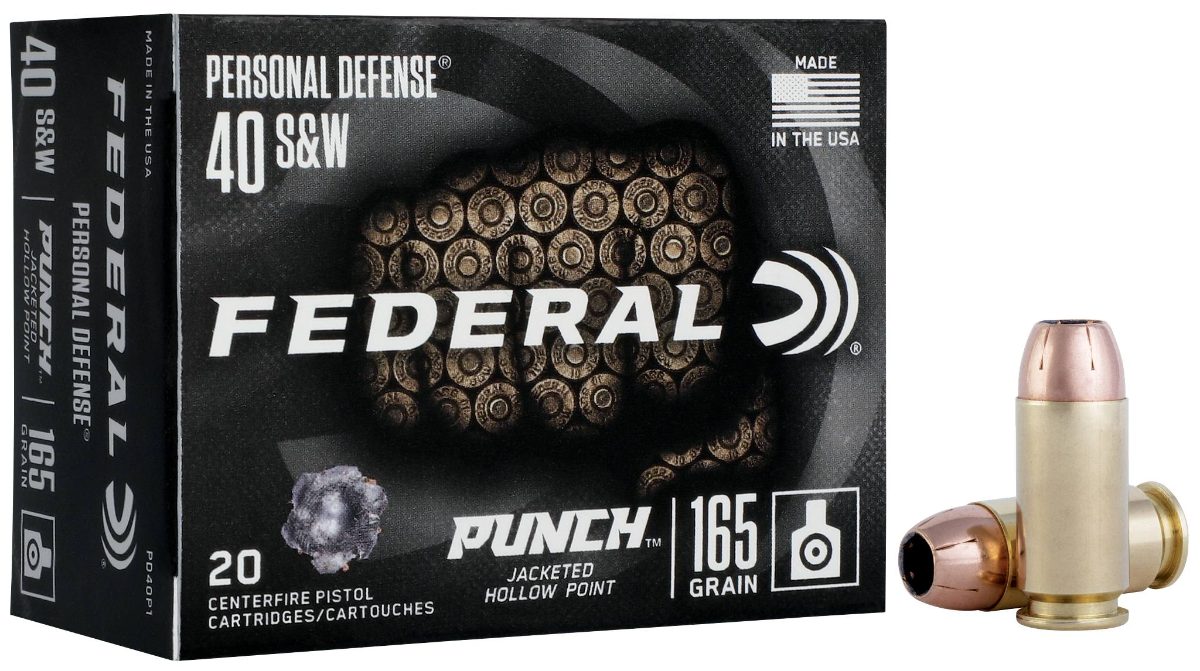
You want real defensive ammunition for your 9mm without paying top-shelf prices, and two boxes keep coming up: Federal Punch and Hornady American Gunner. Both are hollow points, both cost less than Federal HST or Speer Gold Dot, and American Gunner says it's good for practice too. Should you pick the one that expands most, or the one that penetrates deepest?
The two were built with different goals, and that decides which belongs in your pistol. By the end you should be able to pick between them for carry or home defense, know when a premium load is worth the extra money, and know how to prove the one you choose.
The short answer
For carry or home defense in a 9mm, choose Federal Punch 124-grain. It was designed for one job, defense, and in independent tests it reaches proper depth through heavy clothing while opening wider than American Gunner's bullet. Hornady American Gunner is a reasonable defensive load, especially in revolver calibers, but its "one box for practice and carry" idea is less useful than it sounds. And if your budget allows, Federal HST or Speer Gold Dot is a step up from both.
What a defensive bullet has to do
A defensive hollow point has two jobs. It has to go deep enough to reach the heart, lungs and major blood vessels from a bad angle, through clothing and perhaps an arm, and it should open, or expand, so it makes a wider wound. The test most makers and testers follow, from the FBI, calls for 12 to 18 inches in ballistic gelatin, a stand-in for muscle. Less than 12, and the bullet may stop short. Much more than 18, and it is more likely to pass through and keep going toward whatever is behind the person.
The two jobs pull against each other. A bullet that opens wide slows down faster and stops sooner. A bullet that stays narrow goes deeper but makes a smaller hole. Every defensive bullet is a different balance between the two, and Punch and American Gunner strike that balance differently.
Key idea: A good defensive bullet reaches 12 to 18 inches and opens as wide as it can while still getting there. Neither the widest nor the deepest bullet wins on its own.
How the two bullets differ
Federal Punch came out in 2020 as a line designed from the start for private citizens rather than police. Its hollow point is built to open reliably after passing through heavy clothing at close range, the realistic case for someone defending themselves. It isn't overbuilt to pass through auto glass and steel, which police loads must, and that's part of why it costs less. In independent tests the 9mm 124-grain load has opened to about 0.60 inch, roughly one and two-thirds times its original width, and gone from about 15 to 20 inches deep through heavy clothing, depending on the test.
Hornady American Gunner uses the XTP, a hollow point Hornady designed decades ago as an all-around hunting and defense bullet. It opens more modestly and holds its weight, so it tends to go deep, often past 16 inches in 9mm. That's adequate depth, but a narrower wound than a bullet built purely for defense. In 9mm it comes in 115-grain standard pressure and 124-grain +P, which is loaded to higher pressure.
So the difference is this: both go deep enough, and Punch makes the wider wound getting there. For defense against a person, that's the better balance.
- If you carry a 9mm for personal protection, choose Punch 124-grain, because it was built for exactly that and opens wider at proper depth.
- If you want a hollow point for a .357 Magnum or .38 Special revolver, American Gunner's XTP is a solid choice; its tendency to go deep is useful from the faster .357.
- If your pistol isn't rated for +P, don't use the American Gunner 124-grain +P; choose Punch or the standard-pressure American Gunner 115.
If you're not sure, buy Punch 124-grain and prove it in your pistol.
Is "one load for practice and carry" worth it?
American Gunner is often sold on the idea that you practice with what you carry. There's real value in that: you learn exactly how your carry load recoils and where it hits. The catch is price. Hollow points cost far more per round than full metal jacket practice ammunition, so very few people can afford to do all their practice with them.
You get the same benefit more cheaply another way. Do most of your practice with full metal jacket of the same bullet weight as your carry load, which recoils and hits about the same, and shoot enough of the carry load itself to know it runs in your pistol. That makes the dedicated defensive load, Punch, the better choice even for someone who values practicing with what they carry.
Common mistake: Choosing a defensive load from photos of expanded bullets. The widest mushroom in a picture can come from a bullet that stopped at 9 inches. Ask how deep it went before you ask how wide it got.
When to spend more
Federal HST and Speer Gold Dot cost more for good reasons. They were built to the FBI's full test, which adds wallboard, plywood, sheet steel and auto glass to heavy clothing, and they have long records with police agencies. Gold Dot's jacket is bonded to its core, so it holds together through barriers. For most private citizens, heavy clothing is the realistic barrier, and Punch handles that. If you want the most margin, or you might need to shoot through a car door or windshield, step up to HST or Gold Dot.
Your pistol makes the final call
A load that doesn't feed reliably in your gun is useless, whatever it does in gelatin. Before you trust one, fire at least 50 rounds through the pistol you'll carry, using every magazine you'll carry, loaded full. With eye and ear protection on, shoot some slowly at 7 yards to see where they hit compared with your sights. One malfunction can be the gun or your grip; clean it and try again. A second with the same load means try another. Our guide to testing and rotating carry ammunition covers this in more detail.
Check your understanding
Try answering these before you open the answer. If you can decide what to do and explain why, you have it.
1. You carry a Glock 19 in town, often under a winter coat. Punch or American Gunner?
Punch 124-grain. It was designed to open after passing through heavy clothing, and it reaches proper depth while opening wider than the XTP. Prove it with 50 rounds in your Glock before you carry it.
2. Your older compact 9mm's manual says not to use +P. A friend hands you a box of American Gunner 124-grain. Can you carry it?
No. That load is +P, loaded to higher pressure than your pistol is rated for. Use Punch 124-grain or American Gunner 115-grain, both standard pressure.
3. A coworker plans to buy a case of American Gunner and use it for all his practice so he's "training with his carry load." What would you suggest?
It's an expensive way to get a benefit he can get cheaply. Practice mostly with full metal jacket of the same weight, which recoils and hits about the same, and shoot enough of the carry load to know it runs. Carry the dedicated defensive load, Punch.
4. You keep a .357 Magnum revolver for home defense. Does the same reasoning point to Punch?
Not necessarily. Punch doesn't come in .357 Magnum, and American Gunner's 125-grain XTP is a sound choice there. The test is the same either way: a bullet that reaches proper depth and opens, proven in your own gun.
5. A new budget defensive load claims "massive expansion" but gives no penetration number. How do you judge it?
Find an independent gel test through heavy clothing from a barrel about as short as yours. If it doesn't reliably reach about 12 inches, the expansion doesn't matter. If it does, compare it with Punch on the same basis, then prove it in your pistol.
Where to go next
You can find Federal Punch and Hornady American Gunner ammunition on our website, and anything listed there can be ordered if it isn't in stock.
To see how Federal's whole 9mm lineup fits together, read Federal's 9mm lineup. For the premium loads mentioned here, see Hydra-Shok and HST and Speer Gold Dot. And to understand what gel tests can and can't tell you, read ballistic gelatin explained.
If this article helped you, we invite you to sign up for email notifications of new blog articles.