
+P Ammunition: What Plus-P Really Means and Whether Your Gun Can Handle It
Joseph McLain Nov 07, 2026
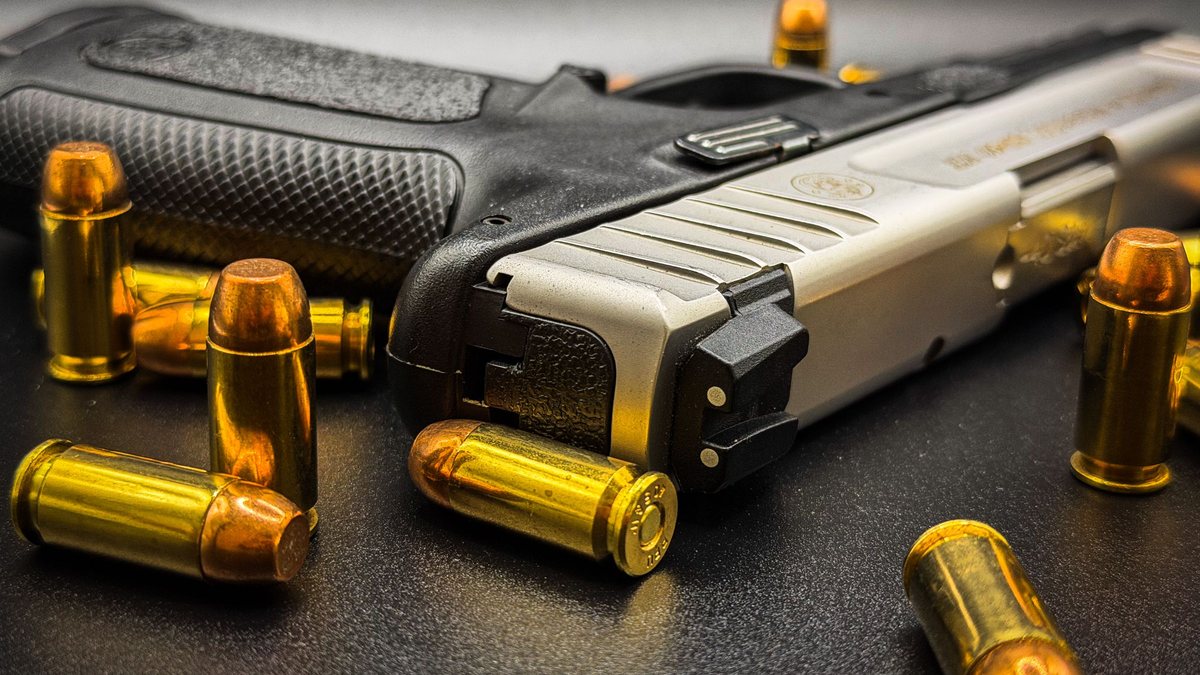
You are choosing defensive ammunition for a new pistol, and half the boxes have a small "+P" printed beside the caliber. Is it more effective, is it hard on your gun, or is it just marketing?
A little of each. +P ammunition does run at higher pressure and usually a little higher velocity. Some guns shouldn't fire it, and some wear faster when they do. And in many modern loads, the difference is smaller than the label makes it sound. What decides the question for you is what the marking actually means, what your gun was built for and how well you shoot the result.
By the end you should be able to look at your own handgun and its manual, say whether +P belongs in it, and decide whether it is worth carrying.
Pressure: The force every gun is built to hold
When a cartridge fires, burning powder makes gas, and that gas pushes the bullet down the barrel. The same gas also pushes outward on the case, the chamber and the barrel. That outward push is chamber pressure, measured in pounds per square inch (psi).
Every standard cartridge has a maximum average pressure set by SAAMI, the industry body that publishes ammunition standards in the United States. Gun makers design chambers and barrels to hold that pressure with a margin of safety, and ammunition makers load to stay under it. That shared standard is why a box of 9mm from one company works in a 9mm pistol from another.
Think of it like the weight rating on a truck's trailer hitch. The hitch is designed with a margin above its rating, but the rating is the number everyone plans around. Going over it doesn't mean instant failure. It means you are relying on margin that was meant for something else.
Ammunition and guns are designed together around a published pressure. Stay inside what your gun was designed to hold.
What "+P" actually means
"+P" stands for "plus pressure." It means the cartridge is loaded to a higher maximum average pressure than the standard load of the same caliber, under a separate SAAMI specification. For common handgun calibers such as 9mm, .38 Special and .45 ACP, that increase is roughly 10 percent. In 9mm, for example, the standard maximum is 35,000 psi, and the +P maximum is 38,500 psi.
The marking appears on the box and usually on the headstamp of the case itself, so a +P round can still be identified after it leaves the box.
Ten percent is meaningful, but it is not a different cartridge. A +P 9mm is still a 9mm. It is nowhere near the jump from .38 Special to .357 Magnum, where the magnum runs at roughly twice the pressure. Magnums are separate cartridges with longer cases, precisely so they won't fit guns that weren't built for them. +P rounds are the same size as standard rounds, so they fit every gun of that caliber, including the ones that shouldn't fire them.
Key idea: A +P round fits any gun of its caliber. The fact that it chambers tells you nothing about whether the gun was designed for it. The gun's marking or manual does.
Treat +P as a defined, somewhat stronger version of the standard load, not as a magnum and not as a meaningless label.
What "+P+" means: No published standard
Some ammunition is labeled "+P+." This is where the standards end. SAAMI publishes no specification for +P+. The label simply means the maker loaded the ammunition hotter than +P, by an amount the maker decides. Different companies' +P+ loads can differ widely.
Historically, +P+ loads were made mostly for law enforcement agencies that had worked with gun makers to approve them for specific duty pistols. For a private owner, there is no common standard to check your gun against.
Don't fire +P+ ammunition unless your gun's manufacturer specifically approves it for your model.
Can your gun handle +P?
There are three places to look, in this order. First, check the gun itself. Many handguns built for +P say so on the barrel or slide, often as "+P" after the caliber. Second, check the owner's manual. Most manufacturers state plainly whether +P is approved, and some note limits, such as recommending it for carry but not for heavy practice. Most manuals are available on the maker's website. Third, if the gun and manual don't say, contact the manufacturer with the model and serial number.
Most modern service and carry pistols from major makers are rated for +P. Older guns are where caution matters most. Some older revolvers, particularly older .38 Special revolvers and lightweight alloy-frame guns, were not built for it. Some makers rate a gun for +P but note that it increases wear, which is why "approved" and "recommended for thousands of practice rounds" aren't the same thing.
Common mistake: Assuming that because a gun is modern-looking or the caliber is common, it is +P rated. Some small, lightweight pistols and older revolvers are not. If you can't find a clear yes from the maker, treat the answer as no.
Fire +P only when the gun's marking, manual or maker clearly approves it.
What you gain, and what you give up
The gain from +P is a little more velocity. The size of that gain depends on the load and especially on barrel length. From a short-barreled carry pistol or snub-nose revolver, the increase is often modest. More velocity can help a hollow-point expand more reliably, which is the real reason defensive loads are offered in +P. Our guide to premium defensive ammunition compares the major lines.
What you give up is control. +P loads recoil harder, produce more muzzle flash and blast, and add wear. In a full-size steel pistol, many shooters barely notice. In a very light pistol or an alloy-frame revolver, +P can be sharp enough to slow follow-up shots and make practice unpleasant.
Modern standard-pressure defensive ammunition from major makers is designed to expand and penetrate well on its own. The difference between a good standard load and a good +P load is usually much smaller than the difference between a hit and a miss.
Choose +P only if you shoot it as well as the standard load, because accuracy and fast follow-up shots matter more than a few extra feet per second.
Practice ammunition and carry ammunition
Many shooters carry +P defensive ammunition and practice with standard-pressure full metal jacket rounds. That is reasonable, because it saves money and wear, but it means the gun behaves a little differently when it matters. The point of aim may shift slightly, and the recoil will feel sharper.
Fire enough of your actual carry load to know how it feels and where it hits from your gun. Our article on testing and rotating carry ammunition walks through how to confirm a carry load works in your pistol.
Practice mostly with affordable ammunition, but shoot your carry load often enough to know it.
Handloads and "hot" ammunition are not +P
You may hear someone describe a reloaded round as "basically +P." It isn't. +P is a specific standard that a manufacturer tested and labeled. A handload pushed past standard pressure has no such testing behind it, and its real pressure is unknown. Ammunition of unknown origin, such as old reloads from an estate, deserves the same caution. If you don't know what it is, don't fire it in a gun you care about or near a face you care about.
Trust the +P label only on factory ammunition from a known maker.
Putting it together
+P is a defined, higher-pressure version of a standard cartridge, about 10 percent higher in common handgun calibers. +P+ has no published standard at all. A +P round fits any gun of its caliber, so the gun's marking, manual or maker has to tell you whether it belongs. When it does, +P gives you a little more velocity at the cost of more recoil, blast and wear. Whether that is worth it depends on your gun and on how well you shoot the result. For many shooters, a good standard-pressure load they control well is the better choice.
- If your gun isn't clearly approved for +P, carry a standard-pressure defensive load such as Federal HST or Speer Gold Dot, which are built to perform without it.
- If your gun is approved and has a short barrel, a +P load designed for short barrels, such as Speer Gold Dot Short Barrel 124-grain +P, can restore the speed a short barrel takes away, as long as you shoot it well.
- If your gun is approved and full-size, standard pressure is usually all you need; choose +P only if you shoot it just as fast and accurately.
If you're not sure, carry a standard-pressure load. With eye and ear protection on, you can settle the question by firing five quick rounds of the standard and +P versions of the same load at 7 yards: if your groups and recovery are as good with +P, it's an option; if not, stay standard.
Check your understanding
Try answering these before you open the answer. If you can decide what to do and explain why, you have it.
1. A +P round slides into your old .38 Special revolver without any trouble. Does that mean it is safe to fire?
No. +P rounds are the same size as standard rounds, so they fit every gun of that caliber. Only the gun's marking, manual or maker can tell you whether it was built for +P.
2. A friend says that since his revolver handles .357 Magnum, +P .38 Special must be "nothing" for it. Is he right?
For that revolver, yes: a gun built for .357 Magnum, which runs at roughly twice the pressure of .38 Special, easily handles +P .38s. But the reasoning only works for guns built for the magnum. A revolver marked only .38 Special needs its own +P approval, because the +P round fits it whether or not it was built for the pressure.
3. A box says +P+. How do you know how much pressure it develops?
You don't, from any industry standard. SAAMI has no specification for +P+. The maker sets it, so fire it only if your gun's manufacturer approves it for that gun.
4. Your pistol is rated for +P, but you shoot the +P load noticeably slower and less accurately. Which should you carry?
Usually the standard-pressure load. A small velocity gain doesn't make up for slower, less accurate shots.
5. A friend gives you reloads he says are "hotter than +P." Should you shoot them in your carry gun?
No. Their real pressure is unknown and untested. Only factory ammunition from a known maker carries a reliable +P rating.
Where to go next
You can find Speer Gold Dot and Federal HST defensive ammunition in standard and +P on our website, and anything listed there can be ordered if it isn't in stock.
To compare the defensive loads that come in both standard and +P, read premium defensive ammunition. For how bullet design affects expansion and penetration, see understanding pistol bullet types. To confirm your carry load works in your own pistol, read testing and rotating carry ammunition. And for why barrel length changes the numbers on the box, see reading an ammunition box.
If this article helped you, we invite you to sign up for email notifications of new blog articles.