
Pistol Bullet Weight: How 115, 124 and 147 Grain Loads Change Recoil, Accuracy and Performance
Joseph McLain Nov 07, 2026
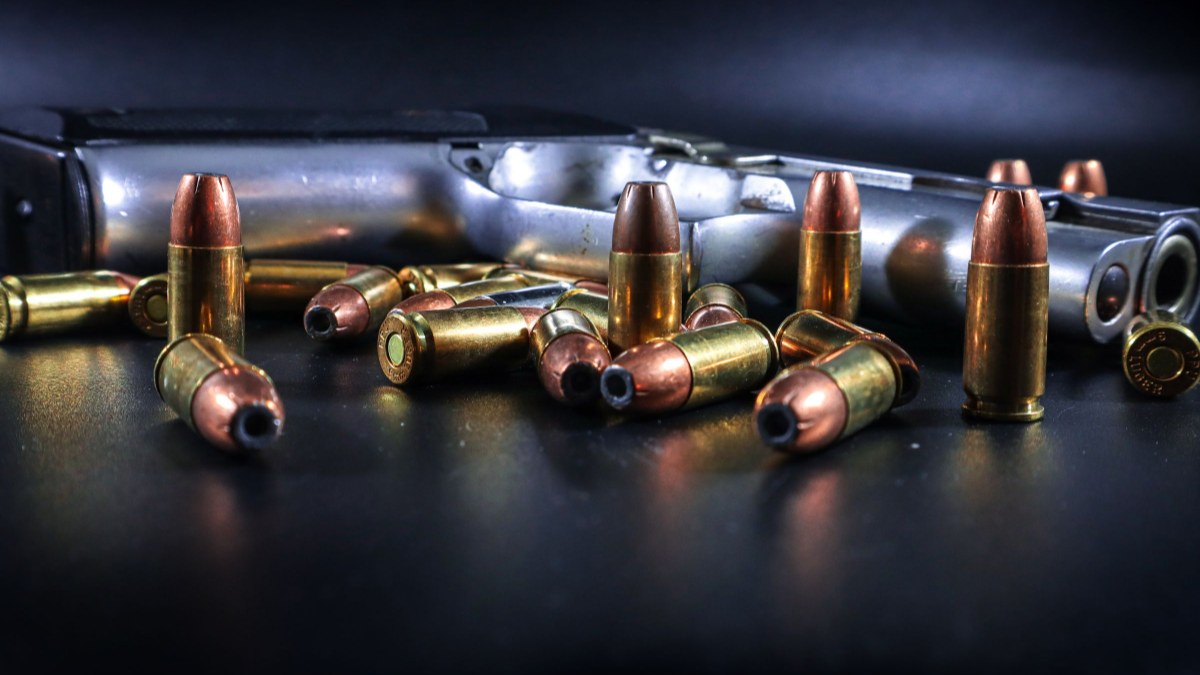
You are buying 9mm ammunition, and the boxes say 115 grain, 124 grain and 147 grain. Do heavier bullets hit harder? Are lighter bullets faster and flatter? Is the 124-grain load the "real" 9mm? The answers depend on how bullet weight behaves in a pistol, and on what your pistol likes, how you shoot and what the ammunition is for.
By the end you should understand how bullet weight changes velocity, recoil, point of impact and penetration in a handgun, and why design often matters more than weight for defense, so you can predict how a heavier or lighter load will feel and shoot in your gun and choose a weight for practice, competition and defense.
What "grain" means
Bullet weight is measured in grains, an old unit in which 7,000 grains make one pound. A 115-grain 9mm bullet weighs about a quarter of an ounce. The number on the box is the weight of the bullet alone, not the whole cartridge. Within a caliber, a heavier bullet is usually longer, because the diameter is fixed and extra weight has to go somewhere. That longer bullet takes up more room inside the case, which affects how much powder fits and how the cartridge behaves.
Weight, velocity and recoil
In the same cartridge, a lighter bullet is usually pushed faster and a heavier bullet slower, because the pressure limit of the cartridge sets roughly how much work the powder can do. Typical 9mm loads illustrate the pattern: 115-grain bullets often leave the muzzle around 1,100 to 1,200 feet per second, 124-grain loads somewhat slower, and 147-grain loads often near or below 1,000 feet per second, slow enough to be subsonic in many pistols. Exact numbers depend on the load and your barrel length.
Recoil changes character as well as amount. Many shooters describe light, fast loads as "snappy," with a sharper jolt, and heavy, slower loads as more of a "push." The total recoil you feel depends on the bullet's weight and speed together, plus the gun's weight and design, so two loads can feel different even when the measured difference is small. Picture the difference between catching a fast tennis ball and a slower, heavier medicine ball: Both arrive with force, but one stings and the other shoves. Which feels easier to control is personal, and the only way to know is to shoot both.
Key idea: In a given pistol cartridge, lighter bullets usually go faster with a sharper recoil, and heavier bullets go slower with more of a push. Neither is better in general; the right weight is the one your pistol runs reliably and you shoot well.
Point of impact: Why heavier bullets often hit higher
Pistols recoil upward a little before the bullet leaves the barrel. A slower, heavier bullet spends slightly longer in the barrel, so the muzzle rises a little more before it exits, which is why heavier bullets often strike slightly higher than lighter ones at typical pistol distances. Many pistols' fixed sights are regulated for a particular bullet weight. The practical rule is to check where your carry or competition load hits at the distances you shoot, and to practice with a load of the same weight so your sights and habits match.
Common weights by caliber
| Caliber | Common bullet weights | Notes |
|---|---|---|
| .380 ACP | About 85 to 100 grains | Mild cartridge; defensive bullet design matters a great deal |
| 9mm Luger | 115, 124 and 147 grains | The widest choice of loads; 124 is a common middle ground |
| .40 S&W | 155, 165 and 180 grains | Snappier recoil in light, fast loads; 180 is a common duty weight |
| .45 ACP | 185, 200 and 230 grains | 230-grain loads are typically subsonic and the traditional standard |
| .38 Special and .357 Magnum | About 110 to 158 grains | Revolver loads; .357 Magnum recoil rises sharply with velocity |
The table shows the range most manufacturers offer, not limits. Our personal protection caliber comparison explains how these cartridges compare more broadly.
Practice and competition: Matching weight to your purpose
For practice, inexpensive full metal jacket ammunition, most often 115-grain in 9mm, is the most common choice, and it is fine for building skill. The important habit is to practice at least some of the time with ammunition of the same weight as your defensive load, so the recoil and point of impact you train with match what you carry. Some manufacturers make training loads that match the weight and velocity of their defensive lines for exactly that reason; our article on Speer Lawman training ammunition explains one example.
In competition, shooters often choose weights that feel softer in their particular gun and that meet their sport's minimum power requirements. Heavier, slower loads are popular in some divisions because they feel like a push and help the sights settle quickly, but the right choice still depends on the gun and the shooter. Test a few loads on a timer and look at both your times and your hits.
Defense: Design matters more than weight
For defensive use, the most important property of a bullet is how it behaves when it hits: Whether it expands reliably and whether it penetrates deeply enough to be effective without excessive over-penetration. Those properties depend mainly on the bullet's design and construction, such as hollow-point shape, jacket design and bonding, and on whether that design was made for the velocity your pistol produces. Heavier bullets in a given caliber often penetrate a bit deeper, and lighter, faster bullets often expand a bit more quickly, but a well-designed defensive bullet at any common weight is engineered to perform within a useful range. Laboratory testing in ballistic gelatin is how manufacturers and testers compare these loads; our article on the role of ballistic gelatin explains what that testing does and does not tell you.
Barrel length matters here too. Short-barreled carry pistols produce lower velocity, and some defensive bullets are designed specifically to expand at those lower speeds. If you carry a compact pistol, look for a load designed for short barrels. Our guide to selecting personal and home defense ammunition covers the decision in detail.
Common mistake: Choosing defensive ammunition by weight alone. A heavy bullet that does not expand, or a light bullet designed for a longer barrel than yours, can perform poorly. Choose a proven defensive design for your barrel length, then confirm it feeds reliably and hits where you aim.
Reliability comes first
Whatever weight you choose, it has to run in your pistol. Different weights and bullet shapes feed differently, and some pistols are particular. Before you carry any defensive load, fire enough of it through your pistol and every magazine you will carry to be confident it feeds, fires and ejects reliably. Confirm where it hits at your typical distances. A load that performs perfectly in a test but jams in your gun is not a defensive load for you.
Comparing two weights in your pistol
Your pistol and your hands have the final say. A box each of two weights, such as 115-grain and 147-grain 9mm, fired in five-shot groups at 7 and 15 yards from the same position and aiming point, with eye and ear protection, shows where each centers, how the recoil feels and how quickly your sights settle. A short timed string with each adds speed and hits to the comparison. The weight that ran reliably, grouped well and let you shoot fastest with good hits is the one to standardize on, with your practice and defensive loads matched to it.
Putting it together
Heavier bullets often do penetrate a bit deeper and feel like a push. Lighter bullets do go faster and often feel snappier. And a middle weight is a sensible starting point in many calibers. But for defense, bullet design and barrel-length suitability matter more than weight, and for every use, reliability and how well you shoot the load matter most. Test a couple of weights in your own pistol, choose the one that runs and that you shoot well, match your practice ammunition to it, and choose a proven defensive design for your barrel length.
Check your understanding
Try answering these before you open the answer. If you can decide what to do and explain why, you have it.
1. Two 9mm boxes from the same maker show 1,180 fps for the 115-grain load and 990 fps for the 147-grain. Why is the heavier bullet slower?
The cartridge's pressure limit sets roughly how much work the powder can do, so the same push accelerates a heavier bullet to a lower speed.
2. Your pistol hits dead-on with 115-grain practice ammo, but your 147-grain carry load prints higher. Why?
A heavier, slower bullet stays in the barrel slightly longer while the muzzle rises in recoil, so it leaves with the muzzle pointed a little higher.
3. A friend chooses his carry load by picking the heaviest bullet he can find. What matters more?
Bullet design and construction, and whether the load was designed for his barrel length and velocity, so it expands and penetrates reliably. Weight alone doesn't tell you that.
4. You carry 124-grain defensive loads but practice with cheap 147-grain. What are you missing?
Practice that matches what you carry. Different weights recoil differently and can hit at a different point, so practicing with the same weight keeps your recoil control and point of impact consistent.
5. What must you confirm before carrying any defensive load?
That it feeds, fires and ejects reliably in your pistol and magazines, and where it hits at your typical distances.
Where to go next
For how bullet designs differ, read understanding pistol bullet types. For defensive choices, see selecting personal and home defense ammunition. For the rifle side of the same question, read understanding bullet weight in rifle rounds. And to put your chosen load to work, see our pistol practice drills.
If this article helped you, we invite you to sign up for email notifications of new blog articles.