
Misfire, Hangfire or Squib: What to Do When a Round Doesn't Sound Right
Joseph McLain Nov 07, 2026
You are at the range, pressing through a magazine at a steady pace, and then the trigger breaks and nothing happens. Just a click. Do you rack it and keep going, or wait?
The answer depends on where you are and what you heard. In a defensive emergency, clearing a dead round quickly is exactly what you are trained to do. On the range, waiting a few seconds costs nothing and protects you from the rare round that fires late. And there is a third possibility most shooters never think about, the shot that goes "pop" instead of "bang." That one is the most dangerous of all, and the right response is completely different.
By the end you should be able to tell a misfire from a hangfire from a squib by what you hear and feel, and respond to each one without putting yourself, your gun or anyone near you at risk.
What should happen when a round fires
When you press the trigger, a firing pin or striker hits the primer at the base of the cartridge. The primer contains a small amount of impact-sensitive compound that flashes and ignites the powder. The powder burns very quickly, builds pressure and drives the bullet down the barrel. From the pin's strike to the bullet leaving the barrel takes a tiny fraction of a second, so to you it is one event, a click and a bang together.
Every failure described here is a break in that chain. The pin doesn't strike hard enough, the primer doesn't ignite, the powder ignites slowly, or the powder burns but not enough of it to push the bullet out. Our article on what goes into cartridge design explains each part of the cartridge in more detail.
When a shot isn't normal, ask which link in the chain broke before you do anything else.
Misfire: A click and no bang
A misfire is a round that doesn't fire at all. You hear the click of the firing pin, but there is no shot and no recoil.
Common causes include a primer that didn't ignite because of a manufacturing defect, ammunition contaminated by oil or solvent, or very old or poorly stored ammunition. With rimfire ammunition such as .22 LR, the priming compound sits inside the rim. If a spot in the rim didn't get enough compound, the pin can hit an empty spot. Misfires can also come from the gun: a weak hammer spring, a dirty firing pin channel or a light primer strike. If one round misfires, suspect the ammunition. If misfires keep happening with different ammunition, suspect the gun.
Look at the primer of the failed round after you've safely removed it. A deep, centered dent with no ignition points to the ammunition. A shallow or off-center dent points to the gun. Our article on common gun malfunctions covers feeding, extraction and other stoppages the gun itself causes, and when a firearm needs a gunsmith explains when to hand it to a professional.
Treat every click as a possible hangfire until enough time has passed.
Hangfire: A bang that comes late
A hangfire is a round that ignites after a noticeable delay, anywhere from a fraction of a second to, rarely, several seconds. The danger is not the delay itself. The danger is what you do during it. If you open the action and the round fires outside the chamber, the case can burst and throw fragments and hot gas at your face and hands. If you've turned to ask a friend about it, the gun may no longer be pointed safely when it goes off.
Hangfires are uncommon with modern factory ammunition, but they do happen, especially with old, contaminated or cold-soaked ammunition and with muzzleloaders. The Iowa hunter education course teaches a specific wait: Keep the action closed and the muzzle pointed at a safe backstop for 15 seconds with a rifle, handgun or shotgun, and 60 seconds with a muzzleloader. Many ranges and instructors teach 30 seconds for modern guns. Waiting longer is never wrong.
Key idea: After a click on the range, the gun stays pointed downrange and the action stays closed while you count. That single habit turns a hangfire from a dangerous surprise into a loud non-event.
On the range, after a click, keep the muzzle downrange and the action closed for at least 15 seconds, or 60 with a muzzleloader, then unload the round carefully.
Squib load: The "pop" that should stop everything
A squib load is a round that fires with far less force than it should. Usually the powder was missing, very undercharged or failed to burn properly. The primer alone, or a little powder, has just enough energy to push the bullet partway into the barrel, where it stops and stays.
You will usually notice a squib by sound and feel. Instead of a sharp bang, there is a quieter "pop" or "puff," with little or no recoil. In a semi-automatic, the slide or bolt may not cycle. Sometimes you will see smoke or powder from the ejection port, and you won't see the bullet hit the target.
Here is why it matters so much. If a bullet is stuck in the barrel and you fire another round behind it, the second bullet slams into the first. The barrel can bulge, split or burst, and the gun can fail in your hands. A semi-automatic will often have chambered the next round already, so the shooter only needs to press the trigger once more for that to happen.
Common mistake: Hearing a weak shot, assuming it was a light load and firing again. If a shot sounds or feels wrong, the next shot is the dangerous one. Stop before you press the trigger again.
After any shot that sounds or feels weak, stop shooting, unload and check the barrel before firing again.
Exactly what to do in each case
The response depends on what you heard and felt. Here are the steps for a range or hunting situation.
- Click, no bang (possible misfire or hangfire). Keep the muzzle pointed at a safe backstop, keep your finger off the trigger and keep the action closed, then wait at least 15 seconds (60 with a muzzleloader).
- After the wait. Carefully unload the round, keeping your face and hands away from the ejection port, and set it aside in a separate container.
- Pop, reduced recoil, or anything that felt wrong (possible squib). Stop, keep the muzzle downrange, take your finger off the trigger, unload completely and lock the action open.
- Check the barrel. With the gun unloaded and the action open, look through the barrel from the breech end toward a light, or run a cleaning rod down it, to confirm nothing is stuck inside.
- If something is stuck. Don't try to shoot it out, and use a properly sized rod to tap it out from the muzzle end with the gun unloaded, or take it to a gunsmith.
Of these steps, the barrel check after a weak shot does the most work, because it is the only thing standing between a stuck bullet and a burst barrel. If your range has a range safety officer, raise your hand and let them help. That is what they are there for.
Click means wait. Pop means stop and check.
Revolvers behave differently
With a revolver, a misfire is less of a stoppage, because pressing the trigger again rotates a new chamber under the hammer. That is a real advantage in an emergency. On the range, though, think about the hangfire risk. If the failed round fires late after the cylinder has rotated, it fires out of line with the barrel. That can damage the gun and spray fragments to the sides.
A squib in a revolver is also dangerous. The bullet can stick partway between the cylinder and the barrel and lock the cylinder, or lodge in the barrel where the next round will hit it. The same rule applies. A weak shot means stop and check.
On the range, wait after a revolver misfire the same way you would with any other gun.
Defensive use is a different situation
If you carry a gun for defense, you have probably learned an immediate-action drill for a click. You tap the magazine, rack the slide and assess. That drill exists because in a real threat, waiting 15 seconds can be more dangerous than a rare hangfire. Defensive training and range procedure answer different questions, and both are correct in their own settings.
Even in that setting, a "pop" with little recoil is different from a click. Training courses that teach immediate action also teach you to recognize the feel of a squib. Our article on pistol practice drills covers practicing malfunctions safely with dummy rounds.
On the range, follow the wait-and-check procedure. In a defensive emergency, follow your training, and still treat a weak "pop" as a possible stuck bullet.
Preventing failures in the first place
Most failures trace back to the ammunition or how it was stored. Keep ammunition in its original box, cool and dry, and away from solvents, oils and cleaning products, all of which can seep into primers. Don't over-lubricate your gun, and wipe excess oil out of the chamber. Avoid firing ammunition of unknown history, such as old reloads from an estate sale. Our guide to storing ammunition covers the details.
Rounds that misfired shouldn't go back into your carry gun or your regular supply. Our article on disposing of old ammunition explains what to do with them.
Store ammunition dry and clean, keep oil out of chambers, and retire any round that failed once.
Practicing the response at home
The right reaction to a click has to be a habit before it happens at the range, and dummy rounds let you build it safely at home.
- At home, unload your gun completely, lock the action open, move all live ammunition to another room and confirm twice that the gun is empty.
- Load a magazine with snap caps or dummy rounds, which are inert practice rounds with no powder or primer.
- Pointing the gun in a safe direction, press the trigger on a dummy round and practice the range response: Muzzle stays safe, finger comes off the trigger, action stays closed while you count to 15 out loud.
- Unload the dummy round carefully, keeping your face away from the ejection port, and place it in a container.
- Practice saying out loud, "Click means wait. Pop means stop and check," and then the steps for a squib, including where you would look through the barrel.
The habit is set when your first reaction to an unexpected click is to freeze with the muzzle in a safe direction and start counting, not to turn around and ask what happened.
Putting it together
A round can fail in three ways. A misfire is a click with no bang. A hangfire is a bang that comes late. A squib is a weak pop that can leave a bullet stuck in the barrel. On the range, a click means you keep the muzzle downrange and the action closed for at least 15 seconds, or 60 with a muzzleloader, before unloading. A pop means you stop, unload and look through the barrel before firing again. Revolvers and defensive situations change the details, but not the core rule. Any shot that doesn't sound or feel right deserves a pause before the next one.
Check your understanding
Try answering these before you open the answer. If you can decide what to do and explain why, you have it.
1. Halfway through a magazine at the range, your pistol goes click instead of bang. Your buddy says, "Just rack it and keep going." What do you do instead, and why?
Keep the muzzle downrange, take your finger off the trigger and leave the action closed for at least 15 seconds. On the range there's no threat to justify hurrying, and a round that's slow to ignite can still fire. After the wait, unload the round carefully, keeping your face away from the port, and set it aside.
2. At deer camp, your nephew's muzzleloader goes "snap" with no shot, and he immediately tips it up to look down the barrel. What do you tell him?
Stop, and keep the muzzle pointed at a safe backstop. A muzzleloader can hang fire for a long time, and the Iowa hunter education course teaches waiting 60 seconds before doing anything. Looking down the barrel of a gun that might still fire is the most dangerous thing he could do. After the wait, follow the gun's manual to clear the charge safely.
3. Your shot makes a soft pop with almost no recoil, and the slide cycles. What might have happened, and what is the danger?
It may be a squib, with the bullet stuck in the barrel. If you fire again, the next bullet can hit the stuck one and bulge or burst the barrel. Stop, unload and check the barrel.
4. One round misfired with a deep, centered dent in the primer. Another box fires fine. Where does the problem most likely lie?
With that round or that ammunition. A deep, centered strike means the gun did its job. Repeated misfires across different ammunition would point to the gun.
5. In a defensive emergency, should you wait 15 seconds after a click?
No. Follow your immediate-action training, because the threat is the bigger danger. Still, treat a weak pop with little recoil as a possible stuck bullet.
Where to go next
You can find snap caps and dummy rounds for ball-and-dummy and dry-fire practice on our website, including A-Zoom and Tipton, and anything listed there can be ordered if it isn't in stock.
To see what's inside a cartridge and why each part can fail, read what goes into cartridge design. To store ammunition so it stays reliable, see best practices for storing ammunition. For what to do with rounds that failed, read disposing of old ammunition. And if failures keep coming back no matter what ammunition you use, see when a firearm needs a gunsmith.
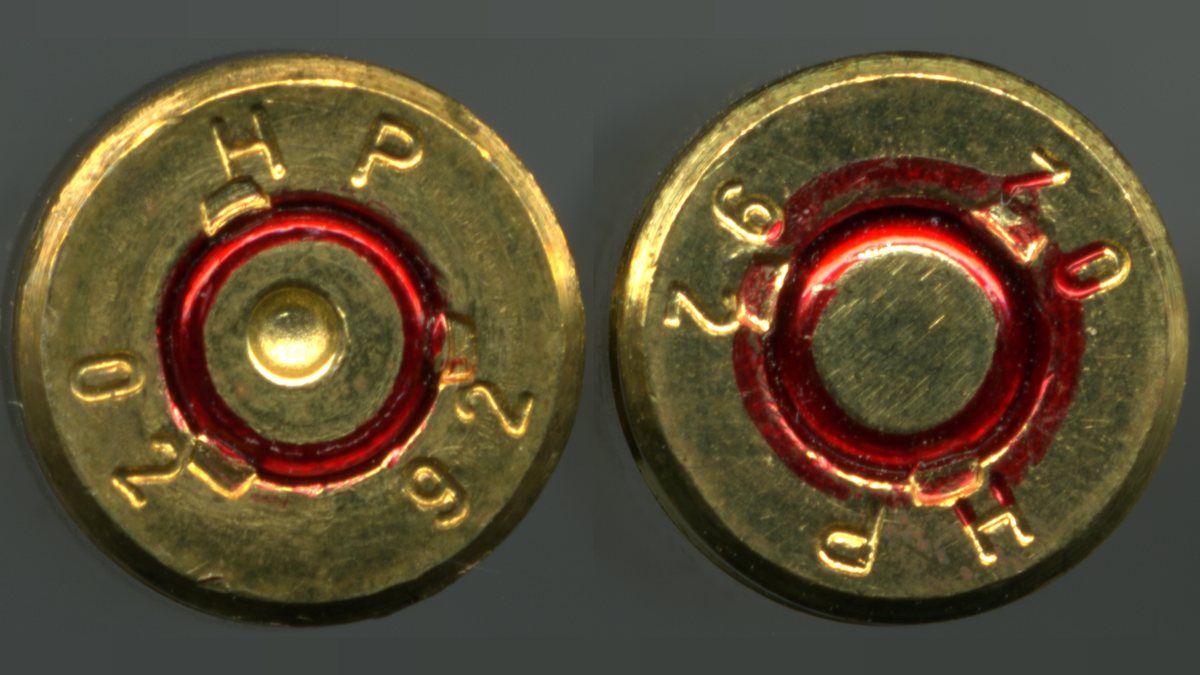
Photo: "5.56 x 45mm NATO cartridge bottom - fired (left) and not fired (right)" by D-Kuru, via Wikimedia Commons, licensed CC BY-SA 3.0 AT; background extended.

If this article helped you, we invite you to sign up for email notifications of new blog articles.