
Premium Defensive Ammunition: Ultimate Guide to Federal Hydra-Shok & HST, Speer Gold Dot & G2, and Hornady Critical Defense & Critical Duty
Joseph McLain Nov 07, 2026
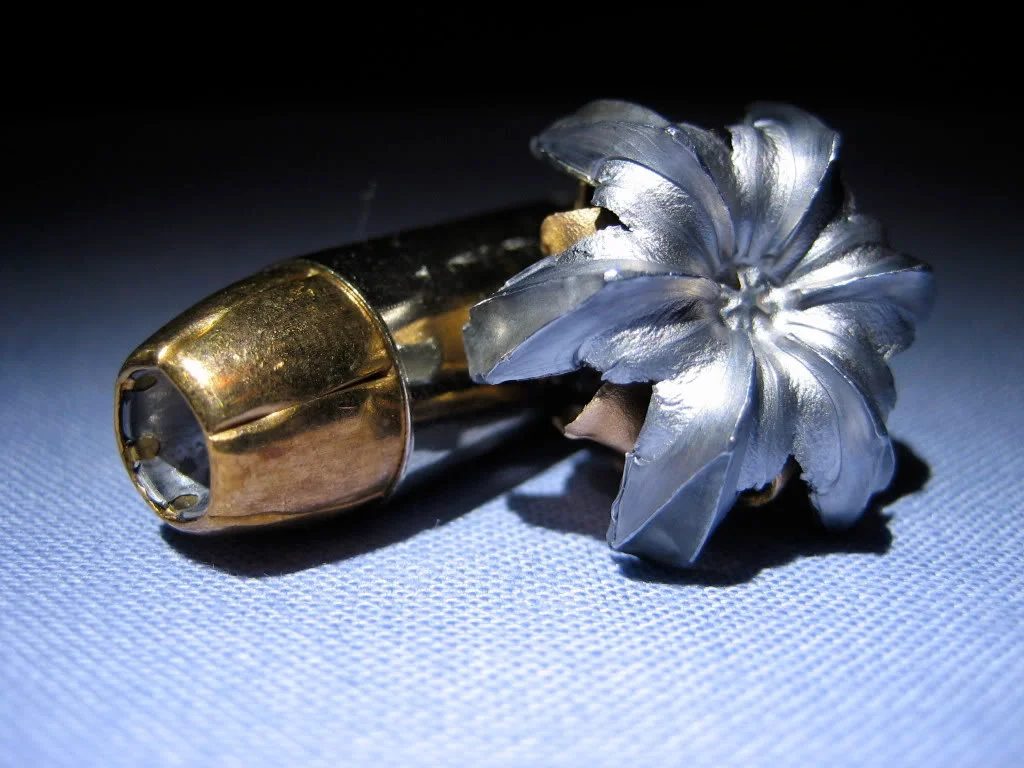
You have a pistol you already own and a choice to make among boxes labeled Hydra-Shok, HST, Gold Dot, G2, Critical Defense and Critical Duty. They all promise serious personal protection, and from the outside they look about the same. What follows explains what actually separates them, so you can match a load to your pistol and your purpose, explain why you chose it, and prove that it runs in your own gun. These six lines are among the most trusted names in personal protection, and several are used by law enforcement, so the question is not which one is good. It is which one is right for you.
What a premium defensive bullet is built to do
Every load in this guide is a hollow point, which means the bullet has a cavity in its nose. When the bullet hits, the cavity helps it open up like a mushroom. That opening is called expansion, and it slows the bullet and makes it cut a wider path. The bullet also has to travel far enough (penetration), and it has to stay in one piece (weight retention), because a bullet that sheds fragments loses the mass that keeps it moving. These goals pull against each other. More expansion means more resistance and less depth, so designers tune each bullet toward a useful middle. Penetration is usually measured in ballistic gelatin, which is why the comparison table later in this guide labels that row "gel."
Then comes the complication that explains most of the products below, the barrier. Heavy clothing, auto glass, drywall, plywood and sheet metal can plug a hollow point or strip away its jacket, so a bullet designed to open may arrive closed or broken. Picture pushing a drinking straw into a block of cheese. The straw fills with cheese and stops working like a straw. A good deal of the engineering below is about keeping the cavity working when something is in the way.
A third ingredient is velocity. A hollow point needs enough speed to open, and a shorter barrel gives the powder less distance to push the bullet, so compact pistols send bullets out slower. Keep that in mind, because it is why barrel length decides so much in this guide. For the basics of how pistol bullets are built, see Understanding Pistol Bullet Types.
Key idea: Each of these bullets is a compromise tuned for a particular job, and your task is to match that job to your barrel length, the barriers you could realistically face and the penetration you want.
Federal Hydra-Shok and HST: Two answers to one problem
Hydra-Shok appeared in the late 1980s as one of the earliest rounds engineered specifically for enhanced terminal performance, which simply means better results at the target. Its signature is a center post inside the hollow point, designed to help the bullet expand reliably. It penetrates about 15 inches, which is good, and it retains roughly 90 to 100 percent of its weight. Over time, though, its expansion proved less consistent when it had to pass through heavy clothing, auto glass and similar barriers.
Federal HST arrived more than a decade later to close that gap. It has a deep hollow-point cavity and precision-cut skiving along the jacket. Skiving is a set of planned cuts, like the score lines on a chocolate bar, that tell the jacket where to fold back so the bullet opens uniformly. The result is consistent expansion and strong performance through auto glass, plywood and denim, with penetration of 16 to 18 inches and near-perfect weight retention. Our article on Federal Hydra-Shok and HST takes a deeper look at both.
Hydra-Shok suits civilian personal defense where hard barriers are minimal. HST is the better fit when you want consistent performance through various intermediate barriers, meaning objects between you and the target such as clothing or glass, and it is the broader choice overall, with a very wide range of calibers and platforms and a place in both law enforcement and civilian use.
Speer Gold Dot and Gold Dot G2: Bonded cores and barrier-ready tips
Speer's Gold Dot is known for its bonded-core design, in which the copper jacket is chemically bonded to the lead core. Think of plywood compared with a stack of loose boards. Glued layers move as one, while loose layers slide apart. In a bullet, a jacket that separates from its core means lost weight and less predictable behavior. Speer's Uni-Cor bonded core eliminates that separation, which fits the roughly 100 percent weight retention in the table below. Gold Dot earned its reputation among law enforcement officers and concealed carriers with excellent consistency in typical self-defense situations and reliable expansion in both standard and barrier-free conditions.
Gold Dot G2 is Speer's next-generation variant. It keeps the bonded core and adds an elastomer-filled hollow point, designed to keep expansion consistent through the barriers that traditionally obstruct it, such as heavy clothing, drywall and auto glass. The payoff is superior expansion consistency, especially through intermediate barriers, with penetration of 14 to 18 inches and a design optimized for enhanced penetration and predictable expansion. Our article on Speer Gold Dot ammunition goes further into the line.
Choose standard Gold Dot as a general-purpose defensive load, trusted widely by law enforcement and civilians. Choose G2 when barriers are a real part of your picture, since it suits both duty and defensive use. One practical point from the comparison table is that G2's caliber range is listed as moderate, so confirm that your caliber is offered before you plan around it.
Hornady Critical Defense and Critical Duty: Matching the bullet to your barrel
Hornady built two complementary lines, and the dividing line is the pistol the ammunition is made for. Critical Defense was designed for concealed carry and compact pistols. Its FTX (Flex Tip) bullet is meant to expand reliably at the lower velocities that short barrels produce, so it is designed primarily for pistols with barrels under 4 inches. It aims for consistent expansion with moderate penetration, about 11 to 13 inches, which makes it well suited to concealed-carry and home-defense firearms with shorter barrels. It also has reduced muzzle flash, which helps at night and in low light, since a large flash can briefly spoil your night vision.
Critical Duty came later and was tailored to law enforcement and tactical use. It uses Hornady's FlexLock design with a mechanical InterLock band around the jacketed bullet, built to perform through stringent FBI barrier-testing protocols. Where Gold Dot uses a chemical bond to keep the bullet together, this is a mechanical answer to the same problem. The payoff is robust penetration through challenging barriers such as auto glass, sheet metal and plywood, described as barrier-blind, meaning it behaves much the same whether or not something is in the way. Penetration depths consistently meet FBI standards of 12 to 18 inches, and the load is intended for full-sized duty firearms with barrels of 4 inches or greater.
Common mistake: Assuming "Duty" means tougher and therefore better for any gun. Critical Duty is intended for full-sized duty firearms, and in a compact pistol it may not perform as designed because it was developed for longer barrels. Choose the line built for your barrel length. For a closer comparison, read Hornady Critical Defense vs. Critical Duty.
Reading the side-by-side comparison
| Feature | Hydra-Shok | HST | Gold Dot | Gold Dot G2 | Critical Defense | Critical Duty |
|---|---|---|---|---|---|---|
| Expansion Consistency | Good | Excellent | Excellent | Superior | Excellent | Superior |
| Barrier Performance | Moderate | Excellent | Very Good | Excellent | Moderate | Excellent |
| Penetration (gel) | 15 inches | 16–18 in. | 12–18 in. | 14–18 in. | 11–13 in. | 12–18 in. |
| Weight Retention | ~90–100% | ~100% | ~100% | ~100% | ~100% | ~100% |
| Caliber/Platform Range | Wide | Very Wide | Wide | Moderate | Compact Focused | Duty-sized |
| Optimal Barrel Length | Any | Any | Any | Any | Under 4 inches | 4+ inches |
| Use Case Suitability | Personal | General | General | General/LE | Concealed Carry | Law Enforcement |
The penetration figures are typical published ranges in ballistic gelatin; actual results vary with caliber, bullet weight and barrel length, so check the manufacturer's data for the exact load you are considering.
Start with the three rows that separate these loads, which are barrier performance, penetration and optimal barrel length. Weight retention is about 100 percent for everything except Hydra-Shok, so it will not help you choose among the other five. Barrier performance splits the field in two, because Hydra-Shok and Critical Defense are rated moderate and the other four are rated very good or excellent. Penetration shows design intent. Critical Defense, at 11 to 13 inches, is tuned for moderate penetration in compact pistols and starts a little below the 12 to 18 inch window that FBI standards use, while HST, Gold Dot, Gold Dot G2 and Critical Duty all reach 18 inches at the top of their ranges. Expansion consistency climbs from Good for Hydra-Shok to Superior for Gold Dot G2 and Critical Duty, which matches the story of each design improving on an earlier weakness. Finally, the last rows tell you who each load is for, and only the two Hornady loads are tied to a barrel length. Treat the ratings as a map, not a guarantee, which is why the test at the end of this guide matters.
How these loads are used in the field
For law enforcement and tactical work, Critical Duty and Gold Dot G2 are highly regarded by professionals who need consistent barrier performance, and Federal HST is widely trusted for its balanced performance in diverse environments. Hydra-Shok has historically served law enforcement well, though many agencies have moved to HST or Critical Duty because of barrier performance. That shift is the same story you saw earlier, with a known weakness leading to a better design.
For civilian personal defense, Federal HST and standard Gold Dot offer excellent all-around performance. Critical Defense and Gold Dot Carry Gun, a variant of Gold Dot, specifically cater to compact concealed-carry pistols. Rounds optimized for short barrels, like those two, are built to expand reliably at the reduced velocities common in compact and subcompact firearms.
Choosing the right round: Start with barrel length, then ask about barriers
Here is a decision path you can use. First, check your pistol's barrel length. Short barrels typically measure less than 4 inches. If yours is under 4 inches, you want a load built to expand at reduced velocity, and Hornady Critical Defense excels there, while Gold Dot Carry Gun or G2 can also perform reliably. If your pistol is full-size, Federal HST or Speer Gold Dot are excellent general-purpose rounds that offer balanced expansion and penetration. Second, ask whether barriers are central to your use. If they are, as in law enforcement and tactical work, Hornady Critical Duty is ideal when barrier penetration is critical, with FBI-grade barrier performance. Gold Dot G2 provides similar reliability through barriers, with moderate expansion, for departments and officers seeking consistent barrier performance.
The recommendations come down to three situations.
- Civilian concealed carry (short barrels). Critical Defense, then Gold Dot Carry Gun, then HST Micro.
- General civilian and home defense (full-size pistols). Federal HST, then Gold Dot or G2.
- Law enforcement and tactical duty (barrier-heavy). Hornady Critical Duty, then Gold Dot G2, then Federal HST.
Read each line as an order of preference, with the first name as the best fit for that situation. Notice that barrel length moves you between the first two lines, while heavy barrier demands move you to the third. Federal HST appears in all three, which fits its very wide caliber range.
Proving the load in your pistol
A shortlist starts with three facts about your gun and life: the caliber, the barrel length and the main purpose, such as concealed carry or home defense. The three situations above narrow that to one or two loads; confirm they are made in your caliber. Then prove it at the range with eye and ear protection on and the muzzle downrange. Shoot your normal practice ammunition first so your grip and sight picture feel familiar, then run the defensive load through every magazine you plan to carry, watching for any failure to feed, fire or eject and noting where it hits compared with your practice ammunition. A load that runs without a single stoppage, and that you can explain in one sentence, is the one to carry.
Good practice: Testing premium ammunition costs money, which is why many people skip it. Treat the test as part of the price. A load that does not run in your pistol is not defensive ammunition for you, no matter what is printed on the box.
Putting it together
The loads police agencies carry have earned that trust through barrier testing, and every line in this guide is a well-designed modern hollow point. What separates them is the job each was tuned for. Start with your barrel length, decide how much barrier performance you need, pick a load built for that combination, and then prove it runs in your pistol.
Check your understanding
Try answering these before you open the answer. If you can decide what to do and explain why, you have it.
1. Hydra-Shok worked well for years. Why did Federal develop HST, and what feature helps HST open the same way every time?
Hydra-Shok's expansion could be inconsistent through barriers such as heavy clothing and auto glass. HST has a deep hollow-point cavity and precision-cut skiving along the jacket, which gives uniform expansion across various barriers.
2. A friend with a compact carry pistol (barrel under 4 inches) wants to buy Critical Duty because "duty" sounds tougher. What would you tell them?
Critical Duty is intended for full-sized duty firearms with barrels of 4 inches or greater. A compact pistol produces lower velocities, so a load designed to expand at those speeds, such as Critical Defense or Gold Dot Carry Gun, is the better match.
3. Your friend's practice load sometimes leaves the copper jacket and lead core in separate pieces in a gel test, while his Gold Dot holds together. What is the Gold Dot doing differently?
Its jacket is bonded to the core, so the two can't separate when the bullet strikes something hard. A bullet that stays in one piece keeps its weight, and its weight is what carries it to the needed depth. You can see the result in the weight retention row, about 100 percent for the bonded Gold Dot lines.
4. You own a full-size pistol and want one load for general civilian and home defense. Which loads come first, and why?
Federal HST, then Gold Dot or G2. They offer balanced expansion and penetration and are excellent general-purpose rounds for full-size pistols.
5. Critical Defense penetrates about 11 to 13 inches and Critical Duty 12 to 18. What trade-off does that show?
Critical Defense aims for consistent expansion with moderate penetration in compact, shorter-barreled pistols. Critical Duty is built for deeper, barrier-blind performance that consistently meets FBI standards, in full-sized duty firearms.
Where to go next
You can find Federal HST and Hornady Critical Defense ammunition on our website, and anything listed there can be ordered if it isn't in stock.
Because a bullet only matters after you have chosen a caliber, start with the personal and home defense caliber comparison. Then read Selecting the Right Personal / Home Defense Ammunition for the wider picture of building a defensive setup. Once you have bought a box, Best Practices for Storing Ammunition shows how to keep it safe and reliable.
If this article helped you, we invite you to sign up for email notifications of new blog articles.