
Hornady Superformance Ammunition
Joseph McLain Nov 07, 2026
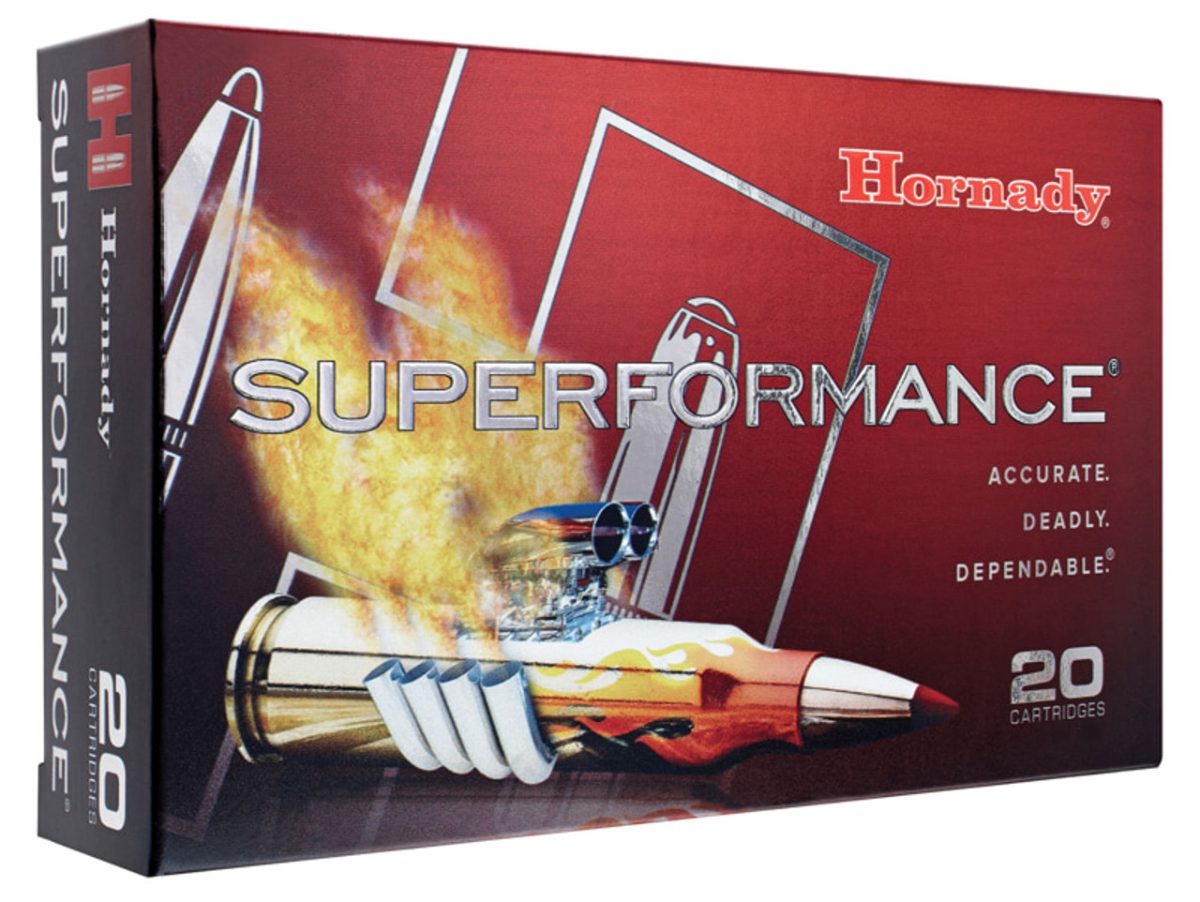
It is the night before deer season opens. Your rifle is sighted in, the forecast is cold, and the field you will be watching is wider than the one you practiced on. A box of Hornady Superformance promises faster bullets, flatter shooting and steadier performance. Is premium ammunition cheap insurance, or will a deer at 150 yards never know the difference? Is the promise real, or just a label?
By the end you should understand what Superformance actually changes and why, so you can decide whether it's worth the extra cost for your rifle and your purpose, and match the bullet and caliber to your game or target.
Hornady Superformance: What faster ammunition actually changes
Superformance is Hornady's line of factory ammunition built to deliver higher velocities, flatter trajectories and strong terminal performance, all while staying within standard pressure limits. It was designed to overcome the limitations of conventional powders and bullet designs, giving you more muzzle velocity and better downrange energy while still running reliably in the field. For hunters and competitive shooters that is a real edge in ballistic performance, and you get it without making custom handloads.
Start with why speed matters. Imagine throwing a baseball as hard as you can and then lobbing it gently to the same spot. The hard throw travels in a nearly straight line, and the lob rises and falls in a big arc. A faster bullet behaves like the hard throw. It reaches the target sooner, so gravity has less time to pull it down. The path the bullet follows is its trajectory, and a flatter one means less hold-over, which is aiming above the target to make up for the drop. That makes it easier to predict where the bullet will hit, even at longer distances.
Three engineering choices make the extra speed possible.
- Proprietary propellant. Hornady developed custom-engineered powders tailored to each cartridge. By optimizing the burn rate and the pressure curve, which is how pressure builds and falls as the bullet travels the barrel, Superformance achieves faster powder burn and higher velocities, often up to 200 feet per second (fps) faster than standard loads.
- Premium bullet designs. The line is available with a range of Hornady's premium bullets, each selected for a specific application, because it is about precise terminal effects as well as speed.
- Pressure management. Even while pushing velocity, the loads are designed to operate within standard pressure limits, so your rifle is not under undue stress or accelerated wear.
Key idea: Superformance gets its speed from better powder, not from running a rifle harder than normal. That distinction is why the line can be fast and still operate within standard pressure limits.
If you want to see how powder, pressure and consistency connect to what happens on the target, our article on how ammunition affects your accuracy walks through it step by step.
What you gain in the field
The benefits grow out of one another, so it helps to follow the chain. Higher muzzle velocity means a flatter trajectory. A flatter trajectory means less hold-over and an easier time judging distance. Higher velocity combined with an aerodynamic bullet also means the bullet retains more energy downrange, and that matters for effective terminal performance on game, whether you are hunting medium game or shooting precision targets.
The next claimed benefit is temperature stability. Hornady promotes its propellants as less sensitive to temperature changes. Many powders burn differently in heat and cold, so an ordinary load can shoot a little faster on a warm afternoon and a little slower on a freezing morning, and the point of impact shifts with it. If you shoot in sweltering heat or in the freezing cold, a load built to hold steadier gives you more consistent velocities. That is a real advantage in variable outdoor conditions, and especially for anyone preparing for cold-weather deer hunting in the Midwest.
Two further points deserve a careful read. First, recoil. A bullet of the same weight driven faster carries more momentum, so expect somewhat more recoil than a standard load of the same bullet weight, not less; the difference is usually modest, and you should judge it in your own rifle. Second, barrel wear. Claims that a faster load is easier on a barrel are hard to support, because barrel wear rises with heat and velocity, so plan on normal cleaning and normal barrel life.
Which benefits matter most? For most hunters it is velocity and the flatter trajectory that follows from it, plus whatever steadiness in cold weather your own rifle shows, because those change where the bullet lands and how it performs. At typical woods distances, the difference is small; it grows with distance.
Four bullets, four jobs: SST, GMX, V-MAX and InterLock
Speed gets the bullet there, but the bullet decides what happens next. Superformance uses four of Hornady's bullet designs, and choosing the right one for your game is as important as choosing the line. Here are the key terms in plain words. Ballistic coefficient (BC) measures how well a bullet slips through the air. Weight retention is how much of the bullet is still there after it hits, because a bullet that keeps its mass can penetrate deeper. Expansion is the bullet opening up on impact, and fragmentation is the bullet breaking into pieces.
| Bullet | Design | Performance | Ideal use |
|---|---|---|---|
| SST (Super Shock Tip) | Soft polymer tip that dramatically enhances the BC | Rapid, controlled expansion with a substantial wound channel and sufficient weight retention | Medium to large game at extended ranges |
| GMX (Gilding Metal eXpanding) | Monolithic copper alloy, near-100% weight retention, lead-free | Deep penetration and consistent expansion, even under challenging conditions | Larger game needing deep penetration and maximum energy transfer, and areas with lead restrictions |
| V-MAX | Engineered for varmint hunting | Explosive expansion with pinpoint accuracy, and rapid fragmentation | Prairie dogs, coyotes and ground squirrels |
| InterLock | Mechanical locking ring that prevents core-jacket separation | Reliable expansion and energy transfer | A versatile option across many game and ranges |
Ask what each design is trying to protect or deliver. The SST tip improves BC so the bullet flies well at distance, then expands in a controlled way so it keeps enough weight to do its job, which is a critical factor in ethical hunting. The GMX is a monolithic bullet, meaning it is made from one piece of copper alloy instead of a jacket around a core, so it holds nearly all of its weight. Being lead-free also makes it a good fit for areas with lead restrictions and for hunters who care about environmental considerations. Check your state or local rules for what applies where you hunt.
The V-MAX works the opposite way. Its rapid fragmentation is what makes it effective on small animals, minimizing suffering, but it is the wrong feature for large game, where you want depth. That is why it belongs on a prairie dog and not on an elk. The InterLock is the classic all-rounder, with a ring that keeps the jacket and core together for reliable expansion and consistent performance. For a closer look at the whole family of bullet designs, see Understanding Rifle Bullet Types.
Match the bullet to the animal: fragmenting bullets for small varmints, SST or GMX for medium to large game, and InterLock when you want one dependable choice.
Matching caliber and bullet to the game
Superformance comes in many popular calibers, and each is tuned to its own purpose. Grouping them by what you hunt makes the choice easier.
| Group | Caliber | Bullet and use |
|---|---|---|
| Small game and varmint | .223 Remington | Paired with V-MAX for speed and accuracy on coyotes, prairie dogs and ground squirrels |
| Small game and varmint | .22-250 Remington | Ultra-flat trajectory and explosive terminal effects for pest control and long-range varmint hunting |
| Medium game | .243 Winchester | SST or GMX, a balance of velocity and energy for deer at moderate ranges |
| Medium game | 6.5 Creedmoor | Enhanced velocities that improve hunting and competitive shooting |
| Large game | .30-06 Springfield | SST and GMX, for larger game such as elk and moose |
| Large game | .300 Winchester Magnum | High energy and extended range for open-terrain hunting |
| Specialty | .375 H&H Magnum | Deep penetration and reliable expansion for dangerous game |
The first thing the table shows is that cartridge and game size travel together. Small cartridges with fragmenting bullets suit small animals, and larger cartridges with deep-penetrating bullets suit larger ones. The 6.5 Creedmoor is typically associated with long-range precision shooting, and Superformance adds velocity that helps in both hunting and competition. The .30-06 loads in SST and GMX deliver consistent performance on elk and moose at extended ranges. The .300 Winchester Magnum is designed for long-range hunting and suits open terrain where distance is critical.
Iowa hunters should note that none of the calibers in this table is legal for deer during Iowa's youth and disabled or first and second shotgun seasons, because Iowa Code section 481A.48 limits rifles in those seasons to expanding bullets of .350 to .500 inch with at least 500 foot-pounds of muzzle energy. In Iowa, these are varmint, predator and out-of-state cartridges.
A fast, flat-shooting load does not make a long shot ethical on its own. Shot placement, distance you can hit reliably and a clean, humane kill still come first, which we cover in Hunting Ethics. Choose the caliber that fits your game and the distances you can shoot well, and then choose the bullet to match.
Target shooting, long range and other uses
For target shooters, the appeal is speed and consistency. Whether a particular Superformance load groups under one minute of angle (about one inch per 100 yards) depends on your rifle, so test it rather than assume it. For long-range target shooting, a flatter trajectory reduces bullet drop and the time the wind has to push the bullet, but many competitors still choose dedicated match ammunition for the smallest groups.
What about defensive use? Superformance is designed primarily for hunting and target shooting, and most users reserve these high-performance loads for those jobs because of their specialized design. Ammunition for home defense is a different task with different needs, so choose loads made for that purpose.
Is it worth it? Considerations before you buy
Superformance loads are priced higher than standard factory ammunition, which reflects the advanced propellant and refined bullet designs. For shooters who want to maximize range performance and terminal ballistics, the benefits often justify the cost. If budget is a concern, a sensible plan is to use standard loads for routine practice and reserve Superformance for critical applications such as a hunt or a match.
Two other factors decide whether you actually get what you pay for. The first is barrel length. Optimal performance is typically achieved in rifles with standard barrel lengths, and short-barreled rifles may not fully benefit from the added velocity. The second is your own rifle. As with any high-performance ammunition, test Superformance in your specific firearm, because chamber dimensions and barrel wear can affect cycling reliability and accuracy. Regular cleaning and maintenance also remain important to sustain peak performance, even with a load engineered for efficiency.
Common mistake: Practicing with a cheaper load and then hunting with Superformance without re-zeroing. A faster load can land in a different place than the load you zeroed with, so zero with the ammunition you will actually hunt with. Our guide to sighting in rifles at different distances shows how.
Comparing your current load with Superformance
The only way to know whether Superformance earns its price in your rifle is to shoot it beside what you use now. With eye and ear protection, the muzzle downrange and a steady rest, fire a five-shot group at 100 yards with your standard load in the same caliber, then one with Superformance, and note where each centers and how large it is. If your range allows, repeat at a longer distance: how much higher the Superformance group lands is the flatter trajectory you're paying for, and a chronograph shows how much each load's velocity varies from shot to shot. Those numbers, set against the distances you actually hunt, answer whether the difference is worth the cost.
Putting it together
Superformance really does add velocity without running higher pressure, and that flattens the trajectory and carries more energy downrange. At 150 yards on a whitetail, that difference is small enough that a well-placed standard load works just as well. The extra cost earns its keep when the shots are long, the target is small, or you need a particular bullet, such as lead-free GMX. So decide by your longest honest shot and your bullet needs, confirm the caliber is legal where you hunt, and if you buy it, zero and practice with the box you will hunt with.
Check your understanding
Try answering these before you open the answer. If you can decide what to do and explain why, you have it.
1. A Superformance box claims up to 200 fps more than a standard load at standard pressure. How can that be true?
Hornady uses powders tailored to each cartridge, with an optimized burn rate and pressure curve. The extra speed comes from better propellant, not from higher pressure.
2. With your old load you held 6 inches high at 300 yards; with Superformance you hold less. Why?
The faster bullet reaches the target sooner, so gravity has less time to pull it down. Its trajectory is flatter, and the point of impact is easier to predict at distance.
3. You hunt elk and a friend suggests V-MAX because it expands so dramatically. What would you tell them?
V-MAX is designed for varmints and fragments rapidly, which suits small animals. For larger game choose a bullet with deep penetration and weight retention, such as SST or GMX in a caliber like .30-06 Springfield.
4. You practice with standard ammunition and plan to hunt with Superformance. What should you do before the season?
Test the Superformance in your rifle and zero with it. It may land in a different place than the standard load, and chamber and barrel factors can affect accuracy and cycling.
5. A shooter with a very short-barreled rifle is considering Superformance for the extra velocity. What should they know?
Short-barreled rifles may not fully benefit from the enhanced velocity, and optimal performance is typically found in standard barrel lengths. The premium price may not pay off for them.
Where to go next
If you want to compare Superformance with another premium option for long-range hunting, Federal ELD-X is a natural next read. For another Hornady line aimed at deer, see Hornady American Whitetail. When you want to understand the numbers behind drop and drift, The Role of Ballistics in Long-Range Shooting shows how they are used. And to make sense of sub-MOA claims, Understanding MOA explains how groups are measured and compared at different distances.
If this article helped you, we invite you to sign up for email notifications of new blog articles.