
A Dive Into the Hornady American Gunner Product Line
Joseph McLain Nov 06, 2026
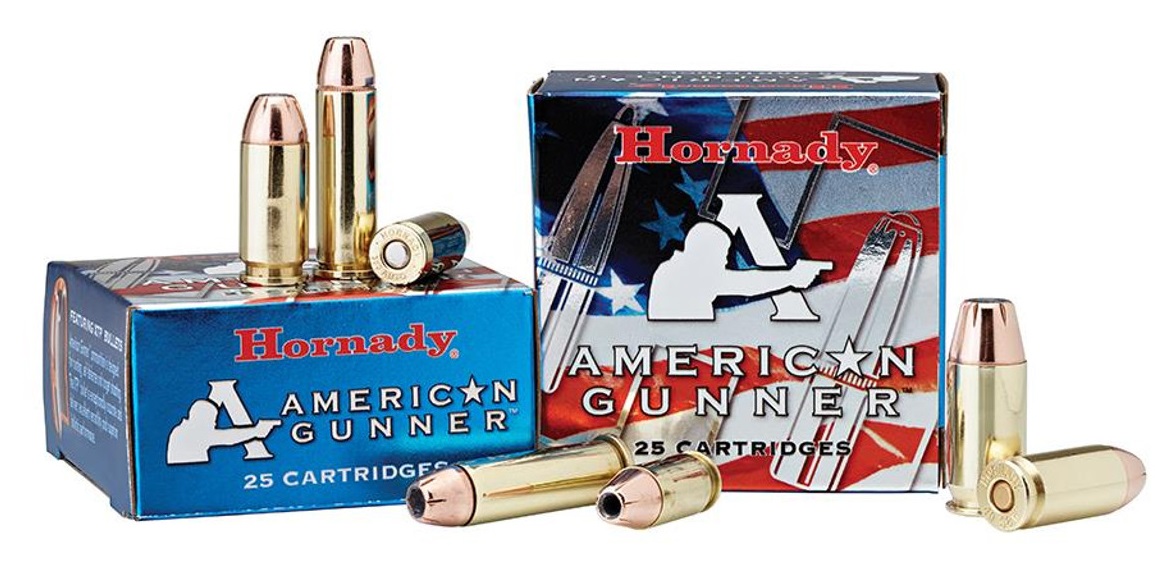
You are at the ammunition shelf and a box of Hornady American Gunner catches your eye. It costs more than the bulk target loads and less than the premium match and defensive boxes, and you cannot tell which job it is meant for. One friend calls it the best middle-ground ammunition Hornady makes; another says it is overpriced range ammo. Is it range ammunition, match ammunition, defensive ammunition or hunting ammunition? This article answers that. By the end you should understand what is actually inside an American Gunner round, be able to pick the right load for your pistol or rifle, and know when to step up or down to a different line.
The honest short answer is that American Gunner is a carefully curated "do a lot of things well" line, built around proven bullets, sensible velocities and solid brass rather than flashy marketing or bleeding-edge tech. Let's unpack what that means so you can decide when it makes sense for you.
Where American Gunner fits among Hornady's lines
Hornady makes a lot of lines, and the easiest way to keep them straight is to picture a ladder of price and specialization. Bulk range ammunition sits on the bottom rung, and purpose-built match and defensive loads sit near the top. Very roughly, the centerfire offerings stack up like this.
| Line | What it is | Built for |
|---|---|---|
| Frontier | Bulk, mil-spec-style FMJ and basic BTHP | Volume and price |
| American Gunner | Mid-priced, "tried-and-true" bullets (XTP, HP, BTHP) in popular handgun and rifle calibers | Target, hunting and self-defense |
| Match / ELD Match | Premium, high-BC match bullets | Tiny groups and long-range consistency |
| Black | AR-centric loads with low-flash powders in common tactical and competition calibers | Semi-autos, especially ARs |
| Critical Defense / Critical Duty | Purpose-built defensive lines using FTX/FlexLock bullets | Very specific expansion and barrier-performance goals |
A few of those abbreviations are worth defining. FMJ is a full metal jacket bullet, which does not expand. BTHP is a boat-tail hollow point, a match-style design we will look at shortly. BC is ballistic coefficient, a measure of how well a bullet slips through the air. You can learn more about the bottom and side rungs in our guides to the Hornady Frontier line and Hornady BLACK ammunition.
American Gunner sits right in the middle. It is more capable than generic FMJ range ammunition, and it is less specialized (and cheaper) than the pure match or duty and defense lines. It is built around XTP handgun bullets and HP/BTHP rifle bullets, plus quality brass, primers and conventional pressures, meaning non-+P unless the box is marked otherwise. If you want one line you can use for training, casual competition and realistic defensive or hunting practice, American Gunner is designed to live there.
Key idea: American Gunner's job is to narrow the gap between your practice ammunition and your serious ammunition. It is not the cheapest and it is not the most specialized, and that is exactly what makes it useful.
What is inside the box: The bullets that define the line
To understand American Gunner, you have to understand its bullets. Hornady did not design new bullets just for this line. It pulled from some of its most proven designs, so what you learn about these bullets tells you what to expect from the box.
XTP: The heart of the handgun line
Most American Gunner handgun loads use the XTP (eXtreme Terminal Performance) jacketed hollow point, a lead core wrapped in a metal jacket with a hollow cavity in the nose that lets the bullet open up on impact. Each design cue below does a specific job.
| Design cue | What it does |
|---|---|
| Aggressive hollow point cavity with precisely cut jacket serrations | Controls how the bullet peels back as it expands |
| Tapered jacket thickness | Thinner at the nose for easy expansion, thicker toward the base to prevent jacket and core separation and to drive penetration |
| Swaged lead core | Gives uniform density and balance in flight |
| Cannelure and crimp on revolver bullets | Keeps bullets from creeping under recoil and supports consistent ignition |
The tapered jacket is the clever part. A bullet that opens too easily can stop shallow, and one that never opens behaves like plain FMJ. A thin nose lets the front open while a thick base holds the bullet together so it keeps pushing forward. The cannelure is a groove around the bullet, and the crimp turns the case mouth into it. Revolver recoil can work a bullet forward out of its case, so these features keep the rounds assembled the way they left the factory.
What that means in real terms comes down to two things. First, expansion across a wide velocity window. XTPs are tuned to open reliably at realistic handgun speeds, whether from short barrels or full-size guns and with standard or +P loads. That matters because a hollow point needs enough speed to open, and a short barrel gives the bullet less speed. Second, controlled, not explosive, expansion. They tend to penetrate deeply and hold together instead of creating dramatic but shallow wounds. That makes American Gunner handgun loads genuinely usable for self-defense, not just "range hollow points."
HP and BTHP: Match-style rifle bullets
On the rifle side, American Gunner leans on hollow point (HP) and boat-tail hollow point (BTHP) match-style bullets. Three features define them.
- Boat-tail base. The taper at the rear reduces drag and helps keep the bullet stable and less affected by wind.
- Open-tip, match-style construction. The small opening at the nose is a byproduct of how match bullets are formed, and it helps weight distribution and accuracy.
- Consistent jackets and ogive shape. The ogive is the curved nose of the bullet, and match-grade construction here gives a more uniform BC and group size. Our guide to rifle bullet shapes explains why tips, bodies and bases matter.
Common mistake: Reading "hollow point" on a rifle box as a promise of hunting-style expansion. The opening in a match bullet's nose is not meant as a traditional expansion cavity. It exists because of how the bullet is made and what it does for accuracy.
The practical impact is on paper first. MOA (minute of angle) is a way to describe group size that scales with distance, and at 100 yards one MOA is a group of roughly an inch. Many owners find American Gunner groups noticeably tighter than bulk FMJ, especially when the rifle already likes that bullet weight, but your own rifle decides the result. If MOA is new to you, our article on understanding MOA will make the numbers easy to use.
Terminal performance is "match HP-like." You get some expansion and fragmentation on soft targets, which is plenty for varmints and medium game with good shot placement, but this is not a dedicated big-game hunting bullet.
The handgun lineup: Calibers, specs and best uses
Available handgun calibers
Current American Gunner handgun offerings cover the big mainstream carry and training calibers.
| Caliber | Load | Notes |
|---|---|---|
| .380 ACP | 90 gr XTP | Standard pressure; also available in 250-round bulk packs |
| 9mm Luger | 115 gr XTP (standard) and 124 gr XTP +P | Both also offered in 250-round bulk options |
| .38 Special | 125 gr XTP | |
| .357 Magnum | 125 gr XTP | |
| .40 S&W | 180 gr XTP | |
| 10mm Auto | 155 gr XTP | |
| .45 ACP | 185 gr XTP |
Most are sold in 25-round boxes, with select loads offered in 250-round "value" packs that blend defensive-grade bullets with range-friendly pricing. Those value packs are what make the "train with what you carry" idea practical, because they let you shoot a defensive-style bullet in volume.
Reading the numbers: Two 9mm loads side by side
Two popular 9mm loads make a good worked example. Velocity is measured in feet per second (fps), and energy in foot-pounds (ft-lbs), and both figures below are advertised from a 4-inch barrel.
| Load | Item number | Advertised velocity | Advertised energy |
|---|---|---|---|
| 9mm 115 gr XTP | #90244 | Around 1155 fps | About 340 ft-lbs |
| 9mm +P 124 gr XTP | #90224 | About 1175 fps | About 380 ft-lbs |
The +P 124 gr load trades a bit more recoil for deeper penetration and more energy, which many defensive shooters prefer for duty or carry guns rated for +P. The "+P" marking means the load is built to a higher pressure than standard ammunition, so it belongs only in a firearm the maker says can take it. The 115 gr standard-pressure load is easier to shoot and still perfectly viable for defense, especially in compact pistols where recoil management and faster follow-up shots matter.
Because both use the same XTP bullet family, your gun tends to shoot them to similar points of aim at typical handgun distances. That is a big plus if you want to train with the exact bullet style you rely on for protection.
Safety: Before you load any ammunition, match the caliber printed on the box to the caliber marked on your firearm. Use +P only if your owner's manual or the maker says the gun is rated for it. When in doubt, standard pressure is the safe choice.
Best uses by handgun role
- Self-defense and everyday carry (EDC). XTP-based American Gunner handgun loads are absolutely viable as carry ammunition, especially if your main priority is deep penetration and reliability rather than cutting-edge barrier technology. If you carry Critical Duty or Critical Defense, you can still use American Gunner as a training analogue that is a bit more affordable but behaves similarly in recoil and basic trajectory.
- Defensive training and classes. For multi-day pistol classes and high-round-count sessions, American Gunner offers better consistency and cleaner burning than the cheapest FMJ, and the chance to train with your actual defensive bullet type (XTP) instead of switching between FMJ and JHP.
- Casual competition and club matches. The load is not designed to chase specific power factors or recoil profiles, but the 9mm, .40 and .45 ACP XTP loads are accurate and consistent enough for IDPA and USPSA club level and for action pistol matches where you are not obsessing over thousandths of a second and micro-tuned recoil.
The thread running through all three is that the line rewards frequent shooting. Practicing with a bullet that behaves like your carry bullet is worth more than carrying a premium load you rarely fire. If you later move into pure competition bullets, you will still benefit from the fundamentals you built with a round that actually hits where you aim.
Handgun decision charts: Matching a load to your gun
The charts below put the lineup into practical terms. Recoil is rated L (light), M (moderate) or H (heavy). Gun sizes run from micro (pocket or very small), through subcompact (P365 or G43 size) and compact (G19), to full-size (G17, 1911, K/L-frame revolvers and similar).
Semi-auto pistol loads
| Caliber and load | Recoil and behavior | Best primary roles | Notes |
|---|---|---|---|
| .380 Auto, 90 gr XTP. Standard-pressure XTP JHP designed for controlled expansion at modest velocities. | L recoil in small guns. Limited penetration window and very barrel-length-sensitive. | EDC in micro-.380s (LCP-class guns), backup gun carry, and deep concealment where size matters more than anything. | Great for recoil-sensitive shooters who still want a real expanding bullet. Keep expectations realistic on penetration, and prioritize close-range, high-percentage shots. |
| 9mm, 115 gr XTP. Standard-pressure XTP JHP at around 1155 fps from 4-inch barrels, with balanced expansion and penetration. | L to M recoil. Very shootable in micro and subcompact guns, mild in compacts and full-size. | EDC in subcompacts and compacts, home defense in 9mm pistols, and the "train with what you carry" load for most 9mms. | An excellent "do-everything" 9mm for people who do not want +P. Good for defensive pistol classes where you want real-world recoil and terminal behavior without beating up the gun. |
| 9mm, 124 gr XTP +P. XTP JHP at +P pressure, with higher velocity, deeper penetration and more reliable expansion through clothing and barriers. | M to H recoil, especially in micro and subcompacts. Very manageable in compact and full-size duty pistols. | Serious EDC or duty load in compact or full-size 9mm, and home defense where you want more margin on penetration and expansion. | Best in guns rated for +P and shooters comfortable with snappier recoil. Great for carrying and training with the same load in G19 and P320-class pistols. Less ideal for very small, ultralight 9mm micros unless you are very experienced. |
| .40 S&W, 180 gr XTP. Heavy-for-caliber XTP JHP that emphasizes penetration and momentum. | H recoil in small guns, M to H in duty-size pistols. A slow, authoritative push. | Duty-style carry in compact and full-size .40s, home defense for shooters committed to .40, and a woods belt gun where you want extra penetration on critters compared with 9mm. | Works best in mid-size and full-size guns with a good grip and weight. Overkill for many casual shooters, but it shines for people who like the .40's performance envelope and do not mind recoil. |
| .45 ACP, 185 gr XTP. Slightly light-for-caliber XTP, typically a bit faster, with strong expansion and adequate penetration. | M recoil in full-size 1911s and duty .45s, M to H in lightweight compacts. | EDC in Commander and full-size .45s, home defense in .45, and defensive training with realistic .45 recoil. | A great option if you want .45 performance but prefer a somewhat lighter, faster-expanding bullet instead of a 230-gr "push." Pairs well with standard-pressure practice ammunition in feel. |
Read each row from left to right, starting with the gun you own. Find the recoil cell first, because a load you cannot shoot well will not help you, and then check whether the best roles match what you use the pistol for. The 9mm rows show the clearest choice. The 115 gr is the friendly all-rounder, and the 124 gr +P rewards a rated gun and a shooter who is comfortable with more snap.
Revolver loads
| Caliber and load | Recoil and behavior | Best primary roles | Notes |
|---|---|---|---|
| .38 Special, 125 gr XTP. Standard-pressure XTP optimized for .38 velocities, with controlled expansion and decent penetration. | L to M recoil in steel snubs, L in K-frame and mid-size revolvers. | ".38 snub carry" in J-frames and similar, EDC for recoil-sensitive shooters, and home defense in .38 revolvers. | An excellent all-around .38 load when you want expansion but do not want +P blast in a lightweight snub. Also a good training and defensive blend for new revolver shooters. |
| .357 Magnum, 125 gr XTP. Full-power magnum XTP with high velocity, strong expansion and deep penetration. | H recoil and muzzle blast, especially in short barrels. M to H in 4 to 6 inch revolvers. | Woods carry or field sidearm (hogs, coyotes, defensive use in the field), home defense in steel 4-inch-plus revolvers where you can tolerate blast, and hunting small and medium game at closer ranges. | Not ideal for ultralight snubs because of recoil, flash and slow follow-up shots. Shines in 3 to 6 inch steel guns where you can really use the .357's performance. |
The revolver chart shows why the same bullet can play different roles in different guns. A .357 Magnum load in a short snub is punishing, while the same load in a 4 to 6 inch steel revolver is a capable field and home gun. If you are new to revolvers, the .38 Special row is the gentler place to start.
The rifle lineup: Calibers, specs and use cases
Available rifle calibers
American Gunner rifle ammunition is built around match-style HP and BTHP bullets and currently covers these key calibers.
| Caliber | Load | Packaging |
|---|---|---|
| .223 Rem | 55 gr HP / HPBT "Match" | Often sold in 50-round boxes |
| 6.5 Creedmoor | 140 gr BTHP / HP Match | 50-round boxes and 200-round ammo cans |
| .308 Win | 155 gr HP / BTHP | 50-round boxes |
| .300 AAC Blackout | 125 gr JHP | 50-round boxes |
| 7.62×39 | 123 gr HP | 50-round boxes |
Rifle loads are generally sold in 50-round boxes, with some high-volume options, like the 6.5 Creedmoor 200-round cans, marketed as cost-effective training ammunition that still offers match-style performance.
What accuracy to expect
Take the 6.5 Creedmoor 140 gr BTHP as a representative example. Muzzle velocity is around 2690 fps from a 24-inch barrel, with muzzle energy in the 2250 ft-lbs range. Owners often describe it as accurate enough for club-level precision matches and long-range practice, which makes it a favorite for "bang-for-the-buck" precision work.
The .223 Rem 55 gr HP / HPBT is designed as a more accurate, more versatile alternative to plain FMJ for AR-15s and light .223 bolt guns. How much tighter it groups than FMJ depends on the rifle, and free-floated barrels and quality optics help. A free-floated barrel is one that does not touch the handguard, which helps it vibrate the same way every shot.
The educational point is a simple one. If you are shooting bulk FMJ and your groups are larger than you would like, American Gunner .223 or 6.5 CM is an affordable next load to test before jumping all the way to match-line pricing. Your results will depend on your rifle, your optic and your fundamentals, so let a side-by-side test decide.
Practical use cases for rifle loads
- Precision practice and PRS-style training. The 6.5 Creedmoor 140 gr BTHP stands out as a practice load for long-range and positional shooting, with better ballistics and consistency than budget FMJ and enough precision for club-level PRS or steel matches.
- AR-15 general purpose and "enhanced" range ammunition. The .223 55 gr HP is ideal when you want a match-style bullet for better groups and the versatility to cover varmint control, defensive drills and training with one load.
- Light hunting and varmint work. The rifle American Gunner bullets are not dedicated hunting bullets like SST or ELD-X, but the 6.5 CM 140 gr BTHP and .223 55 gr HP can perform well on varmints and medium game with good shot placement, especially inside moderate ranges.
The first two uses are where this line shines, and the third is a "can do" rather than a "built for." If you want maximum expansion and terminal performance on game, you would still look at Hornady's dedicated hunting lines, such as Precision Hunter and Superformance. Local rules also decide what is legal for a given game animal, so check your state's current hunting regulations before you head out.
Shotgun and slug offerings
Hornady has also extended the American Gunner branding into 12-gauge defensive and hunting loads.
- 12ga 2¾" 00 Buckshot. Defensive or LE-style buckshot for home defense or close-range use.
- 12ga 2¾" 1 oz Rifled Slug. For smoothbore slug guns used in deer or hog country, and it is also sometimes chosen for defensive roles where maximum penetration is needed.
These loads give shotgun users a way to keep the American Gunner concept consistent across pistol, rifle and shotgun, with the same general philosophy of trusted bullets, quality components and mid-tier pricing. A slug is built for deep penetration, so know what is behind your target before you ever fire one.
How American Gunner compares with neighboring lines
| Compared with | What the other line is | What American Gunner offers instead | Choose American Gunner when |
|---|---|---|---|
| Frontier | Hornady's collaboration with Lake City-style production for bulk FMJ and military-pattern loads, such as M193 and M855 | XTP and match-style HP/BTHP bullets instead of FMJ, typically with better accuracy and better terminal ballistics, at a higher (but still moderate) price | You are past the "cheapest ammo possible" phase and want accuracy and realistic behavior on targets, gel or game |
| Match / ELD Match | Highest-BC, premium bullets with extremely tight velocity spreads, built for competition and long-range precision first and cost second | Match-style HP/BTHP bullets, but not the ultra-refined ELD line, so it is slightly less expensive and usually a bit less precise than true match loads, but still excellent for most shooters | You are training, not chasing trophies, and want something good enough to expose shooter error without the cost of true match ammunition |
| Critical Defense / Critical Duty | Carefully tuned penetration and expansion for FBI barrier protocols (Duty) or civilian carry contexts (Defense), with specialized FTX/FlexLock bullets, polymer tips and advanced jacket designs | XTP bullets that are more traditional but still very proven in defensive roles. It lacks some of the barrier optimization but offers excellent value and real-world performance | You want a single load for both carry and training, or a more affordable XTP-based defensive option you can practice with regularly |
Think of each row as a question about what you are paying for. Frontier pays for volume, Match pays for precision, and Critical Defense and Duty pay for specialized expansion and barrier performance. American Gunner asks you to pay for just enough of each to be useful across the board. The last column is the one to remember, because it tells you the situation where the middle rung is the right call.
Choosing American Gunner intelligently
When American Gunner is an excellent choice
- Everyday pistol training with realistic recoil and point of impact. You want to shoot often with ammunition that behaves like your carry load and is accurate enough to show mistakes.
- The first step up from cheap FMJ rifle ammunition. You are moving from blasting to actual group shooting, wind-calling and positional practice.
- The budget-conscious but serious self-defense user. You would rather carry something like 9mm XTP American Gunner and actually shoot 200 to 300 rounds a year in practice than buy a more expensive defensive load and barely train with it.
- Casual matches and club competitions. Think three-gun, carbine matches and local steel, where you need good ammunition but not the last 1 percent of match performance.
All four share one idea. You benefit most when you will actually shoot the ammunition often, because the line's value is in making that frequent practice affordable and realistic.
When you might want something else
- Serious long-range competition. Go to ELD Match or a dedicated match load for the highest BC and tightest SDs (standard deviations, a measure of how much velocity varies from shot to shot).
- Duty, LEO or barrier-critical defensive work. Critical Duty, TAP or similar lines are tuned for auto glass, sheet metal and other intermediate barriers.
- Very specialized hunting (large game, extreme ranges). Look to Precision Hunter, Superformance or other hunting-specific lines, where bullet construction is tailored to game size and impact velocity ranges.
Those three describe the edges of the line. When your need is specialized enough that a bullet has to be built for it, step up.
Rifle decision charts: AR-15, intermediate and precision cartridges
These charts focus on the rifle loads that are best documented, which are the .223 Rem, .300 Blackout and 6.5 Creedmoor. The .308 Win BTHP American Gunner appears in many catalogs, and the .308 row reflects how a 155-gr BTHP .308 typically runs rather than documented Hornady data.
AR-15 and intermediate cartridges
| Caliber and load | Typical accuracy and recoil | Best primary roles | Notes |
|---|---|---|---|
| .223 Rem, 55 gr HP. Match-style hollow point, not just a basic FMJ, designed for target, varmint and defensive versatility. | Often tighter than bulk FMJ in ARs that like 55-grain bullets, and recoil is very soft. | AR-15 training and home defense with a "better-than-FMJ" bullet, carbine classes, minor 3-Gun, and varmint or small predator work. | A great all-purpose .223 if you want a single load for range work and serious use. The HP construction gives more useful terminal effect than M193-style ball while staying affordable. |
| .300 Blackout, 125 gr HP / HPBT. Supersonic HP/HPBT with a decent BC and good expansion at typical .300 BLK speeds. | Mild recoil in 16-inch carbines and still manageable in 8 to 10.5 inch SBR or pistol setups. Accuracy is generally good for the class; test it in your gun. | AR-15 training and general-purpose .300 BLK use. For hunting, a dedicated hunting load is the better choice. | Ideal if your .300 BLK is set up primarily for supersonic use. For suppressed subsonic roles you would step out of American Gunner into dedicated subsonic lines, but this is a very flexible, affordable supersonic workhorse. |
The .223 row is the everyday workhorse of the line, and the .300 BLK row has one special condition. If you run subsonic ammunition for suppressed shooting, this is the wrong tool, so check how your rifle is set up first. Our guide to choosing ammunition for suppressors explains why that matters.
Precision and DMR-style cartridges
| Caliber and load | Typical accuracy and recoil | Best primary roles | Notes |
|---|---|---|---|
| 6.5 Creedmoor, 140 gr BTHP. Boat-tail hollow point match bullet, box-listed around 2690 fps, with a very solid BC for the price. Built as a "budget match" or long-range trainer load. | Owners often report match-capable accuracy in rifles that like it. Recoil is mild for a full-power rifle. | "Budget precision 6.5 CM" for PRS club matches, steel out to 800 to 1000 yards, and long-range practice where you want factory ammunition that tracks dope consistently. | An outstanding "buy a case and learn your rifle" load. It is primarily a target bullet, so for game a hunting-specific 6.5 load is the better choice once your dope is worked out. |
| .308 Win, about 155 gr BTHP. BTHP match bullet tuned for .308 velocities, emphasizing accuracy and decent wind behavior at practical distances. | Generally accurate enough for practical rifle work and local matches; test it in your rifle. Recoil is firm but manageable, especially with brakes or cans (suppressors). | DMR and practical rifle training, general-purpose .308 rifle ammunition, and budget .308 match practice to about 600 to 800 yards. | A great choice if you run a .308 gas gun or bolt gun and want "good enough to compete locally" without stepping up to premium match lines. For dedicated hunting, a purpose-built hunting bullet is the better choice. |
Here "dope" means the recorded scope adjustments for each distance, and it is the reason a consistent factory load pays off. When every box shoots the same, the numbers you write down on Saturday are still true next month. That is why the 6.5 row calls this an outstanding "buy a case and learn your rifle" load.
If this, then that: Quick pointers by situation
| Your situation | Start with | Why |
|---|---|---|
| Pocket pistol or deep concealment | .380 90 gr XTP or .38 Special 125 XTP, depending on platform | You accept their terminal limitations but gain concealability and controllability |
| EDC in a subcompact 9mm (P365, Hellcat, G43X and similar) | 9mm 115 XTP, then 9mm 124 +P XTP if you are comfortable with more snap and your gun is +P rated | The 115 is a great balance of recoil versus performance |
| Revolver carry (.38 snub, small K-frame) | .38 Special 125 XTP, with .357 125 XTP reserved for 3 to 6 inch steel guns and field or woods roles | The .38 is controllable with a proven design |
| AR-15 general use, classes and home defense | .223 55 HP American Gunner | It is the sweet spot of cleaner terminal behavior than ball, accuracy enough for serious work, and affordability |
| .300 BLK short gun for home, truck or hogs | .300 BLK 125 HP/HPBT American Gunner | A very solid supersonic "one-load solution" if you are not trying to run ultra-quiet subsonics |
| Precision training on a budget | 6.5 Creedmoor 140 BTHP American Gunner | The archetypal "budget precision 6.5 CM" load. Buy in bulk, log your dope and shoot a ton |
| .308 general-purpose rifle or DMR | .308 BTHP American Gunner | One factory round that works for training, club matches and general-purpose use |
Use the table as a starting point, not a rule. Your own pistol or rifle may prefer a different load, and the only way to know is to shoot it, which is what the next activity is for.
Try this: A rifle group comparison
- Buy one box of the bulk FMJ you normally shoot and one box of American Gunner in the same caliber, such as .223 Rem or 6.5 Creedmoor.
- Wear eye and ear protection, keep the muzzle downrange, and shoot from a steady rest at 100 yards.
- Shoot three five-shot groups with each load, and write down the load next to each group.
- Measure the widest spread of each group in inches. At 100 yards, about one inch is roughly 1 MOA, so a 2-inch group is roughly 2 MOA.
- Compare your numbers with the ranges in this article, and note which load your rifle grouped better.
You will know it worked when you can say, with your own numbers, how much the group shrank (or did not) with American Gunner, and which load your rifle prefers. If you shoot a pistol instead, you can run a similar check by comparing recoil and follow-up shot speed between standard-pressure and +P loads, but only if your pistol is rated for +P.
Big picture: What American Gunner really gives you
If you zoom out, the Hornady American Gunner line is not about one perfect niche. It is about reducing the gap between your practice ammunition and your serious ammunition. You get proven bullets (XTP, HP, BTHP) with real track records, and quality brass and primers that are reloadable and consistent. You also get velocities tuned for reliability in common barrel lengths instead of edge-pushing loads that only shine in test barrels, and pricing that lets you actually shoot the good stuff rather than just worship it from inside the nightstand drawer.
You do not have to live in a world where you carry premium ammunition but practice with the cheapest thing you can find. American Gunner gives you a middle road where practice, performance and price all stay in the same zip code.
Putting it together
Both friends were describing the same thing from different sides. American Gunner costs more than bulk range ammunition because it uses real bullets, such as XTP hollow points in handguns and BTHP match bullets in rifles, that shoot and behave better than plain ball. It costs less than Hornady's premium match, defensive and hunting lines because it gives up their specialized construction. Use it where that middle ground fits, such as realistic defensive practice and budget precision training, test it in your own gun, and step up to a dedicated line when the job calls for it.
Check your understanding
Try answering these before you open the answer. If you can explain it in your own words, you understand it.
1. A friend says American Gunner handgun ammunition is "just range ammo." What in the bullet design says otherwise?
The XTP is tuned to open reliably across a wide velocity window, including short barrels and +P loads, and it expands in a controlled way, penetrating deeply and holding together. That makes it genuinely usable for self-defense.
2. The American Gunner rifle bullets have an opening at the nose, but they are not hunting bullets. Why?
The opening is a byproduct of how match bullets are formed and helps weight distribution and accuracy. It is not a traditional expansion cavity. Terminal performance is "match HP-like," fine for varmints and medium game with good shot placement but not a dedicated big-game bullet.
3. Your subcompact 9mm is not rated for +P. Which American Gunner 9mm load fits, and what are you giving up?
The 115 gr standard-pressure XTP. You give up some of the penetration and energy of the 124 gr +P, but you gain easier recoil and faster follow-up shots, and it is still perfectly viable for defense.
4. Name two situations where you should step away from American Gunner, and say what to choose instead.
For serious long-range competition, go to ELD Match or a dedicated match load for the highest BC and tightest SDs. For duty, LEO or barrier-critical defensive work, choose Critical Duty, TAP or similar lines. Very specialized hunting calls for Precision Hunter, Superformance or other hunting-specific lines.
5. Why can practicing with the same bullet type you carry be an advantage?
You train with your actual defensive bullet type (XTP) instead of switching between FMJ and JHP, so recoil and point of aim tend to match, and the value packs make high round counts affordable.
Where to go next
If you carry, read Hornady Critical Defense vs. Critical Duty to see what the step up from American Gunner buys you. For a head-to-head view of how this line stacks up against a popular competitor, try Federal Punch vs. Hornady American Gunner. If you shoot 9mm, Hornady's 9mm lineup helps you place American Gunner among the other Hornady loads. And to decide where your money does the most good, ammunition quality, from cheap to match is the natural next read.
Check out our ammo inventory and let us know if there's something you'd like that we don't have on the website or in stock. Our goal is to have everything you need so if we're lacking, say the word and we'll fix it!
If you found this informative, we invite you to sign up for email notifications of new blog articles.