
A Complete Guide to Hornady's 5.56mm Ammunition: Choosing the Right Round for Your AR-15
Joseph McLain Nov 07, 2026
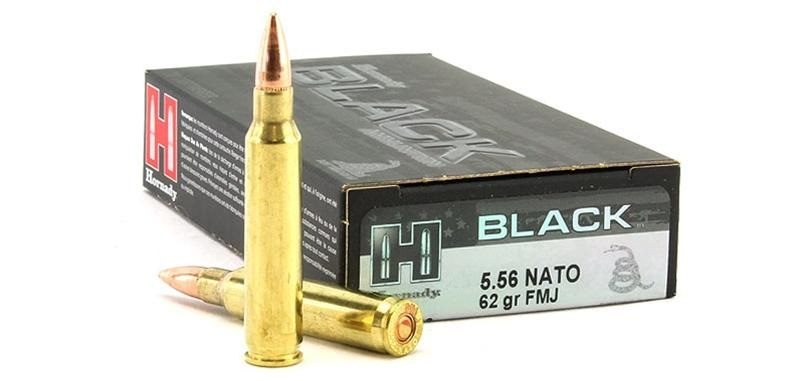
You have an AR-15 at home and a simple question. Hornady alone makes several lines of 5.56mm ammunition, they all fit the same rifle, and every box promises performance. Which one belongs in your range bag, which one is right for varmints, and which one do you want for home defense? Each line was built for a different job, and the differences in price and features mostly follow from that job.
By the end you should be able to match each Hornady 5.56 line to a purpose, understand what the features on the box mean when you shoot, and test two or three loads in your own rifle to find the one it likes.
The Hornady 5.56mm lines at a glance
Hornady sells 5.56mm and .223 Remington ammunition under several product lines: Frontier, American Gunner, Black, TAP (Tactical Application Police) and Superformance. Individual loads come and go, so the specific bullet weights below are examples to check against the current box, not a permanent catalog. The challenge in choosing is not listing specifications. It is understanding the trade-offs between cost, performance and intended application, so the table sets each line's best use beside what you give up to get it.
| Line | Ideal for | Strengths | Trade-offs |
|---|---|---|---|
| Frontier | Training, plinking and high-volume range use | Military-specification loads at a training price | Full metal jacket bullets that are not meant for hunting or defense |
| American Gunner | Everyday shooting where you want a little more than basic practice ammunition | Hollow point and boat tail options at a moderate price | Fewer specialized choices than the premium lines |
| Black | An all-purpose AR load for range and general use | Bullets matched to the AR platform's common uses | Costs more than basic training rounds |
| TAP | Law enforcement and home defense, where predictable behavior on impact matters most | Bullets engineered for specific defensive problems, such as barriers | The most expensive line, and too costly for high-volume practice |
| Superformance | Hunting and longer shots where extra velocity helps | Faster than standard loads from the same barrel; lead-free options in some calibers | Limited 5.56 choices, and availability changes |
Each row is a deal. You get the strength in the third column, and you accept the cost in the fourth. Frontier gives up expansion and refinement in return for low cost. Black and American Gunner ask a little more money for bullets suited to more than plinking. TAP gives up affordability in return for controlled terminal performance, which simply means predictable behavior once the bullet hits. Superformance trades a smaller menu for speed. The right line is the one whose trade-off you can live with for the job in front of you.
Key idea: There is no single best Hornady 5.56 load, only a best load for a particular job. Decide the job first, and the line mostly chooses itself.
Hornady Frontier 5.56mm: The workhorse for training and range days
Think about what practice really looks like. You fire hundreds of rounds learning your rifle, and most of them go into a target at distances you already know. Practice ammunition has one job: Be consistent and reliable at a price that lets you keep shooting. That is where Frontier comes in.
Frontier came out of a partnership between Hornady and the Lake City Army Ammunition Plant, which makes ammunition for the U.S. military. Hornady supplies the bullets, and the cartridges are loaded to military specifications, so the familiar Frontier 5.56 loads are equivalents of the M193 (55-grain full metal jacket) and M855 (62-grain, the "green tip") military rounds. Here "gr" is short for grains, the unit of bullet weight, and FMJ means full metal jacket, a bullet built to hold its shape rather than expand. That last point is the line's limit: An FMJ is right for paper and steel and wrong for hunting, because it is not designed to expand.
How accurate is it? That depends on your rifle as much as the ammunition. Military-specification ammunition is built to be reliable across many rifles, not to win matches, so judge it by testing it in yours rather than by a number someone else got. For most practice at 25 to 100 yards, the question is not whether the ammunition can hold an inch; it is whether you can. You can read more about the line in our guide to the Hornady Frontier product line.
Good practice: Practice rewards volume. If a budget line lets you shoot twice as often, you will improve faster than you would with a few rounds of something fancier.
Hornady American Gunner 5.56mm: The middle ground
Suppose your AR-15 does more than one job. It is a range rifle on Saturday, it handles a woodchuck problem in spring, and you want something better than basic training ammunition without moving into the premium price bracket. That is the shooter American Gunner was designed for.
The line's main step up is bullet design. Hollow point and hollow point boat tail (HPBT) bullets are common in American Gunner, and they behave differently from FMJ. A boat tail is a tapered base that reduces drag, so the bullet holds its speed a little better downrange. A hollow point opens a cavity in the nose; in match-style bullets that cavity is mostly a result of how the bullet is made for consistency, so not every hollow point is a reliable expanding bullet. Read the box to see what the bullet is meant to do before you choose it for varmints or defense. For a closer look, see our guide to the Hornady American Gunner line.
Hornady Black 5.56mm: The all-purpose AR line
Hornady introduced Black as ammunition built around what the AR and other modern sporting rifles are actually used for, choosing a bullet for each caliber that suits that platform's typical jobs. In 5.56, that has included a 62-grain FMJ load for general shooting. Black costs more than Frontier, and what you are paying for is a bullet chosen for the platform rather than a bargain price.
Whether Black shoots tighter groups than another load in your rifle is something only your rifle can answer. Two rifles from the same maker can prefer different ammunition, which is the reason for the bench test later in this article. Our article on Hornady BLACK ammunition covers the line across calibers.
Hornady TAP 5.56mm: Defensive ammunition and the problem of walls
A bullet that does its job in an open field can be the wrong choice inside a house. In a home, bullets can pass through interior walls, and the people on the other side of those walls are your family and your neighbors. TAP, short for Tactical Application Police, is Hornady's law enforcement and defensive line, and its loads are engineered for specific problems rather than general shooting.
The clearest example is the choice between barrier performance and quick expansion. Hornady's 62-grain TAP Barrier load is designed to stay intact while passing through barriers and then expand in soft tissue, which is what a patrol officer may need. Heavier TAP loads, such as a 75-grain boat tail hollow point, aim for a balance of penetration and expansion. A bullet designed to keep going through a barrier will also tend to keep going through drywall, so the barrier feature that helps an officer can be a disadvantage in a crowded house. That is the trade you are really making when you pick a defensive load, and it is why we do not claim any rifle load is safe from over-penetration indoors. Every shot goes somewhere, so you must always identify your target and know what is beyond it.
Because TAP is expensive, keep a budget load for practice, then fire enough of your chosen defensive load to confirm your rifle feeds it reliably and that it hits where your practice load hits. If it does not, re-zero with the defensive load, because that is the one that matters.
Hornady Superformance: Higher velocity and what it costs
Velocity is useful because a faster bullet spends less time in the air. It drops less on the way to the target, which gives a flatter trajectory, and it arrives carrying more energy. Hornady designed Superformance to reach higher velocity than conventional loads from the same barrel by using propellants matched to each load, while staying within industry pressure limits.
Some Superformance loads use GMX, a lead-free monolithic copper-alloy bullet, which matters where lead ammunition is restricted and for hunters who want a bullet that holds together. The 5.56 Superformance menu has been small and some loads have been discontinued, so check what is currently offered before you plan around it. If you hunt with any 5.56 load, check your state's rules first. In Iowa, for example, no .22-caliber centerfire rifle is legal for deer during the shotgun seasons, because Iowa Code section 481A.48 allows rifles only with expanding bullets .350 to .500 inch in diameter. Our guide to Hornady Superformance ammunition covers the line in more detail.
Fitting the round to your rifle with barrel length and twist rate
Picture two AR-15s, one with an 11-inch barrel and one with a 20-inch barrel, both fed the same box. They will not behave the same, because the rifle's configuration shapes what the ammunition does. Two features matter most.
Barrel length and velocity
Burning powder needs barrel length to keep pushing on the bullet, so a shorter barrel generally gives up some velocity. That matters most for bullets that depend on speed to expand or fragment: A load that opens reliably at 20-inch velocity may open less dependably from a short barrel, especially at distance. Published velocities are usually measured in a specific test barrel, often longer than yours, so expect less from a carbine or short-barreled rifle.
Twist rate and bullet weight
Twist rate is how quickly the rifling, the spiral grooves inside the barrel, spins the bullet. It is written as a ratio, so 1:7 means one full turn in 7 inches. The spin keeps the bullet stable in flight, a bit like the spiral on a well-thrown football, and longer, heavier bullets generally need a faster twist to stabilize.
- 1:7 or 1:8 twists. Stabilize the heavier bullets in the 68 to 77 grain range as well as lighter ones.
- 1:9 twists. Work well with lighter bullets (55 to 62 grain) but can struggle with the heaviest loads.
If your rifle has a 1:9 barrel, the 55 to 62 grain loads, such as Frontier's M193- and M855-equivalent loads, are the natural fit. Check your rifle maker's guidance before buying 75 grain loads. For more on how twist works, see our barrel twist rate guide.
Common mistake: Choosing a heavy match bullet because it sounds more serious, then discovering that the barrel's twist cannot stabilize it. Check the rifle first, and then the box.
Suppressors
If you shoot suppressed, test your loads suppressed. A suppressor can change a rifle's point of impact and how hard its action cycles, and some loads run better than others in a given suppressed rifle. Our article on choosing the right ammunition for suppressors explains what to look for.
Putting it to work with your own rifle
Everything above gives you a short list. Only your rifle can tell you the winner, because two AR-15s can prefer different loads. Ammunition is a three-way match between the job, the rifle and the load.
A two-load bench test
The test that settles it is short. Your rifle's barrel length and twist rate are in its manual or stamped on the barrel, and they tell you which bullet weights to consider. Pick two lines that fit your main use and suit your twist, and shoot both from a steady rest at a distance you normally shoot, with eye and ear protection on and the muzzle downrange. A few groups of three to five shots with each load show the difference; at 100 yards, a group about 2 inches across is roughly 2 MOA. The load with the smaller groups and no feeding or ejection problems is the one to zero with.
Putting it together
Each line answers a different question. For practice, an affordable FMJ load like Frontier is what builds skill. For defense, a load should be chosen for how it behaves on impact, and that is where TAP earns its price. And your rifle will shoot some loads better than others, which only a bench session tells you. Put those together and you have a plan most AR owners can follow. Practice with an inexpensive load that suits your twist rate, choose one purpose-built load for the job that matters most, confirm that both run reliably and hit where you aim, and keep enough of the serious load on hand that you never have to substitute something you have not tested.
Check your understanding
Try answering these before you open the answer. If you can decide what to do and explain why, you have it.
1. You want inexpensive ammunition for a weekend of plinking and steel with a 16-inch AR-15. Which line fits, and why?
Frontier fits. It is military-specification FMJ ammunition built for high-volume training at a training price. Its FMJ bullets are the reason it is wrong for hunting or defense, not a flaw for plinking.
2. A neighbor with a house full of interior walls asks whether the TAP Barrier load is the safest choice indoors. What do you tell them?
A load designed to stay intact through barriers will also tend to keep going through drywall, so barrier performance and limited penetration pull in opposite directions. No rifle load guarantees a bullet stops in a wall. The bigger safety factors are knowing your target and what is beyond it, and choosing your position and line of fire in your home with that in mind.
3. Your rifle has a 1:9 twist and you are tempted by a 75 grain boat tail hollow point load. What is the concern?
A 1:9 twist works well with lighter bullets (55 to 62 grain) but can struggle to stabilize the heaviest bullets, which are better served by a 1:7 or 1:8 twist. Check your rifle maker's guidance, then test before you rely on it.
4. A friend says the load his rifle shoots best will shoot just as well in yours. How do you respond?
Accuracy is a match between a particular barrel and a particular load. His results are a good place to start, but your rifle has the final say, so test it from a rest at a known distance.
5. Why should you confirm your defensive load hits where your practice load hits?
Different bullets can land in different places from the same rifle and zero. If you practice with one load and defend with another, you need to know where the defensive load actually hits, and re-zero with it if necessary.
Where to go next
You can find Hornady 5.56 NATO and .223 Remington ammunition on our website, including Frontier M193 and the 68- and 75-grain BTHP match loads, and anything listed there can be ordered if it isn't in stock.
If the other big name on the shelf caught your eye, a guide to Federal's 5.56mm ammunition lets you compare the two makers line by line. To go back a step and see how to choose among all 5.56 rounds, read A Guide to 5.56mm Ammunition. Because group sizes appear all through this article, understanding MOA is the natural next read, and 5.56 NATO and .223 Remington explains an important safety question about what your chamber will accept.
If this article helped you, we invite you to sign up for email notifications of new blog articles.