
Full Metal Jacket (FMJ) vs Total Metal Jacket (TMJ): Understanding Their Differences, Uses, and Practical Considerations
Joseph McLain Nov 13, 2026
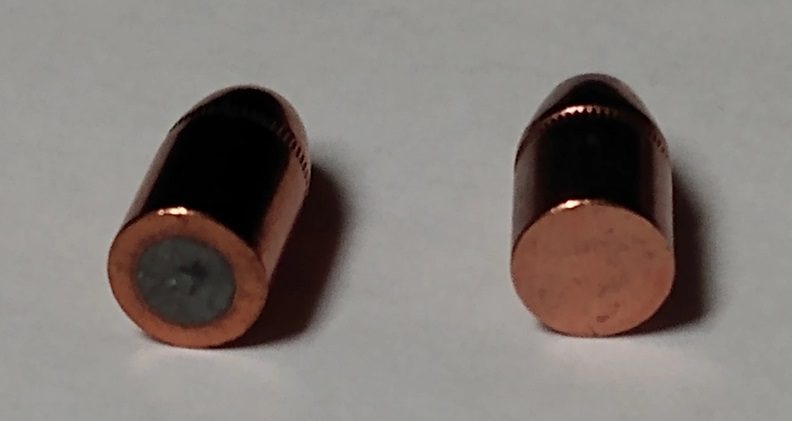
Two boxes of practice ammunition for the same gun look almost identical: same bullet weight, familiar brands. One is marked FMJ, the other TMJ, and the TMJ costs a little more. Is the difference marketing, or is it worth paying for?
It depends on where you shoot. By the end you will know what each bullet is made of, what that does inside your barrel and in the air around you, and what each one will and will not do for your accuracy, so you can choose for a winter league at an indoor range, a weekend of plinking outdoors or loading your own.
Why bullets wear a jacket in the first place
Early firearms shot bare lead projectiles. Lead is soft, so a bullet pushed hard down a barrel leaves bits of itself behind. That meant excessive lead fouling, higher friction and a limit on how fast a bullet could go. Think of dragging a stick of soft chalk down a rough sidewalk. It marks everything it touches and wears away as it goes.
Metal-jacketed bullets fixed this by wrapping the lead core in a harder metal, and the jacket does two jobs. It reduces barrel leading, which is lead deposited in the bore, because the hard outer surface is what rubs against the barrel instead of soft lead. It also helps cartridges feed smoothly in semi-automatic and automatic firearms, because a hard, smooth bullet slides into the chamber instead of snagging.
That is how the full metal jacket (FMJ) rose to prominence in military and law enforcement use, where it was prized for its penetration. Civilians adopted it for its cost-effectiveness and reliable feeding. FMJ shows minimal expansion, and you can see how it compares with bullets built to expand in our guide to pistol bullet types. If terms like cartridge and bullet are still new to you, our beginner's guide to ammunition is a good place to start first.
The one difference that matters: What happens at the base of the bullet
An FMJ bullet has a lead core inside a copper or brass alloy jacket that covers the entire bullet except the base. It is typically made by the "cup and core" method, in which a metal cup is drawn around the lead core and leaves the back end open. That open base matters because it faces the burning powder. Think of the base as the end of a log sitting in the fire. On an FMJ it is bare lead.
When the cartridge fires, hot gases contact that exposed lead. Some of the lead can vaporize into the air, and some can be deposited as residue in the barrel. As indoor ranges became more common and concern about lead exposure grew, manufacturers looked for a way to reduce airborne lead. The answer was the total metal jacket (TMJ), which fully encloses the lead core, base included, so no lead is directly exposed to the propellant gases. TMJ bullets are often called "plated bullets," because the lead core is coated or electroplated with copper (or a copper alloy) all the way around.
| Feature | FMJ | TMJ |
|---|---|---|
| Construction | Lead core in a copper or brass alloy jacket, with the base left open | Lead core fully enclosed in metal, including the base |
| How it is made | Typically "cup and core," with a metal cup drawn around the lead | Often called plated; the core is coated or electroplated with copper or a copper alloy |
| Lead at the base | Exposed to hot propellant gases | Covered, so no lead is directly exposed to the gases |
| Airborne lead | Some lead can vaporize at ignition | Minimal lead vapor |
| Barrel fouling | Lead residue can build up over time | Generally a cleaner bore, though copper fouling from the jacket can still accumulate |
| Jacket | Typically thicker than a TMJ's | Often thinner; plating can shear or degrade at extreme velocities or in ported barrels |
| Cost | Generally cheaper, with simpler manufacturing | Slightly higher, because of more material and processing |
Almost every row traces back to the same cause, the base. Covering it reduces lead vapor and lead fouling, and the trade-offs are a slightly higher price and, often, a thinner jacket. The thin plating is the reason to be careful with TMJ in a ported barrel or at extreme velocities, where it can shear or degrade. Both bullet types are widely used for practice and training. The exposed base on an FMJ does not significantly reduce its ballistic performance, and FMJ offers reliable penetration, though it may affect expansion, which is minimal in an FMJ anyway.
Key idea: FMJ and TMJ do the same job and perform much alike. The real difference is the base, where lead meets hot gas, and whether that matters to you depends on where you shoot and how much.
What the base does to your air and your barrel
With an FMJ, the open lead base contacts hot propellant gases at firing, and that can vaporize some lead into the air. This matters most in poorly ventilated or indoor spaces, because that is where the air has nowhere to go. A TMJ's fully covered core significantly reduces airborne lead, which makes it a sensible choice for extended indoor practice or for high-volume shooters concerned about lead contamination. Picture the difference between a few dozen rounds on an open hillside and hundreds of rounds in an enclosed room. The same bullet creates a very different amount of lead in the air you breathe.
One more source of lead matters, and it is not the bullet. Many standard primers contain lead compounds, so a firing primer also puts lead into the air no matter what the bullet is wearing. That is why indoor range guidance from health agencies such as NIOSH emphasizes ventilation and hygiene, and why some ranges ask for ammunition with lead-free primers as well as covered bullets. A TMJ solves the base half of the problem; a lead-free primer solves the other half. Check the box if both matter to you.
The barrel tells a similar story. Gases that hit an exposed lead base can deposit lead residue in the barrel, and the fouling increases over time. A TMJ minimizes lead contact with barrel surfaces, so bores tend to run cleaner and need less frequent maintenance. TMJ does not mean a barrel that never needs cleaning, since copper fouling can still accumulate from the jacket.
Common mistake: Treating TMJ as a reason to relax about lead. Even with TMJ indoors, make sure the space is well ventilated, wear protective gear and wash your hands after shooting. Some ranges that closely monitor lead exposure may require enhanced lead containment, so check with your range before you buy.
Does the bullet type change where your shots land?
For most shooting at short-to-mid range, barely. FMJ typically offers the standard velocities and trajectories you expect from range ammunition. TMJ is usually aimed at the same velocity range as the equivalent FMJ load, and the ballistic coefficients (a measure of how well a bullet slips through the air) are similar, so any difference in trajectory is minimal.
Precision shooters sometimes report better consistency with TMJ, but the difference is marginal at typical distances. If your groups are wider than you would like, your fundamentals and the match between ammunition and firearm are far more likely causes, and our article on how ammunition affects your accuracy shows how to test them.
Choosing FMJ or TMJ for the way you shoot
The right choice follows from where you shoot and what you care about most. The table below sorts the common situations, and the paragraph after it explains how to weigh them.
| Situation | Usual choice | Why |
|---|---|---|
| Outdoor target practice and training | FMJ | Cost-effective, general-purpose and reliable feeding in pistols, rifles or carbines; lead vapor is less of a concern outdoors, and the open base rarely affects short-range performance |
| Indoor range shooting, especially high volume | TMJ | Minimizes airborne lead for those shooting hundreds of rounds, and for staff at enclosed facilities |
| IPSC, USPSA and IDPA, especially indoor winter leagues | TMJ, or FMJ for cost | TMJ reduces barrel cleaning and limits lead exposure; FMJ remains popular for cost |
| Precision pistol or rifle | Either | Some participants claim the uniform base of TMJ helps consistency, though differences are often marginal at typical distances |
| Military and law enforcement | FMJ for duty, TMJ occasionally for training | FMJ is historically favored for penetration and uniform feeding; TMJ is occasionally used in training to reduce lead exposure for personnel who spend extensive time on indoor ranges |
For most readers the first two rows are the decision. If you mostly shoot outdoors, FMJ gives you reliable practice at the lowest cost. If you mostly shoot in an enclosed range, the slightly higher price of TMJ buys you cleaner air and a cleaner barrel. Our article on range ammunition goes through everyday practice choices in more detail.
When two of these point in different directions, ask which cost you are actually paying. A shooter who fires hundreds of rounds in a closed room is paying with air quality and cleaning time, and TMJ answers both. An outdoor shooter on a budget is mostly paying in dollars, and FMJ answers that. Either way, both bullet types feed reliably, offer consistent trajectories and make excellent practice rounds.
Putting it together
The difference comes down to where you shoot. For accuracy and feeding, FMJ and TMJ perform much alike at normal distances. For air quality in an enclosed room, TMJ is worth its price, because a covered base removes one source of lead vapor and keeps your barrel cleaner. So decide by where you shoot. Outdoors on a budget, buy FMJ. Indoors and often, pay a little more for TMJ, consider lead-free primers too, and keep the habits that matter more than any box: Good ventilation, no eating or drinking on the line, and washing your hands and face before you leave.
Check your understanding
Try answering these before you open the answer. If you can decide what to do and explain why, you have it.
1. You shoot a winter league at an indoor range three nights a week. Why might TMJ be worth the extra few dollars a box there?
An FMJ's bare lead base meets the hot powder gas and can vaporize some lead into the air, and in an enclosed room that air has nowhere to go. A TMJ covers the base, which cuts that source of airborne lead and keeps the bore cleaner. At that volume indoors, the small price difference buys real benefit.
2. A friend says TMJ will shrink your groups. How would you respond?
For most short-to-mid-range shooting, the difference in accuracy between FMJ and TMJ is negligible. Some shooters note that a fully enclosed base gives more uniform gas pressure and may help consistency, but the differences are often marginal. Fundamentals and a good match between ammunition and firearm matter far more.
3. You shoot outdoors, shoot a lot and are watching your budget. Which bullet is the better fit, and why?
FMJ. It is generally cheaper, feeds reliably in pistols, rifles and carbines, and lead vapor is less of a concern outdoors. The open base rarely affects short-range performance.
4. Your range uses TMJ ammunition. Can you stop worrying about ventilation and washing your hands?
No. TMJ covers the bullet's base, but many primers still release lead compounds, so good ventilation, protective gear and washing your hands after shooting remain essential. TMJ also does not eliminate barrel cleaning, since copper fouling can still build up.
Where to go next
You can find D-Lead wash and surface cleaner and total metal jacket ammunition, including CCI Blazer Brass Clean-Fire and Speer Lawman, on our website, and anything listed there can be ordered if it isn't in stock.
To compare everyday practice ammunition by brand, read Mastering Range Ammo, which compares five well-known range brands and puts this decision into real boxes. Ammunition Quality: Understanding Cheap, Good, High-Quality, Match, and Hunting Ammo helps you decide when a pricier box earns its place. And because FMJ shows minimal expansion, the role of ballistic gelatin in testing firearm effectiveness shows how penetration and expansion are measured, which is the other half of the story.
If this article helped you, we invite you to sign up for email notifications of new blog articles.