
Federal Fusion Ammunition
Joseph McLain Nov 13, 2026
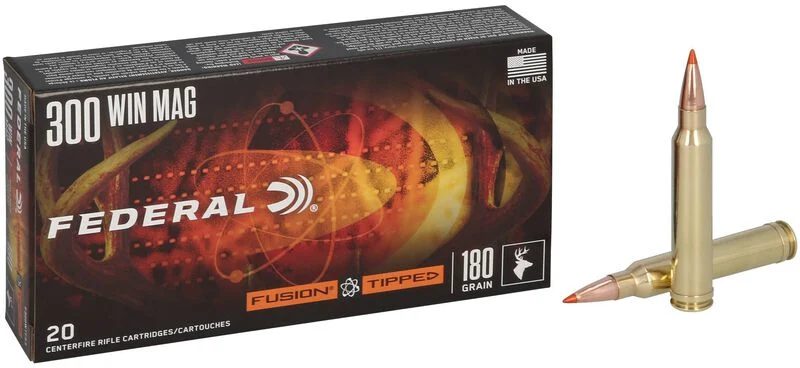
Three deer loads sit side by side: a plain Federal Power-Shok soft point, a Federal Fusion that costs a few dollars more, and a premium load that costs considerably more. Plain soft points have filled tags for generations, and some hunters won't use anything that isn't bonded. Is Fusion worth the step up?
The answer depends on things you can name. By the end you should be able to explain what "bonded" means and when it matters, decide whether Fusion is worth the step up from a plain soft point for your hunting, choose between Fusion and Fusion Tipped, and know which Fusion loads are legal for Iowa deer.
What happens when a soft point hits bone
A traditional soft point is a lead core pressed into a copper cup, with some lead showing at the nose. When it hits a deer, the soft nose flattens and the bullet mushrooms, which is what makes a wide wound. The jacket and core are only pressed together, though. Hit something hard, such as a shoulder blade or a heavy rib, especially at high speed, and the two can tear apart. The core keeps going, lighter and smaller, and may stop short of the heart and lungs.
Think of two boards stacked on top of each other versus two boards glued together. A sharp blow can split the stacked boards apart, while the glued pair takes the blow as one piece. A bonded bullet is the glued pair: its jacket and core are joined so they can't separate. Federal makes Fusion by forming the core under pressure and then applying the copper jacket to it with an electrochemical process, so the jacket is fused to the core rather than wrapped around it. Federal also cuts slits (skiving) into the nose so the bullet opens evenly.
The result is a bullet that keeps most of its weight after it mushrooms. A heavier bullet keeps pushing, so it is more likely to reach the vitals after going through bone or on a steep angle.
Key idea: Bonding doesn't make a bullet kill better on a perfect broadside lung shot. It makes it more forgiving when the shot isn't perfect: a quartering angle, a shoulder, a bigger animal, or a fast bullet hitting up close.
When bonded is worth paying for
On a broadside whitetail at 100 yards, a plain soft point and Fusion both pass through the lungs and the deer is just as dead. The difference shows up when the conditions get harder.
- A bigger animal. Elk, black bear and big-bodied deer have thicker muscle and heavier bone between the bullet and the vitals.
- A bad angle. A deer quartering toward you puts the shoulder in the path. The bullet has to go through it and keep going.
- A fast bullet up close. Magnums and fast cartridges hit hardest at short range, which is exactly when a plain soft point is most likely to come apart.
- A small cartridge. A light bullet from a .243 or .223 has little weight to spare. If it sheds part of it, there isn't much left to drive deep.
- If you hunt whitetail broadside at ordinary distances with a .308, .30-06, .270 or 6.5 Creedmoor, and you'll pass on bad angles, a plain soft point such as Power-Shok or Core-Lokt does the job. Fusion is a modest upgrade, not a necessity.
- If you'll take quartering shots, hunt bigger deer, or shoot a .243 or other light cartridge, choose Fusion, because the bond is what keeps the bullet together when it meets bone.
- If you hunt elk, moose or black bear, Fusion is the minimum, and a premium bonded bullet such as Federal Terminal Ascent or Nosler AccuBond is the better choice for long or hard shots.
If you're not sure, buy Fusion. It costs only a little more than a plain soft point and covers the shot that goes wrong.
Fusion or Fusion Tipped?
Fusion Tipped adds a polymer point to the same bonded bullet. A pointed tip cuts through the air better, so the bullet keeps more speed and drops less at distance, and on impact the tip is driven back into the nose and starts it opening, which helps when the bullet has slowed down far out.
- If most of your shots are under about 250 yards, choose standard Fusion. At those distances the flatter flight of the tip barely changes where the bullet lands.
- If you hunt open country where 300- to 400-yard shots happen, choose Fusion Tipped, because it drops less and opens more reliably at the slower speeds of a long shot.
Whichever you choose, changing loads moves where your rifle hits, so sight in again with the box you'll hunt with, wearing eye and ear protection and shooting from a steady rest. If your rifle comes in two Fusion weights, such as 150 and 165 grains in .308, shoot a group with each. Rifles prefer some loads over others, and the one that groups tighter in yours is the one to hunt with.
Common mistake: Buying a better bullet instead of practicing. A bonded bullet helps after it hits the animal; it does nothing for a shot that lands in the paunch. Shoot enough before the season to know you can keep every shot in a deer's 8-inch vital area at the distance you'll take it.
Fusion for Iowa deer
Iowa allows rifles for deer only in certain seasons, and under Iowa Code 481A.48 they must fire an expanding bullet from .350 to .500 inch in diameter with at least 500 foot-pounds of published muzzle energy. That rules out most of the Fusion line, including the .223, .243, .270, 6.5 Creedmoor, .308 and .30-06, however good they are in other states.
The Fusion loads that fit Iowa's rifle seasons are the straight-wall ones: Fusion .350 Legend 160-grain, built for the cartridge most Iowa rifle hunters now use, and Fusion .44 Magnum 240-grain, which works in a lever-action carbine or a revolver. In a .350 Legend, Fusion makes sense for the same reason it does anywhere: the .350 Legend fires a moderate bullet, and a bond helps it hold together through a shoulder.
Federal also makes Fusion Subsonic in .30-30 and .45-70, loaded below the speed of sound for shooting with a suppressor. A slow bullet drops steeply, so those are close-range loads; keep shots short and sight in with them.
Fusion for the .223 and other light cartridges
Federal makes a Fusion load for the .223 Remington built specifically for deer, not varmints. A varmint bullet is designed to break apart on a coyote; on a deer it can fail to reach the vitals. Fusion's bond keeps the light bullet together. In states where a .223 is legal for deer, Fusion is one of the better choices, but shots should stay close and broadside, because a light bullet has little margin for error. In Iowa, the .223 isn't legal for deer.
Check your understanding
Try answering these before you open the answer. If you can decide what to do and explain why, you have it.
1. You hunt whitetail in Missouri with a .30-06, sit over a food plot and only take broadside shots under 150 yards. Do you need Fusion?
Not really. On a broadside shot at that distance, a plain soft point opens and passes through the lungs just as well. Fusion is cheap insurance if you might take a harder angle, but your hunting doesn't demand it.
2. Your teenager is starting with a .243 for deer in Kansas. Plain soft point or Fusion?
Fusion. A .243 bullet is light, and a new hunter is more likely to take a less-than-perfect angle. A bonded bullet keeps the little weight it has, so it still reaches the vitals if it meets bone.
3. You'll hunt Iowa's shotgun seasons with a .350 Legend rifle. Which Fusion load, and why that one?
Fusion .350 Legend 160-grain. The .350 Legend is one of the few Fusion cartridges legal for Iowa deer, and the bond helps its moderate bullet hold together if the shot goes through the shoulder.
4. A friend is heading to Wyoming for pronghorn, with shots likely at 300 to 400 yards. Fusion or Fusion Tipped?
Fusion Tipped. Its pointed tip keeps more speed and drops less at distance, and it starts the bullet opening when it has slowed down far out. At those ranges that matters more than it does in Iowa timber.
5. You switch from a plain soft point to Fusion in the same weight. Can you keep your old zero?
No. Even a bullet of the same weight can hit somewhere different because its shape and speed differ. Sight in again with the Fusion load before the season.
Where to go next
You can find Federal Fusion ammunition on our website, including Fusion and Fusion Tipped in most popular rifle calibers, and anything listed there can be ordered if it isn't in stock.
To see how bullets open at different speeds, read how deer bullets work. If your hunt calls for a step above Fusion, Federal Terminal Ascent explains the premium bonded option. And for Iowa's straight-wall choices, see choosing a straight-wall deer rifle.
If this article helped you, we invite you to sign up for email notifications of new blog articles.