
Hornady Critical Defense vs. Critical Duty: Which One is Right for Your Needs?
Joseph McLain Nov 07, 2026
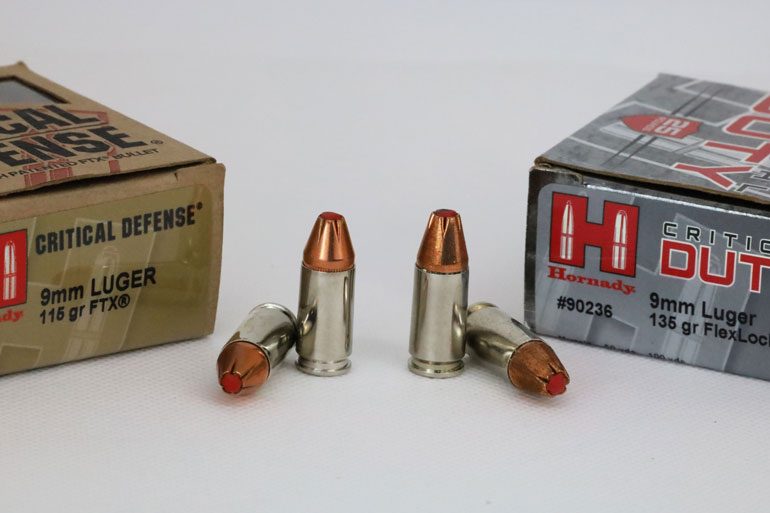
Two boxes of Hornady hollow points look almost alike. One is labeled Critical Defense and the other Critical Duty. Both come from the same maker in popular handgun calibers, so it's easy to assume they are the same thing with a different label, or that the duty load must be better because police carry it. Neither is true: each was built to solve a different problem.
By the end you should understand what each line is designed to do and why, match one to your pistol and the situations you actually prepare for, and know how to confirm it in your own gun before you trust it.
Two lines, two problems: Why Critical Defense and Critical Duty are built differently
Hornady is known for innovative bullet technology and purpose-driven design, and these two lines show that clearly. Critical Defense is tailored for civilian self-defense in close-quarters scenarios, particularly with short-barreled concealed-carry pistols. Critical Duty is built to meet the FBI protocol for barrier penetration and consistent expansion, which targets law enforcement and tactical needs. The FBI protocol is a standard series of tests that sends bullets through common barriers such as auto glass, sheet metal and drywall, then measures how they perform.
To see why those goals lead to different bullets, start with what a hollow point does. A hollow point has a cavity in its nose so that, on impact, the bullet opens up like a flower, a process called expansion. A bullet that expands quickly and widely transfers its energy fast, but it also slows down fast, so it does not travel as deep. A bullet built to hold together travels deeper, but it opens less dramatically. Every defensive bullet is a negotiation between those two things, and the two Hornady lines simply settle the negotiation in different places. For a wider look at bullet designs, see our guide to pistol bullet types.
Key idea: Neither line is simply "stronger" than the other. Critical Defense is tuned to expand quickly in soft targets and short barrels, and Critical Duty is tuned to keep penetrating and expanding after it has been through something hard.
Critical Defense: Built for short barrels and close quarters
The heart of Critical Defense is the Flex Tip eXpanding (FTX) bullet. A polymer tip sits in the hollow point cavity and keeps it from plugging with clothing or other soft barriers. This matters because a plain hollow point pushed through a heavy jacket can pack its cavity with fabric, much like pressing a cup into mud. A cavity that is full of material does not open the way it was designed to. On impact, the FTX tip is driven back into the bullet, which starts quick mushrooming, and that is what you want in personal defense, where the goal is immediate energy transfer.
The second design choice is the barrel length. Bullets need speed to expand. A short barrel gives the burning powder less distance to push the bullet, so velocity drops, and some loads lose their ability to open up reliably. Critical Defense keeps velocities sufficient to expand reliably even in barrels under 4 inches, which is often a challenge for other loads in subcompact firearms. In subcompact trials it maintains its expansion thresholds from short barrels of 3 to 3.5 inches. The line also uses low-flash propellants, which minimize muzzle flash. That is useful in low-light home defense or concealed carry, because a big flash can wash out your own night vision for the moments after the shot.
The third piece is penetration. Critical Defense is designed to stop threats quickly while minimizing the risk of going through the target and into bystanders or walls, and it does this with controlled penetration depths. In dense urban areas or inside a home, collateral damage is a real worry, and this design addresses it. It does not replace the habit of knowing your target and what is behind it, which you must still practice every time. Our firearm safety guide covers those rules.
Critical Defense is available in the common concealed-carry calibers: .380 ACP, 9mm Luger, .40 S&W and .45 ACP, plus revolver-friendly loads in .38 Special and .357 Magnum. If you own handguns in more than one caliber, you can run the same ammunition line across all of them.
If your barrel is under 4 inches, or your main concern is close quarters in a home or concealed carry, Critical Defense is built for you.
Critical Duty: Built to work after it hits something hard
Critical Duty is an evolution of the FTX idea. Hornady kept the polymer Flex Tip but added a stronger mechanical bond between the bullet's jacket (its outer layer) and its core (the inside). That bond is the InterLock band, and the combined design is called FlexLock®. Why does the bond matter? When a bullet hits auto glass, sheet metal or drywall, the jacket can be stripped away from the core. A bullet that loses its jacket loses weight and structure, and it stops behaving the way it was designed to. The InterLock band keeps those two layers together, so there is minimal jacket-core separation when passing through the barriers that are staples of the FBI testing protocol.
The results are what you would expect from a bullet that stays together. The .40 S&W and 9mm +P versions of Critical Duty have been thoroughly tested for consistent 12 to 18 inches of penetration after going through auto glass, steel, heavy clothing and similar barriers. The heavier bullet construction aims for controlled expansion and less fragmentation, with deeper penetration. That matters in tactical or duty scenarios where a threat may be behind cover. Another way to say it is that the line aims to be barrier-blind, which means it performs about the same no matter what it passes through first.
This performance comes with higher pressure. In 9mm and .45 Auto you will often see +P designations. Larger, full-sized service pistols handle those pressures more comfortably, which helps deliver the consistent velocity and energy that barrier-blind performance needs. The calibers reflect that focus on duty-size guns: 9mm +P, .40 S&W, .45 Auto +P and similar, with less emphasis on subcompact or micro pistols. If a box says +P, check your pistol's manual or ask the manufacturer first, because not every pistol is rated for it.
If you shoot a full-size pistol and might have to deal with windshields, heavy clothing or other hard cover, Critical Duty is built for you.
Reading the comparison side by side
| Feature | Critical Defense (CD) | Critical Duty (CDU) |
|---|---|---|
| Primary audience | Civilians (concealed carry, home defense) | Law enforcement, tactical pros |
| Bullet design | FTX polymer tip, quick expansion | FlexLock with InterLock band for barrier penetration |
| Barrel optimization | Short-barreled handguns (sub-4") | Full-sized duty pistols |
| Over-penetration | Lower risk, shallower penetration | Deeper, FBI-compliant penetration |
| Barrier performance | Effective vs. clothing/soft barriers | Passes FBI protocol (auto glass, steel, heavy clothing) |
| Recoil | Typically lower or standard pressure loads | More robust recoil with +P or high-pressure loads |
| Muzzle flash | Low (important for low-light civilian use) | Also uses low-flash propellants but typically higher muzzle blast |
| Expansion | Rapid, maximizing wound cavity in soft targets | Controlled to ensure adequate penetration after barriers |
Follow one thread at a time. The audience row tells you who each load was designed for, and almost every other row follows from it. Civilians mostly face soft barriers like clothing and close distances, so CD expands rapidly and penetrates less. Duty users may face glass, steel and cover, so CDU is built to expand in a controlled way and penetrate deeper. Notice also that recoil and muzzle blast move in the opposite direction from penetration. The more robust loads push back harder, and that matters if you are not practiced with them.
What the testing tells you, and what it does not
Independent gel tests of Critical Defense typically show 11 to 13 inches of penetration, which suits close-range encounters. Ballistic gelatin is a test medium that stands in for soft tissue, and it lets different loads be compared under the same conditions. The FTX tip helps avoid clogging, so the hollow point can expand even through multiple layers of clothing. Critical Duty is known to maintain 12 to 18 inches of penetration after auto glass, drywall or plywood, with minimal bullet deformation. Core-jacket separation is rare because of the mechanical bonding, and the +P versions show reliable velocity and consistent terminal ballistics across barrier types.
It would be easy to read those numbers and think Critical Duty is simply "deeper and therefore better." Look again. The ranges overlap, and they were measured under different conditions. The first describes a soft target, and the second describes what is left after a barrier. So the real difference is not that one bullet is weak. It is that one was designed with soft targets and short barrels in mind, and the other with hard barriers and full-size guns in mind.
Common mistake: Assuming more penetration is automatically better, or that less penetration automatically makes you safe. Each is a trade-off tied to the problem you expect. Choose the design that fits your situation, and keep practicing safe habits regardless of which box you buy.
Shooter and agency reports fit the same picture. Civilian shooters consistently note reliable feeding in micro-compact pistols such as the Ruger LCP, Glock 43 or Smith & Wesson Shield, and low muzzle flash has been verified in low-light range tests, which helps preserve night vision. On the duty side, some departments reportedly switched to Critical Duty after their old loads failed FBI barrier tests, and field reports indicate improved barrier-blind consistency. Bullets recovered from auto glass scenarios often show minimal jacket separation, which is the mechanical lock doing its job.
Choosing between them: Four questions and three scenarios
Choosing comes down to four questions. Ask them in this order, because the first two usually settle it.
- Intent. Daily civilian carry points to Critical Defense, and duty-grade performance points to Critical Duty.
- Barrel length. Sub-4" points to Critical Defense, and full-size points to Critical Duty.
- Recoil and comfort. Higher-pressure loads need more practice.
- Penetration or barriers. Worry about walls and bystanders, or worry about windshields and heavy cover.
Intent and barrel length tell you which line was built for you. Recoil tells you how much practice the load will demand, since Critical Duty loads often run at higher pressures, especially +P, and a load you cannot shoot well is not helping you. The last question is the tie-breaker. If you are worried about walls and bystanders, choose the shallower-penetrating Critical Defense. If you might face windshields or heavy cover, choose the more robust bullet in Critical Duty.
Here is how those questions play out for three different people.
- The everyday carrier. This shooter carries a Glock 43 or similar subcompact. The barrel is under 4 inches and soft barriers like clothing are the likely obstacle, so Critical Defense fits. Lower recoil also makes follow-up shots easier.
- The home defender. A nightstand pistol and family members in the other rooms make walls the main concern. Critical Defense minimizes the risk of over-penetration in close quarters, and its low flash helps at night.
- The duty shooter. A police or security officer with a 4 to 5 inch duty pistol, or someone who expects to deal with windshields or other hard cover, should look at Critical Duty for its consistent performance through auto glass or light steel.
If you own both a subcompact and a full-size pistol, choose per gun rather than per brand. Each barrel produces slightly different velocities and reliability, so the same box may suit one pistol better than the other.
Matching the load, then proving it
Three facts point to the right line: your barrel length, the situations you prepare for, whether carry, home or duty, and the barriers you realistically expect. The four questions above turn them into a choice, and the caliber has to match the marking on your pistol, with any +P load checked against your owner's manual. At the range, following the basic safety rules, a few magazines of the chosen load at short distance show whether it feeds, fires and ejects every round and lands where you aim. If your range allows low light, a few more shots show how the flash looks and whether you can still see your sights. Our firearm safety guide is a good refresher before you go.
Putting it together
The real question is your pistol and your situation. Critical Defense is built to expand reliably from shorter barrels with less penetration through barriers, and Critical Duty is built for full-size duty pistols and barrier performance. Match the line to your barrel length and the barriers you realistically face, check that your pistol is rated for any +P load, and confirm that the load feeds and hits where you aim before you carry it.
Check your understanding
Try answering these before you open the answer. If you can decide what to do and explain why, you have it.
1. You carry in winter under a heavy coat. Why does Critical Defense put a polymer tip in the hollow point cavity?
The tip keeps the cavity from plugging with clothing or other soft barriers. On impact it is driven into the bullet, which starts quick expansion even after passing through heavy fabric.
2. A friend with a subcompact pistol and a barrel under 4 inches wants Critical Duty because it passes the FBI protocol. What would you tell them?
Critical Duty is optimized for full-size duty pistols and is built for hard barriers. Critical Defense is tuned to expand reliably at the lower velocities of short barrels. Ask what barriers they actually expect, and for most civilian carry in a subcompact, Critical Defense fits.
3. What does the InterLock band do, and why does it matter if the threat is behind a car window?
It bonds the jacket to the core so they do not separate when the bullet passes through barriers like auto glass. A bullet that stays together keeps its weight and keeps penetrating and expanding in a controlled way.
4. Critical Defense shows 11 to 13 inches of penetration in gel, and Critical Duty shows 12 to 18 inches after barriers. Why shouldn't you treat those as a simple "weaker versus stronger" comparison?
The ranges overlap and they come from different conditions. One reflects soft-target performance, and the other reflects performance after barriers. Each is the right design for a different problem.
5. A friend with an older compact 9mm wants to carry Critical Duty +P. What should he check first, and why is it often +P?
Whether his pistol is rated for +P, in the owner's manual. Critical Duty is often loaded to +P because full-size service pistols handle the higher pressure comfortably, and it supports consistent velocity for barrier performance. He should also practice with it, since recoil is stronger.
Where to go next
You can find Hornady Critical Defense and Critical Duty ammunition on our website, and anything listed there can be ordered if it isn't in stock.
For the bigger picture on choosing carry or home defense loads, read Selecting the Right Personal / Home Defense Ammunition. When you want to see how Hornady's lines stack up against Federal and Speer, Premium Defensive Ammunition is the natural comparison. Since caliber is the other half of the decision, Personal Protection / Home Defense Caliber Comparison will help you choose what the bullet is loaded in. And because 9mm is such a common choice, Hornady's 9mm Lineup shows where these two lines fit among the rest of Hornady's offerings.
If this article helped you, we invite you to sign up for email notifications of new blog articles.