
Remington Core‑Lokt Ammunition: Evolution, Variations, and Best Practices
Joseph McLain Nov 06, 2026
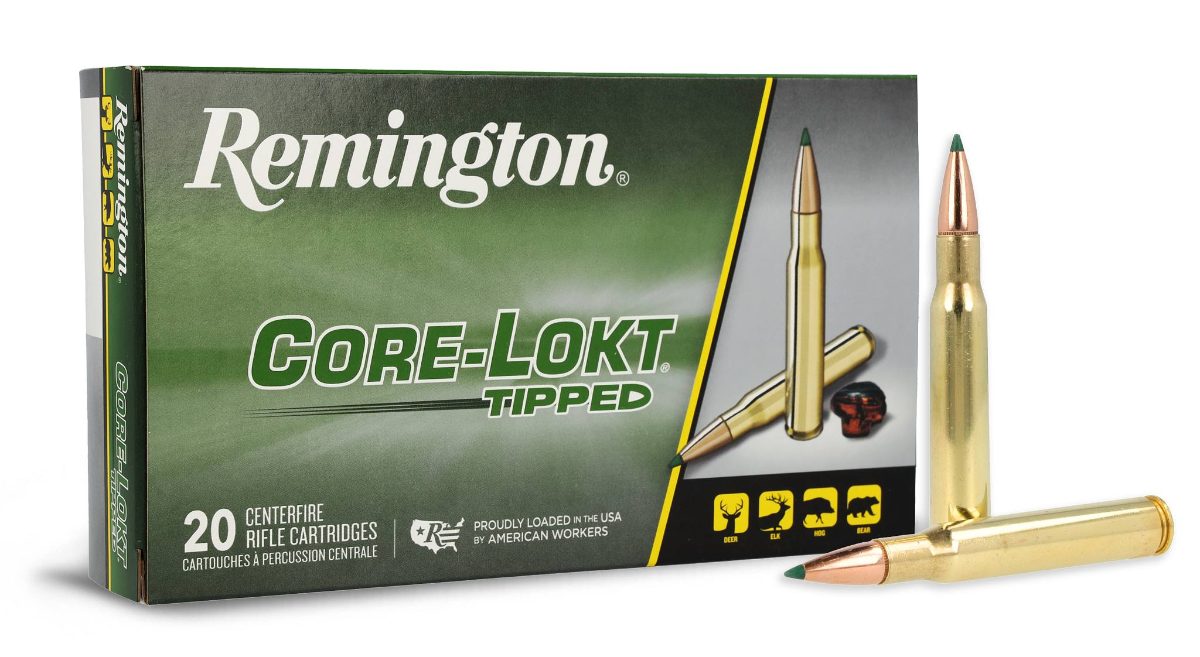
A few weeks before deer season, your cartridge shows up in two Remington boxes. One says Core-Lokt. The other says Core-Lokt Tipped. Hunters have trusted the first for generations, and the second looks like a newer idea. Which one belongs in your rifle? By the end you should be able to match the load to your caliber and the way you actually hunt, and set realistic expectations for accuracy and recoil.
For deer in timber and brush at 150 yards and in, the original soft point does the job well at a fair price. If your shots stretch past 200 yards in open country, the Tipped version's flatter path makes the hold easier. Either way, buy a box of each in your cartridge and let your rifle pick the one it groups best. In Iowa, remember that bottlenecked rifle cartridges such as the .270 and .30-06 aren't legal for deer in most seasons; Core-Lokt in those calibers is for out-of-state hunts and other game.
What a Core-Lokt bullet does, and why it has lasted since 1939
Remington introduced Core-Lokt in 1939 as a soft-point cartridge, and hunters often call it "The Deadliest Mushroom in the Woods." The nickname makes sense once you see how a hunting bullet is built. Most are a lead core wrapped in a metal jacket. A soft point leaves the lead tip exposed, so the bullet begins to open up the moment it meets soft tissue, the way a mushroom cap spreads while the stem stays solid behind it.
The weak spot in that design is the joint between the jacket and the core. The force of impact can tear the two apart, which is called core-jacket separation. When it happens, the bullet loses mass, and a lighter bullet has less ability to push deep. Core-Lokt answered with a mechanical fix. A raised locking ring in the jacket grips the lead core, so the two stay together on impact. The bullet expands in a predictable, mushroom-like pattern and keeps enough weight to penetrate into the vital organs. In 1939, ammunition technology was still young, and this design set a new standard for terminal performance, which simply means what a bullet does once it arrives.
Key idea: A hunting bullet has two jobs that pull against each other. Expansion opens a larger wound channel, and penetration carries the bullet deep enough to reach the vital organs. The locked core is how Core-Lokt keeps both jobs working together.
Why does the balance matter? A bullet that opens too little can pass through while cutting a narrow path. A bullet that opens too much, or that loses weight along the way, can stop before it reaches the vitals. Controlled expansion on a bullet that holds its weight avoids both problems, and it also helps limit over-penetration. That is why hunters across North America have leaned on Core-Lokt for generations, praising its consistent expansion, deep penetration and forgiving nature even when shot placement is not perfect. Treat that forgiveness as a safety margin and not a plan. A clean, ethical kill still begins with a well-placed shot.
Original soft-point or Core-Lokt Tipped: Choosing by where you hunt
Over the decades Remington has expanded the line, and the two main versions are the original soft-point and Core-Lokt Tipped. The Tipped version keeps the locked-core idea and adds a polymer tip to the front of the bullet. That small change affects both flight and expansion.
Start with flight. Air resists every bullet, and ballistic coefficient (BC) is a number that describes how well a bullet fights that resistance. A pointed shape slips through air more easily than a blunt one, the way your hand slices through the wind outside a car window when you hold it edge-on instead of palm-forward. The polymer tip gives Core-Lokt Tipped a more aerodynamic, pointed profile, which improves the BC and reduces drag. The result is a flatter trajectory, meaning the bullet drops less over a given distance, and better energy retention at mid to long range.
Now expansion. On impact, the polymer tip is designed to be driven back into the lead core, which starts rapid but controlled expansion. The bullet opens quickly enough for effective terminal performance and still keeps more velocity for extended range.
| Feature | Original soft-point | Core-Lokt Tipped |
|---|---|---|
| Front of the bullet | Exposed soft lead tip | Polymer tip added |
| How expansion starts | Lead tip meets soft tissue and begins to open | Tip is driven back into the core, starting rapid, controlled expansion |
| In flight | Classic soft-point profile | Higher BC, less drag, flatter trajectory |
| Where it fits best | Short- to mid-range shots, woods and brush | Mid- to long-range shots, open terrain |
| Calibers the line highlights | .30-30 Winchester, .270 Winchester, .30-06 Springfield | .270 Winchester, .30-06 Springfield, .308 Winchester, magnums such as .300 Win Mag |
Both versions share the locked core, so the real differences are the tip, the flight and the range where each one shines. Picture two hunters. One carries a .30-30 lever action into dense timber, where shots are typically 100 to 150 yards. The other watches open ground with a .270 and may need to shoot at 200 yards or more. The first hunter gets what is needed from the original soft-point, whose predictable expansion handles close, brushy shots. The second benefits from the Tipped bullet's flatter trajectory, because less drop means less guesswork at distance.
Neither version gives up terminal performance to get there. The Tipped bullet is still effective at close range, and the original is a dependable all-purpose load for both short- and mid-range shots.
Good practice: Choose for the shots you actually take, not the ones you imagine. Shots of 100 to 150 yards sit at the soft-point end of the scale, and shots of 200 to 300 yards are where a flat trajectory starts to matter.
Matching Core-Lokt to your caliber and your game
Core-Lokt is loaded in a wide range of calibers, and the same bullet design behaves a little differently depending on the cartridge behind it. The table below pulls together the most popular choices and the hunting each one suits.
| Caliber | Core-Lokt version highlighted | Typical hunting use |
|---|---|---|
| .30-30 Winchester | Soft-point | Lever-action deer hunting in dense woods, with medium-range shots typically 100 to 150 yards |
| .270 Winchester | Tipped (soft-point is also popular) | Open-country pronghorn and whitetail, where shots may be 200 yards or more |
| .30-06 Springfield | Standard and Tipped | A wide range of game from deer to elk, with bullet weights typically 150 to 180 grains |
| .308 Winchester | Core-Lokt and Tipped | Hogs, black bear or deer, with a bullet weight chosen for the target |
| Magnums such as .300 Win Mag | Tipped | Long-range hunts in open terrain, keeping energy beyond 300 yards on large game such as elk or moose |
Moving down the table, the game gets larger and the distances grow, and the choice shifts from the lighter, shorter-range setups toward heavier bullets and the Tipped version. Bullet weight is measured in grains, a small unit of weight, and it matters because larger animals call for deeper penetration, which a heavier bullet generally helps deliver. The .308 row shows the idea. Core-Lokt loads in that cartridge balance manageable recoil with deep penetration, and the locked core gives consistent expansion on larger game. The catch is that the shooter still has to choose an appropriate bullet weight for the intended target. Our guide to bullet weight in rifle rounds walks through that choice.
Core-Lokt also shows up beyond big game. In varmint cartridges such as those based on the .22-250 or even the .223 Rem, Core-Lokt loads can be used, although premium loads may be preferred for extreme varmint work. For predator hunting, where a quick, humane kill is essential, the controlled expansion of Core-Lokt and Core-Lokt Tipped provides a useful balance of penetration and rapid energy transfer.
One more check before you buy. Rules about which cartridges are legal for deer and other game differ by state and sometimes by season, so confirm yours with your state wildlife agency.
What to expect in the field: Accuracy, terminal performance, recoil and weather
Accuracy
Hunters commonly report the classic Core-Lokt grouping around 1 to 2 MOA at 100 yards in a well-tuned hunting rifle, though your rifle decides the result. MOA, or minute of angle, describes group size in a way that grows with distance, and one MOA is roughly one inch at 100 yards. So 1 to 2 MOA means groups of about one to two inches at 100 yards and about two to four inches at 200. That is acceptable accuracy for ethical shot placement, and it holds up even when there is slight variation from one box to the next. Our article on understanding MOA shows how to use the idea. The Tipped version's flatter trajectory does not shrink groups, but it means less drop to hold over at longer distances, which is an advantage in open country.
Core-Lokt is not match-grade ammunition. It is not built to deliver the sub-MOA groups that high-level competition demands, and that is a fair trade for ammunition designed to hunt.
Terminal performance
The original soft-point is known for reliable mushroom expansion, and the locking ring keeps the weight needed for deep penetration to the vital organs. In the Tipped version, the polymer tip improves aerodynamics and starts expansion more predictably, which helps preserve energy so the bullet transfers a significant portion of its energy to the target. Both are designed for ethical kills, with enough expansion to create a large wound channel and enough penetration to reach the vitals. You cannot see any of that on a paper target, which is why testers use ballistic gelatin. Our article on how ballistic gelatin is used to test expansion and penetration explains what those results can and cannot tell you.
Recoil and handling
Core-Lokt is typically loaded to standard pressures, so recoil is manageable in popular hunting calibers such as .30-30, .270 and .30-06. In calibers like .30-30 and .270 it is mild, which suits quick follow-up shots in dense brush. In magnum cartridges such as .300 Win Mag, recoil is more pronounced. Practice from a steady rest and then from field positions until you can fire without anticipating the kick, because flinching pulls shots off target.
Weather and durability
Core-Lokt is built with robust brass cases and standard primers. The cases do not use advanced sealing technologies, so proper gun care is what keeps them dependable in damp or cold conditions. The load has a long record in humid forests, cold mountain country and hot weather, and its consistent primer seating contributes to durability over long hunting seasons.
How Core-Lokt compares with Power-Shok and American Whitetail
Core-Lokt is not the only soft-point line on the shelf. Two others hunters often weigh against it are Federal Power-Shok and Hornady American Whitetail.
| Line | Bullet design | What it is known for |
|---|---|---|
| Remington Core-Lokt | Mechanically locked core, soft-point, with a Tipped version | Introduced in 1939 and used in the field for decades |
| Federal Power-Shok | Softer point design | Consistent expansion and performance |
| Hornady American Whitetail | InterLock® soft-point | Controlled expansion and excellent terminal performance |
All three are built for the same job, and all are effective on medium game. The differences often come down to shooter preference and the characteristics of a specific load. Core-Lokt's strongest argument is its record, with decades of use across North America and the locked-core construction behind its predictable mushrooming. The Tipped version adds modern ballistic efficiency to that record, while American Whitetail focuses on precision with advanced bullet geometries. Details on each are in our articles on Federal Power-Shok and Hornady American Whitetail.
The practical answer is that your rifle decides. Every rifle has its own taste in ammunition, and it will group one load better than another. Shooting two loads side by side from a rest at 100 yards, zeroing with the winner, settles the question for your rifle.
Strengths, limits and the reloading advantage
An honest look at Core-Lokt starts with what it does well. The locked-core design is time-tested and delivers reliable, controlled expansion and deep penetration. It is available in nearly every popular hunting cartridge, from the classic .30-30 and .270 to modern magnums like the .300 Win Mag and even the .308 Win. It is competitively priced, which makes extensive practice and high-volume shooting accessible, and the Tipped option brings flatter trajectories and better downrange energy to open-country and long-range hunts.
The limits are just as real. Core-Lokt is not match-grade, so it will not give you the groups required for high-level competitive shooting. Compared with premium lines like Hornady American Whitetail, it relies on proven, traditional designs, and some shooters prefer more advanced bullet technology for specialized work. Some modern shooters also find a traditional design less refined than newer offerings, although the Tipped version has largely answered that concern.
Dedicated reloaders get one more benefit. Core-Lokt uses boxer-primed brass, a primer design that suits reloading, and reloading can significantly cut costs for high-volume hunters. Reloaders can also fine-tune loads to a specific rifle and hunting conditions, potentially improving group sizes and terminal performance beyond factory specifications. Reloading is a skill of its own, and handloaders should always follow published load data from a reputable source.
Putting it together: A simple way to choose
When you choose, run through four questions in order.
- What are you hunting? Deer and similar medium game suit the classic calibers, while elk or moose call for the heavier and magnum options in the table.
- How far will the shot be? For dependable performance at moderate ranges of 100 to 300 yards, Core-Lokt's grouping and penetration give effective terminal performance, and beyond 300 yards the Tipped magnums take over.
- What kind of country is it? Dense woodlands and brush favor the soft-point, and open country favors Tipped.
- Do you shoot or reload a lot? Reloadable brass and moderate cost keep a high-volume season affordable.
The first two questions matter most. Game and distance decide your caliber, bullet weight and version, and the last two refine the choice. Whatever you pick, the bullet is only part of an ethical hunt, because trained, practiced shot placement does the rest.
Common mistake: Zeroing with one load and hunting with another. The soft-point and Tipped bullets differ in shape, so they can shoot to different points on the target. Zero your rifle with the exact load you will carry afield.
Check your understanding
Try answering these before you open the answer. If you can decide what to do and explain why, you have it.
1. A hunting buddy says inexpensive soft points "come apart" on a shoulder and you need a premium bullet for deer. How does Core-Lokt answer that worry?
Its jacket has a raised locking ring that grips the lead core, so the two stay together on impact instead of separating. The bullet keeps its weight, mushrooms predictably and penetrates deep enough to reach the vitals. That's why it has worked on deer for generations, though a well-placed shot still matters most.
2. You'll be sitting a field edge where shots may stretch to 250 yards. Why might Core-Lokt Tipped serve you better than the original soft point there?
Its polymer tip gives a more pointed, aerodynamic shape, with a higher ballistic coefficient and less drag, so the bullet holds its speed and drops less. At 250 yards that means less holdover to guess. It still expands well on impact, since the tip is driven back into the core.
3. One hunter uses a .30-30 lever action in dense timber, and another hunts open country with a .270. Which Core-Lokt would you suggest for each, and why?
The timber hunter is well served by the original soft-point, whose predictable expansion suits closer, brushy shots. The open-country hunter benefits from Core-Lokt Tipped, because its flatter trajectory and better energy retention help at longer range.
4. A friend says Core-Lokt must be inaccurate because it will not shoot sub-MOA groups. How would you respond?
Core-Lokt is not match-grade ammunition, but groups of about 1 to 2 MOA at 100 yards are acceptable for ethical shot placement. It is built to perform on the animal, not to win a precision match.
5. After shooting both loads at 100 yards, they land in different spots. What does that tell you, and what should you do?
Different bullets can have different points of impact. Pick the load you will hunt with and zero your rifle with that exact load.
Where to go next
You can find Remington Core-Lokt and Core-Lokt Tipped on our website in calibers from .25-20 to the magnums, and anything listed there can be ordered if it isn't in stock.
Because the load you choose must be the load you zero with, start with sighting in rifles at different distances to learn how bullet drop and holdover work for your chosen load. If the Tipped bullet's profile caught your interest, understanding bullet shapes explains why shape changes flight and expansion. Because every choice here serves a clean and humane kill, hunting ethics is the natural companion. And before you settle on a cartridge, the legalities of hunting in Iowa and neighboring states will help you ask the right questions about licenses, tags and firearm restrictions.
If this article helped you, we invite you to sign up for email notifications of new blog articles.