
CCI's .22 Ammunition Line
Joseph McLain Nov 13, 2026
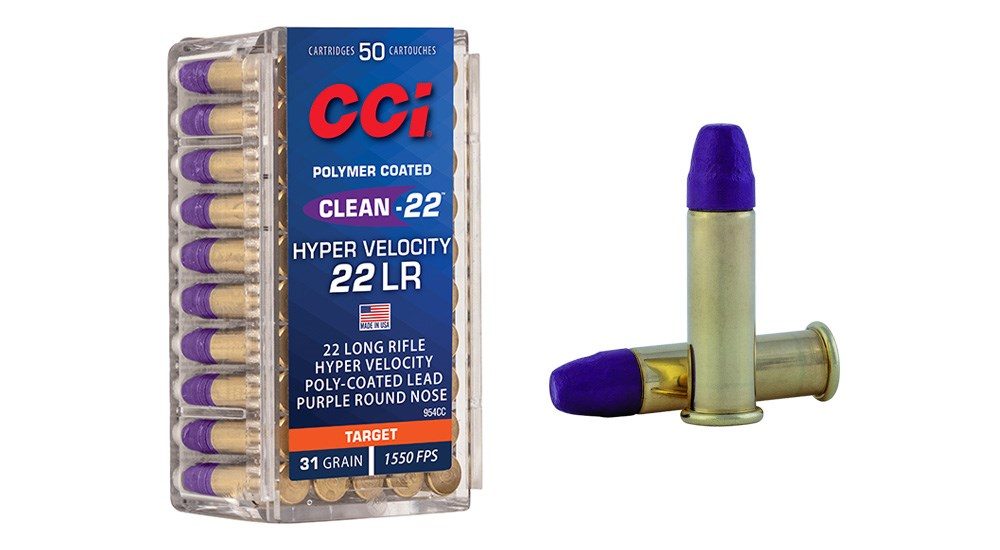
CCI's boxes fill half the .22 shelf: Standard Velocity, Mini-Mag, Stinger, Quiet-22, Clean-22, Green Tag. Every one says .22 LR and fits the same chamber, but the names don't tell you which belongs in your rifle or pistol, or why your semi-automatic might run one box perfectly and jam on the next.
The key is speed. Almost everything that separates these loads, from how quietly they shoot to how reliably they cycle a pistol, follows from how fast the bullet leaves the barrel. By the end you should be able to explain what speed changes in a .22, pick the CCI load for practice, hunting, suppressed shooting or competition, and know why your semi-automatic may run one load and choke on another.
Speed is the dial that changes everything
CCI's .22 loads differ mostly in how fast they push the bullet, and speed changes three things you'll notice.
How flat it shoots. A faster bullet reaches the target sooner, so gravity has less time to pull it down, and it carries more energy when it arrives. That matters at 75 to 100 yards on a squirrel, and hardly at all at 25 yards on paper.
How loud it is. Sound travels about 1,100 feet per second. A bullet faster than that makes its own small crack in flight that no suppressor can remove. Loads kept below that speed (subsonic) are much quieter, especially through a suppressor.
Whether a semi-automatic cycles. Most .22 semi-autos are blowback designs: the fired case pushes the bolt or slide back to eject and reload. A gentle load may not push hard enough to work the action fully, so the gun fails to eject or feed. That's why a slow load that's perfect in a bolt-action can jam in a semi-auto.
Key idea: Faster isn't better, only different. Speed buys a flatter path, more energy and reliable cycling; it costs noise. Slower buys quiet and costs energy and, in semi-autos, sometimes reliability.
The loads, by job
Standard Velocity (40-grain lead round nose, about 1,070 feet per second) is the everyday target load: quiet, accurate and gentle. It runs every bolt-action and revolver and many semi-autos, though some semi-autos need more push. Green Tag is CCI's competition version of a standard-velocity 40-grain load, made to tighter tolerances for small-bore matches. Clean-22 coats its lead bullet in colored polymer, so less lead ends up on your hands and in the bore, which helps in long sessions and youth programs.
Mini-Mag (40-grain round nose at about 1,235 feet per second, or a 36-grain hollow point a little faster) is CCI's high-velocity workhorse. The extra speed runs semi-autos reliably and flattens the path for small game. Mini-Mag Segmented uses a hollow point made to break into pieces on impact, which makes it a small-game hunting load.
Stinger (32-grain hollow point at about 1,640 feet per second) is one of the fastest .22 LR loads made. It's for varmints at longer range. It's louder, and its slightly longer case and light bullet can behave differently in some guns, so test it before buying in quantity.
Quiet-22 is loaded very slow, around 700 feet per second, for quiet shooting with or without a suppressor; CCI makes a slightly faster semi-auto version to help those guns cycle. Subsonic HP keeps the speed below the sound barrier but uses a hollow point for close-range pest control.
- If you're practicing or teaching with a bolt-action or revolver, buy Standard Velocity, because it's accurate, quiet and inexpensive.
- If you're practicing with a semi-auto, buy Mini-Mag 40-grain, because it cycles semi-autos reliably.
- If you're hunting squirrels and rabbits, buy Mini-Mag hollow points or Mini-Mag Segmented, and keep shots inside about 75 yards.
- If you're shooting suppressed, buy Standard Velocity for a bolt-action, or Quiet-22's semi-auto version for a semi-auto, because supersonic loads crack no matter what.
- If you shoot small-bore competition, try Green Tag against your rifle's other favorites.
If you're not sure, start with Mini-Mag 40-grain round nose. It runs in nearly everything.
Common mistake: Buying a case of a slow load for a semi-auto pistol before testing it. If the slide won't cycle with Quiet-22 or Standard Velocity, the gun usually isn't broken; the load is too gentle for that action. Test a box first.
Let your gun choose the final load
.22 guns are famously picky: the same load can group tightly and run perfectly in one gun and stumble in another. Before you buy by the case, take two or three candidates to the range, with eye and ear protection on, and shoot a few magazines and a five-shot group with each from a rest at 25 yards. Drop any load that jams more than once, then keep the one that groups best. Write it down, because a different lot of the same load can shoot a little differently.
Check your understanding
Try answering these before you open the answer. If you can decide what to do and explain why, you have it.
1. Your new Ruger Mark IV fails to eject every few rounds with Standard Velocity. Is the pistol defective?
Probably not. Standard Velocity may not push the bolt hard enough in that pistol. Try Mini-Mag 40-grain, which carries more energy to cycle the action. If it runs, that's your practice load.
2. You shoot a suppressed bolt-action .22 and want it as quiet as possible. Which CCI load?
Standard Velocity or Quiet-22. Both stay below the speed of sound, so there's no bullet crack. A bolt-action doesn't depend on the cartridge to cycle, so the slowest loads work fine.
3. A friend says Stinger is "the best .22" because it's fastest. What do you tell him?
It's the best at one job: reaching varmints at longer range with a flatter path. For target practice it's louder and costs more, and some guns don't run it well. Choose the load for the job.
4. You run a youth .22 program with shared rifles and hundreds of rounds each session. Which load, and why?
Clean-22 or Standard Velocity. Clean-22's polymer coating means less lead on kids' hands and less cleaning; Standard Velocity is quiet and gentle. Either way, everyone washes their hands after shooting.
5. A new .22 load from another maker advertises "subsonic" and "high energy." What should you expect in a semi-auto?
A subsonic load is slow, so it may not cycle some semi-autos, whatever the box says about energy. Test a few magazines before trusting it.
Where to go next
You can find CCI rimfire ammunition on our website, including Blazer .22 LR and Mini-Mag Segmented, and anything listed there can be ordered if it isn't in stock.
For choosing among all .22 loads, read .22 LR ammunition selection. If your .22 jams, why your .22 is picky sorts out the cause. And for shooting suppressed, see choosing ammunition for suppressors.
If this article helped you, we invite you to sign up for email notifications of new blog articles.