
Understanding Bullet Weight in Rifle Rounds and Its Impact on Shooting Performance
Joseph McLain Nov 07, 2026
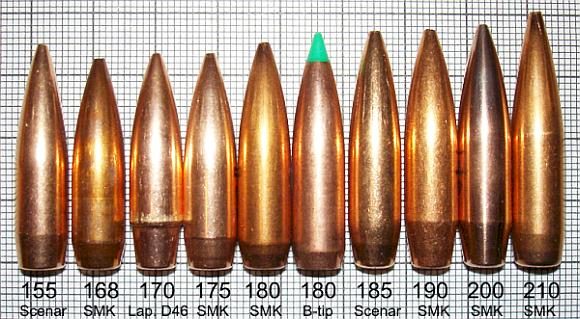
Two boxes of ammunition for the same rifle look nearly identical: same caliber, same brand. One is marked 150 grain and the other 180 grain. Does heavier always hit harder? Does lighter always shoot flatter? Neither is quite true, and the difference matters for what you plan to do.
By the end you will be able to decode that number, predict how a lighter or heavier bullet changes speed, wind drift, penetration and recoil, and choose the weight that fits your purpose, whether that is varmints, deer or elk, or targets at long range.
What the grain number on the box tells you
Bullet weight is the mass of the projectile itself, not the whole cartridge, and it is measured in grains. One grain is 1/7000 of a pound, so it takes 7,000 of them to make a pound. Rifle bullets vary widely, from lightweight 50-grain bullets for varmint hunting to heavier 200-grain bullets for big game. Weight numbers only make sense within a caliber, so when you shop, compare the weights offered for your own cartridge.
The easiest way to see why weight matters is to think of the burning powder as a shove. Give a tennis ball and a shot put the same shove and the tennis ball leaves far faster. A bullet works the same way. A lighter bullet takes less force to accelerate, so it leaves the muzzle faster. Nearly everything else in this article follows from that one trade. Speed is what the light bullet has. Mass is what the heavy bullet has, and mass matters when the bullet meets wind, hide or bone.
Key idea: Bullet weight is a trade-off, not a ranking. Lighter bullets give you speed, a flatter path at closer range and gentler recoil. Heavier bullets give you wind resistance, penetration and retained energy, and they cost you more recoil. Neither is better, only better suited to a job.
How bullet weight changes the flight: Velocity, drop and wind drift
Because a lighter bullet leaves the muzzle faster, it reaches the target sooner, and gravity has less time to pull it down. That is why lighter bullets show a flatter trajectory (less drop) at close to mid-range distances. A flatter path can make a rifle easier to zero and aim in the right scenarios, and the extra speed suits engaging fast-moving targets.
Heavier bullets tell the second half of the story. They start slower, so they generally show a steeper drop at extended ranges and need more elevation adjustment. Yet for long-range shooting they often hold their trajectory better than lighter rounds. The reason is wind.
Wind drift is how far the wind pushes a bullet off its intended path, and the effect grows the longer the bullet is in the air. A heavier bullet carries more momentum, which is its tendency to keep moving along its path, so it is harder to push sideways. Think of a ping-pong ball and a golf ball in a breeze. The golf ball keeps its line, and the ping-pong ball wanders. Heavier bullets with higher ballistic coefficients (a number that describes how well a bullet slips through the air) are less affected by wind and keep their trajectory more consistently. Lighter bullets lose velocity more quickly and are more susceptible to drift, which is why they are generally limited to short- to mid-range distances when you need precise shots. Our article on the role of ballistics in long-range shooting shows how shooters put drop and drift numbers to work.
Here is how that plays out. A shooter breaking targets at modest distances gets real value from a light bullet's speed and flat path. A shooter trying to hold a tight group on a breezy day at long range gains more from a heavier bullet, such as a 175-grain or 200-grain, that stays stable and resists the wind. For mid-range or short-range hunting, lighter bullets offer a balance of speed and accuracy, especially on smaller game.
Weight and the animal: Penetration and expansion
For hunters, the question after "where will it hit?" is "what will it do when it gets there?" The goal is for the bullet to reach the vital organs for a quick, ethical kill, and weight has a lot to say about whether it can.
Many lighter bullets are designed to expand quickly on impact, which transfers energy rapidly and maximizes tissue damage in smaller game. That is exactly what you want on varmints and small predators. The same lighter bullets often lack the mass for deep penetration through dense tissue or bone, which can limit their effectiveness on big game. Heavier bullets retain energy over distance and penetrate more deeply, so they are suited to larger animals such as deer, elk or bear. They can drive through tough hide, thick muscle and even bone, which matters when a shot has to pass through a lot of animal to reach the vitals.
Picture a coyote and an elk. A 50-to-100-grain bullet that opens up fast works well on the coyote. For elk or moose, bullets of 180 grains and up provide the energy and penetration to make the shot effective. Matching the bullet to the animal is a core part of hunting responsibly, and our article on hunting ethics and a clean, humane kill explains why.
Common mistake: Choosing a hunting bullet by weight alone. Weight tells you about mass and momentum, but the bullet's construction decides how it expands. Read the box for both, and see Understanding Rifle Bullet Types for how the designs differ.
Weight and the shooter: Recoil and comfort
Recoil is the rifle's push back into your shoulder, and a heavier bullet pushes back harder. That matters for more than comfort, because recoil affects follow-up shot accuracy. When you start bracing for the kick, the rifle moves before the bullet leaves, and groups open up.
Lighter bullets produce less recoil, which makes them ideal for shooters who put comfort first or need quick follow-up shots. Reduced recoil also makes it easier for new or smaller-framed shooters to control the rifle, which promotes better shooting habits. Heavier bullets generate more recoil, which can be challenging for some shooters, especially in high-caliber rifles. Experienced shooters often accept it for the improved energy and penetration. If you plan a long range session or a day when many shots may be needed, lighter rounds can reduce fatigue. For a serious hunter after larger animals, the added recoil is often a worthwhile trade.
Good practice: If a new shooter is flinching, the problem is rarely willpower. Moving to a lighter bullet in the same caliber (where one is offered) lets them build good habits first, and the heavier load can come later once the fundamentals are solid.
The trade-offs side by side
| What you notice | Lighter bullets | Heavier bullets |
|---|---|---|
| Muzzle velocity | Higher | Lower |
| Path at close to mid-range | Flatter | Steeper drop at extended ranges |
| Wind drift | More sensitive, lose velocity faster | Better resistance, especially with a higher ballistic coefficient |
| On the animal | Quick expansion, less penetration | Deeper penetration through hide, muscle and bone |
| Recoil | Less | More |
Down each column, neither side wins every row. The row that matters most is the one that matches your purpose. A hunter after big game cares most about the "on the animal" row, a long-range target shooter about wind drift, and a new shooter about recoil. That is why the next section starts with your purpose, not with a weight.
Matching bullet weight to your purpose
| Application | Recommended bullet weights | Rationale |
|---|---|---|
| Varmint hunting | 50-70 grains | Light bullets provide high velocity and quick expansion for small game. |
| Deer hunting | 120-150 grains | Medium-weight bullets offer a balance of speed and penetration. |
| Big game (elk, moose) | 165-200+ grains | Heavier bullets ensure deeper penetration and energy retention. |
| Long-range target shooting | 140-175 grains | Provides stability, energy and reduced wind drift over long distances. |
| Short-range target shooting | 55-100 grains | Lighter bullets minimize recoil and are easier to control for precision. |
Notice that the ranges overlap. A 150-grain bullet appears in both the deer row and the long-range target row, so the weight alone does not tell you the job. Your distance, your target and your tolerance for recoil do. Here are three ways it plays out.
If you hunt deer at modest distances, the middle of the scale is your home, because medium-weight bullets balance speed and penetration. If you control varmints or introduce a young shooter to a centerfire rifle, the light end gives you speed, quick expansion and gentler recoil. If you want to shoot targets far away where the wind is a factor, move to the heavier target weights for their stability and reduced drift.
One more factor deserves a mention. Heavier bullets tend to be longer, and a longer bullet often needs a faster barrel twist to spin stably. Your barrel's twist rate can limit which weights shoot well, and you can learn how to read it in our guide to barrel twist rate. And remember that a different weight can strike a different point on the target, so zero your rifle again whenever you change loads.
Ammunition examples by weight and purpose
| Application | Ammunition (weight) | What it is known for |
|---|---|---|
| Varmint hunting | Hornady V-MAX (55 grains) | Rapid expansion, ideal for varmints and small predators |
| Varmint hunting | Nosler Ballistic Tip Varmint (40 to 50 grains) | Fast expansion for varmints and small predators |
| Deer hunting | Nosler AccuBond (140 grains) | Excellent for medium-range deer hunting, with reliable expansion and penetration |
| Deer hunting | Remington Core-Lokt (150 grains) | Consistent performance, effective for deer-sized game |
| Big game | Federal Premium Trophy Bonded Bear Claw (180 grains) | Deep penetration, ideal for elk, moose and larger game |
| Big game | Hornady ELD-X (200 grains) | High ballistic coefficient and reliable performance for long-range big game hunting |
| Long-range target | Sierra MatchKing (168 grains) | Highly accurate with low wind drift, popular among long-range target shooters |
| Long-range target | Berger Hybrid Target (175 grains) | Stability and accuracy, ideal for precision long-range shooting |
| Short-range target | .223 FMJ practice loads (55 grains) | Inexpensive and consistent for short-range target practice |
| Short-range target | .223 match hollow points (69 to 77 grains) | Accurate target bullets for rifles with a fast enough twist |
You do not need to memorize the list; the pattern is what matters. The 55- and 60-grain bullets are built to open quickly on small game. The 140- and 150-grain bullets balance expansion and penetration for deer, and you can read more about one of them in our look at Remington Core-Lokt ammunition. The 180- and 200-grain bullets emphasize penetration and, in the case of the ELD-X, a high ballistic coefficient, which is covered in Federal ELD-X ammunition. The 168- and 175-grain match bullets are all about accuracy and low wind drift, and the two lightest target choices keep recoil low. When you read any box, ask what the bullet is built for. These weights are offered in particular calibers, so check the box for yours.
Comparing two weights in your own rifle
Your own rifle has the final word. Choose two loads in your caliber that differ mostly in bullet weight, ideally the same brand and bullet style, so weight is the only thing changing. With eye and ear protection on and the muzzle downrange, shoot a group with each from a steady rest without touching the scope, and note the group size, where its center landed and how the recoil felt. The heavier load will usually strike at a different point. On a breezy day at a longer distance, the lighter load's group will usually drift farther sideways. Choose the load that fits your purpose and zero with it, and hunters should zero with the exact load they will carry afield. Our guide to sighting in rifles at different distances walks through the zeroing step.
Putting it together
In the same cartridge, a lighter bullet usually starts faster and drops a little less at first, while a heavier bullet carries more momentum, often holds its speed better downrange and penetrates deeper. Choose the weight that suits your game and distance, make sure your barrel's twist can stabilize it, and re-zero whenever you change weights.
Check your understanding
Try answering these before you open the answer. If you can decide what to do and explain why, you have it.
1. A hunting partner says he switched to a heavier bullet in his .308 so it would shoot flatter at 150 yards. What would you tell him?
At that distance the lighter bullet usually shoots flatter, because it leaves the muzzle faster and gravity has less time to pull it down. Heavier bullets earn their keep farther out and in wind, where their momentum and higher ballistic coefficient resist drift.
2. You hunt coyotes in winter and elk every other fall with the same caliber. Why would you buy different bullet weights for each?
Light bullets of 50 to 100 grains expand quickly and dump energy fast, which suits small predators. Elk need deep penetration through hide, muscle and bone, which heavier bullets of 180 grains and up provide.
3. A new shooter is flinching and getting frustrated. How could bullet weight help?
A lighter bullet produces less recoil, which makes the rifle easier to control and helps the shooter build better habits. They can move up to heavier loads once their fundamentals are solid.
4. You switch from a lighter load to a heavier one in the same rifle. What two things should you expect and do?
Expect more recoil, and expect a different point of impact, so zero again with the new load. Also check that your barrel's twist rate suits the longer, heavier bullet.
5. Long-range target shooters and big-game hunters both lean toward heavier bullets. Why are their reasons different?
The target shooter wants stability and resistance to wind drift over long distances. The hunter wants deep penetration and energy retention to reach the vital organs on a large animal.
Where to go next
Weight is only half of a bullet's story, so read Understanding Bullet Shapes for Rifle Rounds to see how the tip and base change what you see downrange. Understanding Rifle Bullet Types shows how construction decides what a bullet does on impact. To see how all of this connects to your groups on paper, try How Ammunition Affects Your Accuracy, and when you are ready to put your chosen load to work, finish with sighting in rifles at different distances.
If this article helped you, we invite you to sign up for email notifications of new blog articles.