
Buckshot Explained: Pellet Sizes, Pellet Counts and What Each Load Is For
Joseph McLain Nov 06, 2026
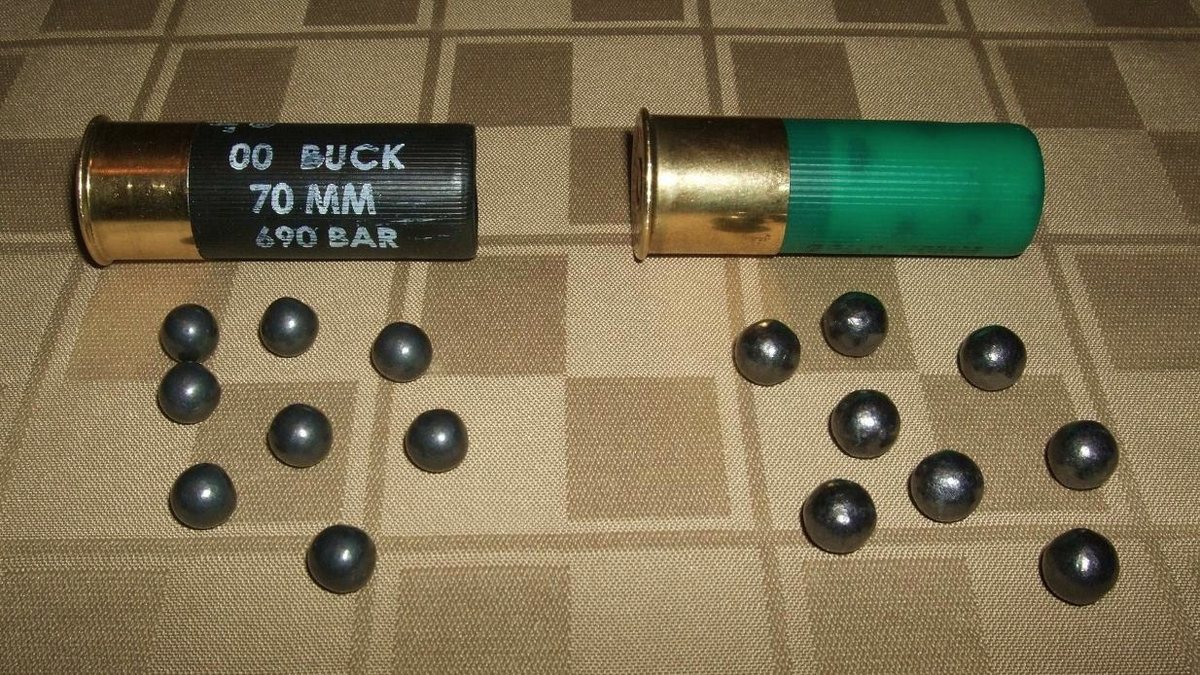
You have a pump shotgun by the bed and a vague feeling that the box of shells next to it might not be the right one. The box says "00 Buck," or maybe "#4 Buck," or maybe it is birdshot left over from dove season, and you aren't sure what any of that means for stopping an intruder or for the walls of your house.
Buckshot choice comes down to a handful of factors that pull against each other: pellet size, pellet count, penetration, spread and recoil. Treat any one of them as the whole answer and you end up with the wrong load. Once you see how they trade against each other, the choice for your own shotgun becomes clear.
By the end you should be able to read a buckshot box, explain why 00 and #4 buck behave differently, and choose a load for your own shotgun with your reasons in mind.
What makes shot "buckshot"
Every shotshell fires a payload of round pellets. With birdshot, those pellets are small, often a tenth of an inch or less, and there are hundreds of them. They are made for small, fast birds and clay targets. Buckshot uses far fewer, much larger pellets, each roughly the size of a pea or bigger. The name comes from its historic use on deer.
The difference matters because a pellet's ability to penetrate depends heavily on its weight. A tiny birdshot pellet slows quickly and stops shallow. A buckshot pellet carries many times the weight, so it keeps going much deeper. That makes buckshot a tool for larger animals and for defense, and it also makes it much more dangerous to anything behind your target.
Think of birdshot as a load for small game and targets, and buckshot as a load for larger animals and defense.
Reading buckshot sizes: Why more zeros means bigger
Buckshot sizes run backward from what you might expect. The smaller the number, the bigger the pellet, and the zeros keep going the same direction. 0 is bigger than 1, 00 ("double-aught") is bigger than 0, and 000 ("triple-aught") is bigger still.
| Size | Pellet diameter (approx.) | Typical pellets, 12-gauge 2¾" |
|---|---|---|
| 000 buck | .36" | 8 |
| 00 buck | .33" | 8 to 9 |
| 0 buck | .32" | 12 |
| #1 buck | .30" | 15 to 16 |
| #4 buck | .24" | 21 to 27 |
It works like a seesaw. As the pellet gets smaller, more of them fit into the same shell. A 00 load throws a handful of big pellets, and a #4 buck load throws two or three times as many smaller ones. Exact counts vary by manufacturer and load, so the box is the final word.
Common mistake: Confusing #4 buckshot with #4 birdshot. They share a number but not a size. A #4 buck pellet is about .24 inch across. A #4 birdshot pellet is about .13 inch and weighs only a fraction as much. Always look for the word "buck."
Read the size and the word "buck" together, and check the pellet count printed on the box.
Penetration: Why pellet size matters most
For stopping a threat or cleanly taking a large animal, a pellet has to reach deep enough to matter. Researchers and law enforcement measure this in ballistic gelatin, a block that roughly mimics soft tissue. The FBI's widely used standard looks for at least 12 inches of penetration. Our article on ballistic gelatin testing explains what those tests can and can't tell you.
Larger buckshot such as 00 and #1 commonly reaches that depth in testing. #4 buck puts more pellets into the target, but each one is lighter, and many loads fall shy of the 12-inch mark. Birdshot generally stops far shorter. That is why the neighbor's birdshot advice falls down. The same light pellets that would be less likely to pass through a wall are also less likely to stop an attacker.
Think of it like throwing stones into a pond versus throwing a handful of sand. The sand covers more of the surface, but none of it goes deep. A few heavy stones go to the bottom.
For defense or large animals, favor pellets large enough to penetrate reliably, which is why 00 and #1 buck are so common.
Spread: It is smaller than you think up close
Many people imagine a shotgun sprays a room. At typical indoor distances it doesn't. Across a bedroom or down a hallway, a buckshot pattern from a typical defensive shotgun may be only a few inches wide, about the size of your hand. You still have to aim.
Spread grows with distance, but no fixed rule like "one inch per yard" holds for every gun. The barrel, the choke and especially the wad inside the shell all change it. Some modern loads use a wad that holds the pellets together for a short distance after they leave the barrel. These often produce much tighter patterns than standard loads from the same gun.
The only way to know your pattern is to shoot your gun with your load at the distances that matter to you. Our article on tactical shotgun selection covers the guns themselves.
A wide pattern seems forgiving, but every pellet outside the target is a pellet going somewhere you didn't intend. Pattern your load at the distances you might actually shoot, and expect to aim like you would with a rifle.
Reduced-recoil and magnum buckshot
Buckshot loads come in different power levels. Full-power 12-gauge buckshot recoils hard, and in a light pump gun that kick slows follow-up shots and makes practice unpleasant. Reduced-recoil loads, often labeled "low recoil" or "tactical," send the same kind of payload at a lower velocity.
For indoor distances, reduced-recoil loads give up little that matters. They are easier to control, faster to fire again and more pleasant to practice with, which means you are more likely to practice at all. Many of them pattern as well as or better than full-power loads.
At the other end are 3-inch magnum buckshot loads, which carry more pellets. They also kick much harder, and more pellets do not always mean a better pattern. Before using a magnum load, make sure your gun's chamber is marked for 3-inch shells. Our guide to shotgun shell length and markings explains why that matters.
For defense, choose the lightest-recoiling load that still uses pellets large enough to penetrate and patterns well from your gun.
Buckshot and what's behind your target
Every pellet that misses keeps going. Buckshot that penetrates people well will also pass through ordinary interior walls, which are usually just two layers of drywall with air between them. No load that reliably stops an attacker will reliably stop at a wall.
That means safety can't come from ammunition alone. It comes from knowing where family members sleep, which walls face a neighbor's house and where you would and wouldn't be willing to shoot. Our guide to a home defense plan walks through those decisions.
Key idea: No ammunition makes it safe to miss. The plan, the layout of your home and your own skill decide where a missed shot goes, not the shell you choose.
Choose effective ammunition, then plan your positions and angles so a miss is least likely to reach someone you love.
Buckshot for coyotes and deer in Iowa
For coyotes, buckshot from a shotgun is a common choice at close range, especially when calling in cover or hunting with dogs. Many hunters favor medium sizes such as #1, #3 or #4 buck, which put more pellets on a smaller animal. Range is short, often 40 yards or less, so patterning matters even more here than with birdshot.
Deer are a different story in Iowa. As of 2025, Iowa's method-of-take rule for deer allows shotguns shooting single slugs only. Buckshot is not legal for deer, even though some other states allow it. Rules can change, so check the current Iowa hunting seasons and regulations each year. Our article on shotgun slugs for Iowa deer covers the legal options.
Use buckshot for close-range coyotes where the regulations allow, and use slugs, not buckshot, for Iowa deer.
Putting it together
Buckshot is a balance. Bigger pellets penetrate more deeply, and smaller pellets give you more of them. Size is named backward, so 00 is bigger than #1, and #1 is bigger than #4 buck. Patterns at indoor distances are small, so you still have to aim. Reduced-recoil loads are easier to control, and magnum loads only make sense when your gun is built for them. For defense, most shooters end up with 00 or #1 buck in a reduced-recoil load that patterns tightly from their own gun, plus a plan for where they would and wouldn't shoot.
If you're not sure, start with Federal Premium Personal Defense 12-gauge 00 buck, a reduced-recoil 9-pellet load with Federal's FliteControl wad, which holds the pellets together for tight patterns, or Hornady Critical Defense 00 buck, which uses a similar pattern-tightening wad. Then pattern it in your gun.
Patterning your load
You can't know how your shotgun throws a load until you shoot it. At an outdoor range that allows buckshot, with eye and ear protection on, put up a large sheet of paper with a small aiming mark, and fire one round at your home's longest likely distance, often 7 to 10 yards. Measure the widest spread and count the hits, then repeat at 15 and 25 yards. Try a second load the same way. Choose the one that keeps every pellet closest together at your distances and that you can control for a fast second shot.
Check your understanding
Try answering these before you open the answer. If you can decide what to do and explain why, you have it.
1. The store has 00 buck and #1 buck in reduced recoil, and you can't decide. What's the real difference for home defense?
00 pellets are a little larger (about .33 inch against .30), so there are fewer of them; #1 carries more, slightly smaller pellets. Both commonly reach the 12-inch penetration standard, so pattern both in your gun and keep the one that groups tighter at your home's distances.
2. A friend keeps #4 birdshot in his home-defense shotgun because "#4 is a good buckshot size." What has he mixed up?
#4 birdshot and #4 buckshot are very different. #4 birdshot pellets are about .13 inch and penetrate shallowly. #4 buckshot pellets are about .24 inch. He needs to look for the word "buck" on the box.
3. Why isn't birdshot a good answer to over-penetration worries?
The light pellets that are less likely to pass through walls are also less likely to penetrate deep enough to stop an attacker. And even birdshot can still injure someone on the other side of a thin interior wall.
4. A relative says a shotgun means you "don't really have to aim" in the house. Is that true?
No. Across a bedroom, a buckshot pattern is usually only a few inches wide, about the size of your hand. You aim it like a rifle, and every pellet that misses keeps going.
5. Can you use 00 buckshot for deer in Iowa?
No. Iowa allows shotguns shooting single slugs only for deer. Buckshot can be used for coyotes where regulations allow.
Where to go next
You can find 00 buckshot on our website, including Federal Premium Personal Defense 00 buck, and anything listed there can be ordered if it isn't in stock.
To understand the shells themselves, including length and the numbers printed on the box, read shotgun shell length and markings. To see what gelatin tests measure and where they fall short, see the role of ballistic gelatin. For choosing the gun around the shell, read tactical shotgun selection. And for the decisions that matter more than ammunition, see home defense planning.
If this article helped you, we invite you to sign up for email notifications of new blog articles.