
Ammunition Quality: Understanding Cheap, Good, High-Quality, Match, and Hunting Ammo
Joseph McLain Nov 06, 2026
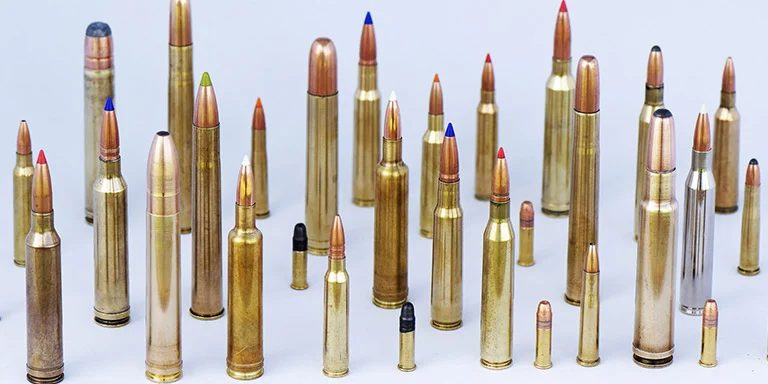
You are holding two boxes of the same caliber, and one costs two or three times as much as the other. Is the expensive box worth it?
Sometimes it is, and sometimes the money is wasted, because extra money in ammunition buys two different things: consistency from one round to the next, and bullets designed to do a specific job in a target or an animal. Whether you need either one comes down to what you are doing with the box.
By the end you should be able to place any box on the quality ladder and choose the rung that fits what you are doing.
What higher-quality ammunition actually buys
Every cartridge is a recipe: A case, a primer, a measured charge of powder and a bullet. Inexpensive and expensive ammunition use the same basic recipe. The difference is how tightly the maker controls each ingredient and what kind of bullet goes on top.
Controlling the ingredients buys consistency. If one round has slightly more powder and the next slightly less, they leave the muzzle at slightly different speeds and land in slightly different places. If bullet weights or shapes vary, the bullets fly a little differently. Tighter control over powder charges, bullet weight and case dimensions makes each round behave more like the last, so groups shrink.
Picture shooting free throws with a basketball whose air pressure changes every shot. Your form could be perfect and the results would still scatter. Consistent ammunition is a ball with the same pressure every time. Our article on how ammunition affects your accuracy follows that chain from powder to target.
The bullet design buys behavior on arrival. A simple full metal jacket bullet is built to stay intact and punch paper. A defensive hollow point is built to expand. A hunting bullet is built to expand and keep penetrating through an animal. Those designs cost more to make and test.
Key idea: You pay for two things: Rounds that behave the same way every time, and bullets designed for what happens when they arrive. Choose the tier whose consistency and bullet design match the job, not the most expensive box on the shelf.
The quality ladder at a glance
| Tier | What you are paying for | Typical use | Examples |
|---|---|---|---|
| Inexpensive practice | Reliable function at the lowest cost; standard tolerances; usually FMJ | High-volume practice, plinking, function-checking a firearm | Federal American Eagle, Winchester white box, Remington UMC, Sellier & Bellot FMJ |
| Better training | Practice ammunition with added features such as cleaner-burning powder, coated bullets or weights that match defensive loads | Regular training, classes, indoor ranges | Federal Syntech, Speer Lawman, Hornady American Gunner |
| Defensive | Expanding bullets engineered and tested for consistent penetration and expansion | Carry and home defense | Federal HST, Speer Gold Dot, Hornady Critical Defense |
| Match | The tightest control of components for the smallest groups | Precision and competition shooting | Federal Gold Medal Match, Hornady Match |
| Hunting | Bullets or shot designed for a clean, humane kill on specific game | Deer, birds and other game | Federal Fusion, Hornady Precision Hunter, Winchester Blind Side |
Think of it as two kinds of ladder. The practice-to-match rows climb in consistency. The defensive and hunting rows are not higher rungs of the same ladder; they are different tools, judged by what the bullet does on arrival rather than by group size alone. Brands such as Federal, Hornady, Winchester and Speer appear in several tiers, so the brand name alone does not tell you the tier. The product line on the box does.
Inexpensive practice ammunition, where most shooting belongs
Most of your shooting life is practice, and inexpensive full metal jacket ammunition exists to make practice affordable. Lines such as Federal American Eagle, Winchester's white box, Remington UMC and Sellier & Bellot are made in large runs, with ordinary components and standard tolerances. They feed reliably in most firearms and group well enough for the distances most people practice at. Our articles on American Eagle, Remington UMC and Winchester White Box look at individual lines.
What you give up is a little consistency and any specialized bullet design. For most shooters, their own technique limits accuracy long before practice ammunition does. Do the bulk of your practice with the least expensive load that runs reliably in your firearm, and spend the savings on more practice.
Better training ammunition, when features make practice easier
A step above basic practice loads are training lines with features that solve specific problems. Federal Syntech uses a polymer coating instead of a copper jacket, which reduces copper and lead fouling and can be easier on steel targets at appropriate distances (see Federal Syntech). Speer Lawman uses a total metal jacket that encloses the lead base, reducing lead exposure on indoor ranges (see Speer Lawman). Some training lines are loaded to match the bullet weight and recoil of a maker's defensive ammunition, so practice feels like the real thing.
They cost a little more. Pay for training features when they solve a problem you actually have, such as indoor-range air quality, steel-target ranges or matching your carry load.
Defensive ammunition, judged by what it does on arrival
Defensive ammunition is not "better practice ammunition." It is a different tool. Its hollow-point bullets are engineered to expand to a predictable size and penetrate to a predictable depth, which reduces the chance that a bullet passes through a threat and continues beyond it. Makers test these designs through barriers such as heavy clothing in standardized gelatin tests. Our article on ballistic gelatin testing explains what those tests show and do not show.
Because defensive rounds cost more, most people carry them and practice with less expensive ammunition of similar weight. Choose a defensive load from a reputable maker, fire enough of it in your firearm to confirm it feeds and hits where you aim, and replace carry ammunition periodically. See selecting personal and home defense ammunition for how to choose one.
Match ammunition, when your shooting can use it
Match ammunition is made with the tightest control over powder charge, bullet weight and dimensions, and usually uses bullets with very consistent shapes. The result is smaller groups, especially at longer distances where small differences in speed and shape add up. Federal Gold Medal Match and Hornady Match are well-known examples (see Federal Gold Medal).
Match ammunition only pays off when your rifle and your shooting are consistent enough to show the difference. If your groups are limited by your trigger press, match ammunition will not make them much smaller. Think of buying racing tires for a car that has never been aligned; the tires are not the problem yet. Move up to match ammunition when your rested groups are consistently limited by the ammunition, which a simple side-by-side test will show you.
Common mistake: Buying match ammunition to fix a problem that is really technique. Build the skill with affordable ammunition first, then pay for the consistency that lets you show it.
Hunting ammunition, matched to the animal
Hunting ammunition is judged by whether it kills cleanly and humanely, which depends on what the bullet or shot does inside the animal. For deer, the bullet must expand enough to create a large wound and hold together enough to penetrate to the vital organs. Lines such as Federal Fusion, whose jacket is electrochemically joined to the core so the two stay together, and Hornady Precision Hunter, with its ELD-X bullet designed to expand across a range of distances, are built for that (see Federal Fusion). Practice FMJ is not appropriate for hunting game.
Birds are a different problem. A shotshell must put enough pellets in the right pattern, each with enough energy, to bring a bird down cleanly. Waterfowl require nontoxic shot by federal law, which is why loads such as Winchester Blind Side use steel. For details, see our guides to duck, turkey and pheasant ammunition. In Iowa, also check the DNR's current regulations for the cartridge and shot rules that apply to each season. Choose hunting ammunition by the animal and the distance, then confirm it groups in your firearm and zero with it.
Putting it together
Higher-priced ammunition buys consistency, specialized bullet design, or both. For practice, buy the least expensive load that runs reliably in your firearm and spend the savings on more practice. Pay for training features when they solve a real problem. Carry defensive ammunition designed for expansion, and hunt with bullets or shot designed for the animal, confirming each in your own firearm. Move up to match ammunition only when your shooting is consistent enough that the ammunition has become the limit.
Finding out where you stand is simple. From a solid rest at the same distance, fire five-shot groups with an inexpensive load and a better one of similar bullet weight, alternating loads so fatigue doesn't favor either, and fire at least two groups of each. If the better load's groups are clearly smaller, the ammunition was holding you back and the step up is worth it for that firearm. If they're about the same, the limit is you or the rifle, and the money is better spent on practice.
Check your understanding
Try answering these before you open the answer. If you can decide what to do and explain why, you have it.
1. You shoot a weekly indoor league with your 9mm. One box is plain FMJ, and another costs a few dollars more and has a fully enclosed bullet base. Is the extra money worth it for you?
Probably, yes. You aren't paying for smaller groups. You're paying for a training feature that solves a real problem you have: an enclosed base releases less lead into the air you breathe at an indoor range every week. If you shot outdoors once a month, the plain FMJ would do.
2. A new shooter wants smaller groups. Should they buy match ammunition?
Not yet. Their technique is likely the larger limit, so practicing more with affordable ammunition will improve their groups more than match ammunition would.
3. A friend carries match ammunition in his pistol because "it's the most accurate there is." What would you tell him?
Accuracy isn't the job of carry ammunition. Defensive loads are judged by how the bullet expands and penetrates, and match bullets aren't designed or tested for that. He should carry a defensive hollow point from a reputable maker, confirm it runs in his pistol, and save the match ammunition for paper.
4. Your nephew has a case of FMJ for his .308 and wants to use it for deer to save money. What do you tell him?
FMJ bullets are designed not to expand, so they make a small wound and may not kill quickly and humanely. Hunting bullets are designed to expand and penetrate to the vitals.
5. Your rested groups are the same size with practice and premium ammunition. What does that tell you?
For your firearm and distance, the ammunition is not your limit, so the premium load is not buying you accuracy you can use there.
Where to go next
You can find practice, training, defensive, match and hunting ammunition on our website, including Federal American Eagle, Syntech and Gold Medal, Speer Lawman and Gold Dot, and Hornady Critical Defense, and anything listed there can be ordered if it isn't in stock.
To see exactly how consistency turns into group size, read how ammunition affects your accuracy. For practical help buying practice rounds, range ammo compares the common lines and how to get the most from them. Federal Gold Medal goes deeper on what match ammunition does, and selecting personal and home defense ammunition explains how to choose a defensive load.
If this article helped you, we invite you to sign up for email notifications of new blog articles.