
Buying and Keeping Ammunition: What the Law Actually Regulates
Joseph McLain Nov 10, 2026
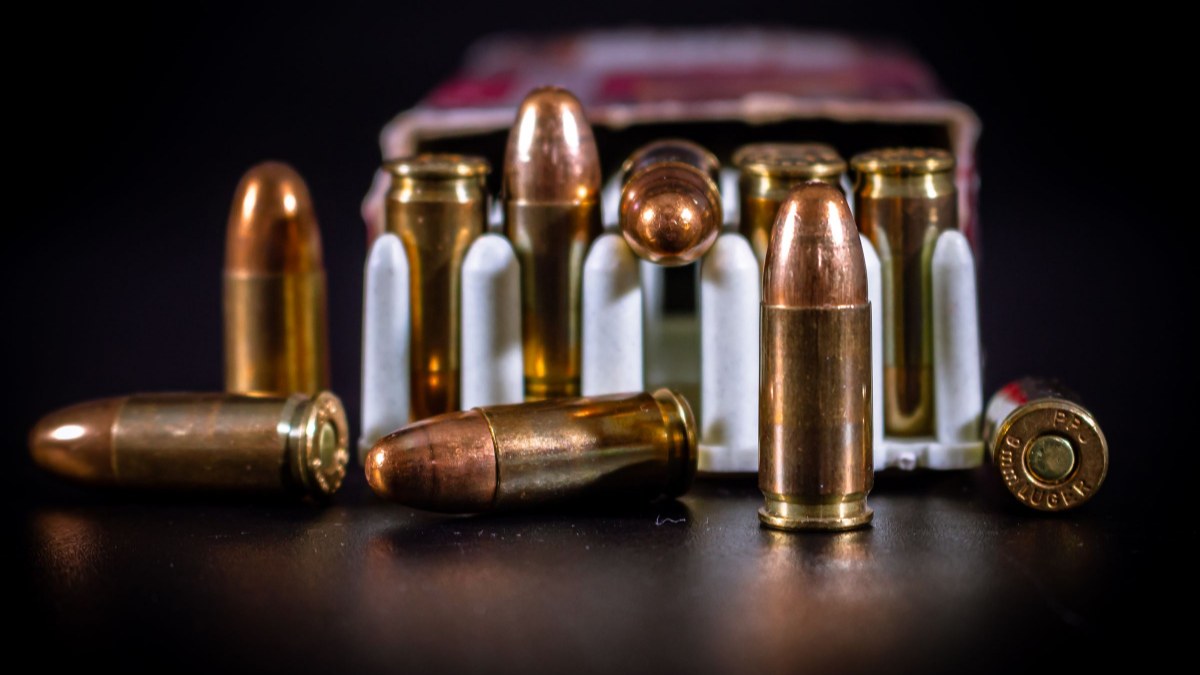
Three questions about ammunition come up again and again. Does owning a thousand rounds for a carbine class need a federal permit? Can a 19-year-old buy 9mm for the pistol-caliber carbine they bought last month? Does an eight-pound keg of reloading powder in the basement break a rule?
The three get three different answers, because ammunition law isn't one question. The law can regulate the buyer, the seller, the sale, the type of projectile, where it is stored and how it travels. Once you see which part a question touches, the answer gets much clearer.
By the end you should be able to explain the federal age rules and why they confuse people, who may not possess ammunition at all, why quantity limits are almost always about storage rather than ownership, what Iowa law says about loaded ammunition and loose powder, and how state lines change the answer.
This is education, not legal advice. Ammunition laws vary widely from state to state.
A cartridge is not a bullet, and the difference matters
In everyday talk, people call a whole round a "bullet." Technically, the bullet is only the projectile. A cartridge is the complete round: The case, the primer, the powder and the bullet. A shotshell has its own version of each part.
The difference matters because laws aim at different things. A rule about pounds of loose smokeless powder does not automatically apply to the powder sealed inside loaded cartridges. A rule about explosive projectiles concerns what is inside the bullet, not the ordinary powder that fires it. And a rule about primers may count them differently from loaded rounds.
Federal law, though, defines "ammunition" broadly. Under 18 U.S.C. 921(a)(17), it includes cartridge cases, primers, bullets and propellant powder designed for use in a firearm. A person who is prohibited from having ammunition cannot get around the ban by buying components instead of loaded rounds.
When you read an ammunition law, find out exactly what it covers, loaded rounds, components, a type of projectile or loose powder, before deciding whether it applies to you.
Why both 18 and 21 show up in the rules
Here is the federal rule that confuses so many people. A federally licensed dealer may not sell or deliver any firearm or ammunition to someone the dealer knows or has reason to believe is under 18, and may not sell handgun ammunition to anyone under 21. The ATF's guide for licensees spells this out.
These are rules about sales by licensed dealers. They are not a declaration that a 20-year-old may never possess handgun ammunition. That explains the apparent contradiction. In Iowa, a 19-year-old may lawfully possess and carry a handgun and its ammunition, yet a federally licensed dealer still may not sell that person a box of handgun ammunition.
Iowa's own law sets 18 as the line. Iowa Code 724.22 makes it a crime to sell, loan, give or make available a pistol, revolver or their ammunition to anyone under 18, and does the same for rifle and shotgun ammunition given to a minor, with exceptions that let a parent, guardian or spouse 18 or older allow it (for handgun ammunition, only under direct supervision). The same section deems .22 rimfire ammunition to be rifle ammunition for Iowa purposes. Older articles that say Iowa's threshold is 21 are out of date.
Some states go further than federal law. Hawaii generally bars ammunition transfers to anyone under 21. Rhode Island generally requires buyers to be 21 and to hold a safety or hunter-education certificate. Being old enough under federal law does not override those rules.
If you are under 21, expect a dealer to refuse handgun ammunition even where you may lawfully possess it, and check your state's rules before buying from anyone.
Is 9mm handgun ammunition if it goes in a rifle?
Many cartridges work in both rifles and handguns. The .22 Long Rifle is the classic example, and pistol-caliber carbines and lever-action rifles in .357 Magnum, .44 Magnum or 9mm raise the same question. So which rule applies to the 19-year-old with the 9mm carbine?
The ATF's guidance says a licensee may sell ammunition that is interchangeable between rifles and handguns to a buyer who is at least 18 if the dealer is satisfied it will be used in a rifle. The intended use matters. The fact that some rifle exists in that caliber does not require a dealer to approve every sale, and the dealer has to be genuinely satisfied.
Retailers may also set stricter policies than the law requires. A store that refuses a sale is not proof the buyer could not lawfully possess the ammunition. And a completed sale is not proof the buyer was eligible.
Common mistake: Assuming a refused sale means you broke a law, or that a completed sale means you are in the clear. A dealer's decision reflects the dealer's legal obligations and store policy. Your own eligibility depends on federal law, your state's law and your personal circumstances.
If you are 18 to 20 and buying interchangeable ammunition for a rifle, say so and be truthful, and accept that the dealer may still decline.
Some people cannot have ammunition at all
Federal law extends its prohibited-person rules to ammunition. Under 18 U.S.C. 922(g), people with qualifying felony convictions, fugitives, unlawful users of controlled substances, people with certain mental-health adjudications or commitments, people under qualifying domestic-violence protective orders or with misdemeanor domestic-violence convictions, and several other categories may not possess firearms or ammunition. Someone under felony indictment may not receive, ship or transport them.
The details matter. Receiving mental-health treatment is not the same as a disqualifying adjudication. An arrest is not a conviction. But for a person who is prohibited, the quantity is irrelevant. One box is as illegal as a thousand.
A gift is a transfer. It is a federal crime to give ammunition to someone you know or have reasonable cause to believe is prohibited, whether or not money changes hands.
Never give or sell ammunition to anyone you have reason to believe is prohibited, and if you are unsure about your own eligibility, find out before you buy.
How much ammunition may you keep at home?
This is the question behind the thousand-round carbine class. There is no general federal limit on how many rounds an eligible adult may own. Federal explosives regulations, at 27 CFR 555.141, expressly exempt small arms ammunition and its components. Your thousand-round case does not become an explosive at the thousand-and-first round, and no federal permit is needed to own it.
That does not mean every quantity is fine in every building. State and local fire codes can regulate how much ammunition, powder and primers may be stored in a particular type of building, and sometimes require permits above certain amounts. New York City, for example, requires a fire department permit to store or sell 200 or more rounds of small-arms ammunition. Massachusetts uses fire-code tables with permit thresholds that vary by type of ammunition. Those are storage rules for particular places, not national ownership limits, and they are often garbled online into "you can only own X rounds."
Iowa takes a much simpler approach. Iowa Code 101A.1 excludes "ammunition or small arms primers manufactured for use in shotguns, rifles, and pistols" from the state's definition of explosives. No general Iowa statute caps the number of loaded rounds an eligible person may keep at home, though a local fire code could still apply to unusual quantities or commercial premises.
Key idea: When you hear a number attached to ammunition, ask what it is. It may be a fire-code storage threshold for a particular kind of building, a permit trigger, a limit on loose powder, an airline baggage allowance or a magazine capacity. It is almost never a limit on how much ammunition an eligible person may own.
In Iowa, store as much ammunition as you need for personal use, and if you keep an unusually large supply or run a business, ask your local fire department what applies to your building.
Loose powder is a different matter
Reloaders face their own rules, because loose powder behaves differently from powder sealed in a cartridge. Iowa's exemption, in Iowa Code 101A.11, lets a person keep up to 25 pounds of smokeless powder for reloading small-arms ammunition and up to 5 pounds of black sporting powder for reloading, loading blanks, cap-and-ball revolvers or muzzleloaders, as long as it is for personal use rather than commercial resale and is stored according to local fire rules. That reloader with an eight-pound keg of smokeless is well within the exemption.
Those are limits on loose powder, not on loaded rounds. Do not add up the powder inside thousands of loaded cartridges and compare it to the 25-pound figure. And owning only a few loaded rounds does not excuse storing loose powder carelessly.
Federal law has a separate exemption for commercially made black powder, up to 50 pounds, when it is used only for sporting, recreational or cultural purposes in antique firearms. That federal exemption is broader than Iowa's 5-pound state exemption, which is a good reminder that federal and state rules answer different questions.
How you store powder matters for safety, too. SAAMI, the industry's standards organization, warns that tightly confining smokeless powder can let dangerous pressure build if it ignites, and recommends storing it in its original containers in a cabinet designed to vent. A heavy steel gun safe, chosen to stop thieves, is not the right place for powder.
Proper powder storage takes a separate cabinet and some planning. In Iowa, keep loose smokeless powder at or under 25 pounds and black powder at or under 5 pounds for personal use, in original containers, in a cabinet that will not trap pressure, away from heat and flame.
Restricted types, regardless of quantity
Some ammunition is restricted because of what it is, not how much of it you have. Federal law defines armor-piercing handgun ammunition by its construction, not by whether it can penetrate some vest, and restricts its manufacture, import and sale. Some states go further and prohibit possession. Iowa's definition of offensive weapons in Iowa Code 724.1 includes certain explosive projectiles and flame-throwing devices.
Other states have rules that catch travelers by surprise. New Jersey heavily restricts hollow-point ammunition outside the home and certain other places, which means the ordinary defensive ammunition in an Iowan's carry gun may be a problem there. Illinois regulates certain .50-caliber cartridges. California requires nonlead ammunition for hunting.
Ordinary expanding hollow-point ammunition is not an "exploding bullet." Laws against explosive projectiles generally concern bullets with an explosive charge, not bullets that expand on impact.
If you travel with ammunition, check the destination state's restrictions on ammunition types, especially hollow points, before you pack.
When ammunition leaves Iowa
Many states regulate ammunition purchases in ways Iowa does not. Iowa requires no permit, license or background check to buy ammunition. Illinois, right across the river, generally requires its residents to have a Firearm Owner's Identification card to buy or possess ammunition. Its FOID law exempts nonresidents whose guns are unloaded and cased and nonresidents licensed or registered to possess firearms in their home state, but buying ammunition there as a visitor can still be complicated. California requires ammunition purchases to go through licensed vendors with a state eligibility check, and generally requires residents bringing ammunition in from out of state to have it delivered through a licensed vendor. New York requires background checks for ammunition sales.
Air travel adds another set of rules. The FAA allows small-arms ammunition only in checked baggage, securely boxed, and many airlines limit it to 11 pounds per passenger including packaging. That is an airline baggage limit, not a limit on what you may own. Our article on flying with firearms covers the details.
Carrying ammunition across state lines also connects to federal safe passage, which requires that neither the gun nor the ammunition be readily accessible from the passenger compartment while you pass through a state where you could not otherwise have them. See traveling across state lines with a firearm.
The freedom Iowans enjoy at home does not travel with them. Before you buy, carry or ship ammunition outside Iowa, look up that state's purchase, possession and type restrictions.
Storing ammunition safely
The law sets the minimum. Good storage protects both your family and your ammunition. SAAMI recommends keeping ammunition in its original packaging or packaging made for it, in a cool, dry place away from solvents, chemicals, heat and open flame, out of reach of anyone who should not have it. It also warns against leaving ammunition in a hot vehicle for long periods, because heat can speed the breakdown of the powder.
It helps to understand what actually happens in a fire. A loose cartridge that heats up enough to ignite will usually burst. The case splits and the primer, bullet or case fragments can fly, but without the force they would have coming out of a barrel, and one burst cartridge generally does not set off the ones next to it. A round in the chamber of a gun is different. If it cooks off, the barrel directs the bullet exactly as if the trigger had been pulled. That is one more reason to store guns unloaded and to keep ammunition separate.
Good practice: Label ammunition cans with the caliber, load and date you bought it, and rotate your carry ammunition at least once a year, shooting the old rounds at the range. Defensive ammunition that has ridden in a gun through summer heat and repeated chambering is the ammunition you most need to trust.
Store ammunition in its box or a sealed can, in a cool, dry place, locked away from children and separate from your guns.
Putting it together
Here are the answers to the three questions from the start. A thousand rounds for a carbine class needs no federal permit, and Iowa sets no limit on how much an eligible adult may own. A 19-year-old may lawfully possess 9mm ammunition in Iowa, but a licensed dealer may sell it to someone under 21 only if satisfied it is for a rifle, and any seller may still say no. An eight-pound keg of smokeless powder is well within Iowa's 25-pound personal-use exemption, as long as it is stored safely in a container that won't trap pressure.
Each question had a different answer because each touched a different part of the law: ownership, sale and storage. None of them was really about the number of rounds.
Check your understanding
Try answering these before you open the answer. If you can decide what to do and explain why, you have it.
1. A friend in line jokes that your 1,000-round case for a carbine class needs a federal permit. Does it?
No. Federal law sets no limit on how much ammunition an eligible adult may own, and federal explosives rules exempt small-arms ammunition and its components. Iowa excludes small-arms ammunition from its explosives definition too. Some cities regulate storage amounts in certain buildings, but those are fire-code storage rules, not ownership limits.
2. Why can a 19-year-old in Iowa possess handgun ammunition but not buy it from a licensed dealer?
Federal law bars licensed dealers from selling handgun ammunition to anyone under 21, but that is a rule about dealer sales. Iowa law sets 18 as the age for handgun ammunition, so an Iowan 18 or older may lawfully possess it.
3. May a dealer sell 9mm ammunition to a 19-year-old who owns a 9mm carbine?
Under ATF guidance, a dealer may sell ammunition that is interchangeable between rifles and handguns to a buyer at least 18 if the dealer is satisfied it will be used in a rifle. The dealer may still decline under store policy.
4. You reload and keep two 8-pound kegs of smokeless powder and a pound of black powder in your basement gun safe. Is anything wrong?
The amounts are fine: Iowa Code 101A.11 allows up to 25 pounds of smokeless and 5 pounds of black powder for personal reloading. The safe is the problem. A sealed steel safe can confine burning powder and let pressure build; keep powder in its original containers in a cabinet designed to vent, away from heat.
5. Your house fire insurance adjuster asks whether the ammunition in your basement made the fire more dangerous for firefighters. What's the honest answer?
Loose cartridges that heat up usually burst and throw fragments with far less force than a fired bullet, and one bursting round generally doesn't set off the rest. A round chambered in a gun is different, because the barrel directs it like a fired shot. That's one more reason to store guns unloaded and ammunition separately.
Where to go next
For flying with ammunition, read flying with firearms and ammunition. For driving through states with strict laws, see traveling across state lines with a firearm. To keep ammunition and guns away from children, read hiding is not storage. And for documenting what you own in case of theft or fire, see lost and stolen firearms.
If this article helped you, we invite you to sign up for email notifications of new blog articles.