
How Ammunition Affects Your Accuracy: The Science Behind Ballistics
Joseph McLain Oct 26, 2026
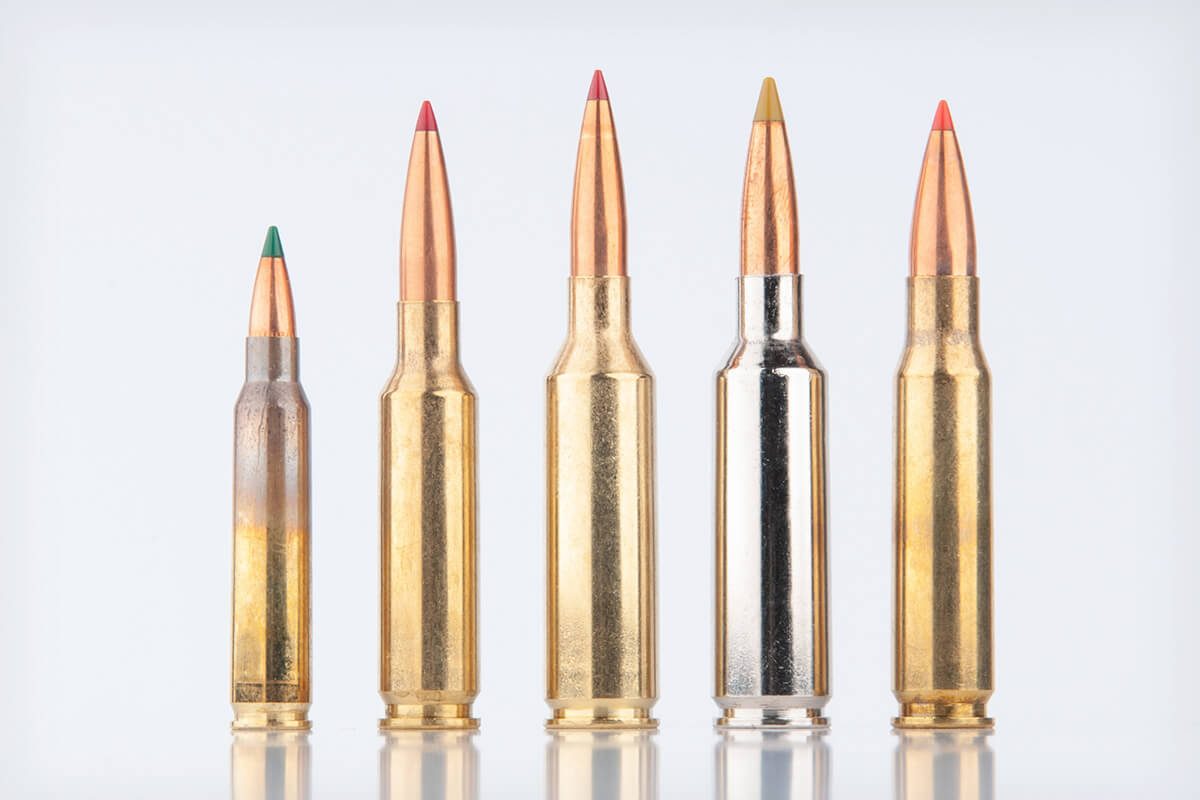
You are at the bench with a rifle you trust. You shoot five rounds from one box and they land in a tidy cluster. You open a second box, same brand and same caliber, and the group opens up into a vertical string, some shots high and some low. Nothing changed except the ammunition. One shooter blames the box; another says it must have been you. This article explains what can change inside a cartridge and along a bullet's path to cause that, so you can work out why a load is or is not grouping, choose ammunition that fits your rifle and your purpose, and run a simple test to prove it.
Three stages, one result: How a bullet's journey decides where it lands
Ballistics is the study of how a bullet moves, and it is easiest to understand in three stages. Internal ballistics is everything that happens inside the firearm between the trigger pull and the moment the bullet leaves the muzzle. External ballistics is the flight through the air. Terminal ballistics is what the bullet does when it arrives. A problem at any one stage can show up on your target.
| Stage | Where it happens | Main factors | What you notice |
|---|---|---|---|
| Internal | Chamber and barrel | Powder burn rate, chamber pressure, barrel length, twist rate | Muzzle velocity and spin; inconsistency shows up as vertical stringing |
| External | Muzzle to target | Ballistic coefficient, gravity, wind | Bullet drop and wind drift |
| Terminal | At the target | Bullet construction, impact velocity, expansion and fragmentation | Penetration and expansion, but not group size on paper |
Read the table from top to bottom as the bullet's timeline. Most groups are won or lost in the first two rows, because those stages decide where the bullet goes. The third row decides what happens after it gets there, which matters most to hunters and self-defense shooters.
Internal ballistics: Why the launch has to be the same every time
Picture throwing a ball at a target, but each throw uses a different amount of arm effort. Even with perfect aim, the hard throws land high and the soft ones land low, because a slower ball spends more time falling. A rifle works the same way. Your job is to aim. The ammunition's job is to launch the bullet at the same speed, with the same spin, every single time.
The first factor is powder burn rate, which is how fast the gunpowder burns inside the cartridge. Fast-burning powders create a quick, high-pressure push that sends the bullet off rapidly, which suits shorter barrels, but the pressure curve can be less controlled. Slow-burning powders build pressure more gradually and keep a consistent force on the bullet over a longer barrel, which tends to produce more uniform velocities and better precision. Think of a sharp shove on a swing compared with a long, steady push. The shove is over in an instant, while the steady push keeps adding speed as long as your arms can follow along. Matching burn rate to barrel length gives the best muzzle velocity and the least shot-to-shot variation. In factory ammunition the maker has already made that choice, but it explains why the same load can behave differently in a short barrel and a long one.
The second factor is chamber pressure, the pressure created in the chamber when the powder ignites. Pressure involves a trade-off.
- Higher pressure. Produces higher velocities and can help long-range performance, but it also increases recoil and stress on the firearm.
- Lower pressure. Gives less recoil and a more comfortable shooting experience, but it can cost you velocity and energy if it is not balanced correctly.
For accuracy, the amount of pressure matters less than whether it repeats. Ammunition built with precise quality control makes each round produce a similar pressure, which gives similar muzzle velocities and tighter groups.
The third pair of factors belongs to the rifle itself. A longer barrel generally allows a more complete powder burn and a higher muzzle velocity, though it also adds weight and can bring in extra variables such as barrel harmonics, the way a barrel vibrates when it fires. Twist rate is how quickly the rifling, the spiral grooves inside the barrel, turns the bullet. It is written as a ratio, so 1:9" means one full rotation in 9 inches of barrel. Spin is what keeps a bullet pointed forward, much like the spiral on a well-thrown football keeps it from wobbling end over end. Heavier bullets tend to be longer, and longer bullets often need a faster twist rate to avoid tumbling, sometimes called "keyholing," where the bullet hits the target sideways. The rule is to match your bullet weight and design to your barrel's twist rate. For a deeper look at the numbers on the barrel, see our guide to barrel twist rate.
Key idea: A well-matched load gives you a repeatable starting point. If the launch changes from shot to shot, no amount of careful aiming can tighten the group.
Here is what that looks like on paper. Inconsistency in powder burn, chamber pressure or the bullet's fit to the barrel causes variations in muzzle velocity, and those show up as vertical dispersion, often called "vertical stringing." The slower bullets drop a little more on the way to the target and the faster ones drop a little less, so they stack up above and below each other. Vertical stringing is a clue, not a verdict, because shooter errors can cause it too. That is why testing several loads from a steady rest is the way to find out.
External ballistics: What happens between the muzzle and the target
Once the bullet leaves the barrel it is on its own with air, gravity and wind. Three factors do the work, and each comes with a rule you can use.
- Ballistic coefficient (BC). This measures how well a bullet overcomes air resistance in flight. A higher BC means the bullet holds its velocity better, drops less over distance and is less pushed around by wind. For long-range work, choose ammunition with a high BC so the environment has less influence on your trajectory.
- Gravity and bullet drop. Gravity acts on the bullet for the entire flight, so it drops as it travels. The good news is that the drop is predictable, and ballistic charts or digital calculators can tell you the elevation adjustment for a given distance. Zero your rifle at a distance that matches your typical engagement range.
- Wind drift. Wind pushes the bullet sideways, and the effect grows with distance. Higher-BC bullets are less affected. Learn to read wind conditions and use windage adjustments on your scope, and remember that consistent bullet design and BC make the drift predictable.
All three connect through time. A sleek, high-BC bullet keeps its speed, so it reaches the target sooner than a blunt one, which gives gravity and wind less time to act on it. Imagine throwing a dart and a crumpled ball of paper with the same effort. The dart holds its speed and arrives on line, and the paper ball slows and wanders. Pair that sleek bullet with the consistent muzzle velocity from the internal stage, and you get tighter groups at long range. Our article on the role of ballistics in long-range shooting shows how shooters put drop and drift numbers to work.
Common mistake: Zeroing with one load and then shooting another. A different load can have a different velocity, drop and drift, so regularly zero your rifle with the ammunition you actually plan to shoot.
Terminal ballistics: What the bullet does when it arrives
Terminal ballistics is the stage hunters and self-defense shooters care about most, and some competitive shooters use it to judge ammunition in disciplines with soft targets. It does not directly change group size on a paper target. It still matters to accuracy-minded shooters, because consistent bullet construction means the rounds behave predictably, and predictability is what match-grade accuracy is built on.
| Bullet construction | What it does on impact | Where it is used |
|---|---|---|
| Full metal jacket (FMJ) | Penetrates deeply and does not expand | Target shooting, because its behavior is predictable |
| Hollow point (HP) | Expands, creating a larger wound channel and transferring more energy | Hunting and self-defense |
| Soft point (SP) | Expands, creating a larger wound channel and transferring more energy | Hunting and self-defense |
The table shows that the real difference is between a bullet designed to stay the same shape and one designed to change shape on purpose. Expansion is critical in hunting and self-defense, and in hunting it is part of making a quick, humane kill. You can read more in our articles on FMJ and TMJ bullets and on how ballistic gelatin is used to test expansion and penetration.
Two more terminal ideas are worth knowing. Velocity on impact is the speed of the bullet when it strikes. High impact velocity means greater energy transfer, and in hunting that can mean a quicker, more humane kill. Consistent velocity means each shot follows a predictable path and delivers similar terminal results, so look for ammunition with minimal velocity variation, which you can measure with a chronograph, a device that records bullet speed. Fragmentation and expansion describe how a bullet breaks apart or opens up. Hunters want controlled expansion, while competitive shooters want minimal fragmentation so penetration and grouping stay consistent. Choose bullets designed for your application. Hunting rounds should expand predictably, and match-grade rounds should keep a consistent shape.
Bullet weight and shape: Matching the bullet to your purpose
Weight and shape are the two bullet choices you can see on the box, and each one trades something for something else.
- Lighter bullets. Reach higher velocities and are ideal for short-range target shooting. They are more susceptible to wind drift and lose velocity more quickly.
- Heavier bullets. Provide better stability at long distances and are less affected by wind, which makes them ideal for long-range shooting and hunting larger game. They often require a barrel with a faster twist rate to stabilize.
- Boat-tail bullets. The tapered rear reduces drag, increases the ballistic coefficient and maintains velocity over long distances. They are ideal where wind drift and bullet drop must be minimized.
- Flat-base bullets. Provide a stable base and are typically used for short- to mid-range shooting. They give consistent performance when extreme long range is not required, and for short-range competition or hunting they can provide exceptional precision.
Here is how to use that list. Start with distance. For short-range competition or hunting where targets are close, a lighter or flat-base bullet can be a good fit. For long-range accuracy, a heavier boat-tail design is the usual choice, as long as your twist rate can stabilize it. That last step is where many shooters get caught, since a bullet that is too long for the barrel will not fly true no matter how good it looks on paper. Our guides to rifle bullet shapes and bullet weight go deeper on both choices.
Three well-known bullets show how those choices come together in real products.
- Hornady ELD Match. High BC, designed for long-range precision.
- Sierra MatchKing. Boat-tail hollow point known for consistent accuracy in competition.
- Federal Fusion. Soft-point hunting bullet with controlled expansion.
The first two are built for precision, and the third is built for the terminal stage. Notice that each one is described by its purpose, which is the habit that will serve you best when you read any box of ammunition.
Consistency and quality control: Why match-grade ammunition groups tighter
Imagine baking bread with a different amount of flour every time. No two loaves would match, even with the same recipe. Ammunition is the same. Variations in bullet weight, powder charge and case dimensions lead to differences in muzzle velocity and trajectory from round to round, and those differences are what widen your group. Match-grade ammunition is made to shrink them.
- Uniform powder charges. Each round leaves the barrel at nearly the same velocity, which reduces vertical dispersion.
- Consistent bullet weight and shape. This minimizes variations in flight and gives tighter groupings.
- Precision-engineered casings. Better chambering consistency and steady chamber pressure contribute to overall accuracy.
Three match-grade choices are worth knowing. Federal Gold Medal Match offers consistent velocities and tight tolerances in popular calibers. Hornady Match is available in several calibers, with boat-tail hollow point designs for exceptional long-range performance. Lapua Scenar is known for minimal shot-to-shot variation and is popular among competitive shooters. If your fundamentals are solid and you can already see differences between loads, match-grade ammunition is worth trying. If you are still building skills, practice will improve your groups more than a premium box will. Our article on ammunition quality, from cheap to match grade helps you decide where to spend.
Testing and optimizing ammunition for your rifle
Even the best ammunition has to be matched to your specific rifle and your shooting style. Testing is how you find the match, and it is the most useful thing in this article.
Try this: A bench test of three loads
- Pick three different loads suited to what you do with the rifle. Wear eye and ear protection, keep the muzzle downrange, and shoot from a steady rest.
- Establish a baseline by shooting several groups with each load. Write down the load and the group size next to each one.
- Look at the shape of each group. Note whether it spreads mostly up and down (possible velocity variation) or side to side.
- If you have a chronograph, record the velocity of each shot and note how much it varies from round to round. Consistency in both group size and velocity is a strong sign of a good match between rifle and load.
- Choose the load with the tightest groups and the most consistent velocity, and zero your rifle with it.
- Repeat the test on another day, in different weather if you can, because temperature, altitude and wind can all affect ballistics.
You will know it worked when you can name one load for your rifle, tell someone why you chose it, and know how it behaves in the conditions where you shoot.
Two other practices help. Knowing the precise drop and drift of your chosen load allows better scope adjustments, and consistent cleaning and maintenance keeps fouling and wear from adding variability to muzzle velocity and shot placement. For those with the expertise, handloading offers the ultimate customization, since adjusting powder charges, bullet seating depth and primer type can produce the ideal load for one rifle. Handloaders should always follow published load data from a reputable source.
Ammunition is the foundation of accuracy, from the moment of firing until the bullet reaches the target. Each stage has its own job. Internal ballistics sets the initial velocity and stability, external ballistics shapes the flight path, and terminal ballistics decides how effectively the bullet transfers energy at the target. By choosing ammunition that fits your firearm and conditions, you can minimize variation, reduce dispersion and achieve consistent, ethical shot placement, whether for target shooting, self-defense or deer hunting.
Putting it together
Both shooters could be right, which is why a fair test matters. Velocity spread, bullet consistency and how well a bullet suits your barrel can all open a group, and so can the shooter. Shoot two loads the same day from a steady rest, let the barrel cool between strings, and compare. If both loads group the same, look at technique and the rifle; if one is consistently tighter, the ammunition was the difference.
Check your understanding
Try answering these before you open the answer. If you can explain it in your own words, you understand it.
1. A rifle strings its shots vertically with a bulk load but groups tightly with match ammunition. What is the most likely explanation?
Velocity variation from the internal stage. Less uniform powder charges, pressure and bullet or case dimensions make some bullets leave faster and some slower, and the slower ones drop more. Match-grade ammunition is built to remove that variation.
2. You want to shoot a heavy, long bullet from a barrel with a slow twist. What could go wrong, and how do you avoid it?
The bullet may not get enough spin to stabilize, so it can tumble or "keyhole" and fly erratically. Avoid it by matching bullet weight and design to the barrel's twist rate.
3. Why does a high ballistic coefficient help with both bullet drop and wind drift?
A high BC lets the bullet hold its velocity, so it reaches the target sooner. That leaves less time for gravity and wind to act on it.
4. Terminal ballistics does not directly affect group size on paper. Why do match shooters still care about consistent bullet construction?
Because consistent construction means each round behaves predictably, and predictability is essential for match-grade accuracy.
5. You zeroed with one load and now want to use a different one. What should you do and why?
Zero again with the new load. A different load can have a different velocity, drop and drift, so your old zero may no longer hold.
Where to go next
Since zeroing is where all of this comes together, start with sighting in rifles at different distances. Then read understanding MOA to learn how to describe and compare group sizes at different distances. If the bullet choices caught your interest, understanding bullet weight and understanding bullet shapes explain how weight and shape change what you see on the target. Happy shooting, and may your rounds fly true!
We can get almost any ammunition type and caliber. Feel free to explore what we have on hand and please shoot us a note if you don't see what you want so we can add it to our inventory.
If you found this informative, we invite you to sign up for email notifications of new blog articles.