
Beginner’s Guide to Ammunition: Understanding Caliber, Bullet Types, and Shot Sizes
Joseph McLain Nov 07, 2026
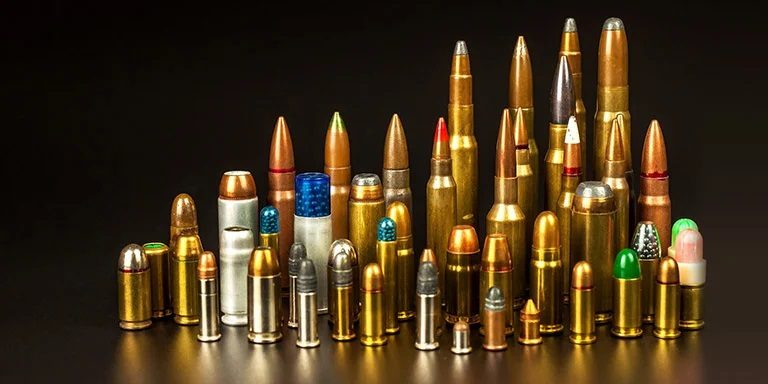
Pick up almost any box of ammunition and it reads like code. A caliber or gauge, a bullet name with three or four letters, a weight, maybe a shot number, and a brand slogan on top. If you are new to firearms, a row of boxes can feel like a test you did not study for. Should you buy whatever is cheapest, only premium defensive rounds, or the biggest caliber that fits? Reading the box is not as hard as it looks. Each part of the label answers one plain question, and once you know the questions you can read any box. By the end of this guide you should be able to tell what fits your firearm, choose a bullet type or shot size that matches your purpose, and explain your choice to someone else.
Caliber and gauge: The first question every box answers
The question is simple: Does this fit my firearm? Caliber is the diameter of the barrel, and therefore of the bullet fired from it. It is written in inches, as in .22 or .45, or in millimeters, as in 9mm or 5.56mm. Think of caliber like the size on a bolt and nut. The right size works together, and the wrong size does not, which makes caliber the fundamental specification that determines what ammunition a firearm can use. One warning: Cartridge names are labels, not exact measurements. A .38 Special and a .357 Magnum both fire bullets about .357 inch across, and a .380 ACP and a 9mm Luger share a bullet diameter but are different cartridges. That is why you match the full name stamped on the firearm, not just the number.
Shotguns use a different system called gauge, which describes the bore size. Gauge is defined by the number of lead balls of the bore's diameter that add up to one pound. In a 12-gauge, twelve balls of the bore's diameter weigh one pound. In a 20-gauge, it takes twenty balls to make a pound, so each ball is lighter and the bore is smaller. That is why a bigger gauge number means a smaller shotgun bore, a point that surprises almost everyone the first time.
Common mistake: Assuming that ammunition which looks close enough will work. Always read the marking on your firearm and compare it with the marking on the box before you load anything. Some cartridges are close cousins and are still not interchangeable, and our article on 5.56 NATO and .223 Remington shows why that matters.
How caliber changes what you feel, what you pay and what you can find
Once ammunition fits, caliber shapes your experience in three ways. The first is power and energy. Larger calibers tend to deliver more energy. In hunting that matters, because game laws often set minimums and larger animals need more. In self-defense it matters less than most beginners think: Among common defensive handgun calibers, where the bullet lands and how well it is designed matter more than the size printed on the box. The second is recoil, the push back you feel when the firearm fires. Generally, the larger the caliber, the more recoil it produces, which affects how quickly you can get back on target for follow-up shots and how pleasant the firearm is to shoot. The third is availability and cost. Common calibers like .22 LR and 9mm are typically more affordable and widely available, which is why they are popular for practice and everyday carry.
Here is a comparison you can feel. A .22 LR is a small-caliber, low-recoil round, so a beginner can focus on the sights and trigger without flinching. A .45 ACP is a larger, heavier round long favored for personal defense, and it comes with heavier recoil. Neither is better in the abstract. They trade power for comfort differently, and the right one depends on who is shooting and why.
| Caliber or gauge | Firearm type | Typical use | What it offers |
|---|---|---|---|
| .22 LR | Rifle | Beginners, target shooting, small game hunting | Low recoil, affordable, perfect for learning marksmanship |
| 5.56mm / .223 Remington | Rifle | Common in AR-15 style rifles; range use and varmint hunting | Versatile, with a good balance of power and low recoil |
| .308 Winchester | Rifle | Hunting medium to large game | Long-range capabilities and high energy delivery; note that in Iowa's shotgun deer seasons, rifles must fire a .350 to .500 inch bullet, so the .308 is an out-of-state deer cartridge |
| 9mm | Pistol | The most popular handgun caliber for self-defense and range shooting | Manageable recoil, high magazine capacity, cost-effective |
| .45 ACP | Pistol | Favored for personal defense | A large, heavy bullet, though with heavier recoil and lower capacity |
| .380 ACP | Pistol | Compact, concealed carry pistols | Small, light pistols that are easy to carry, though they are often harder to shoot well than their recoil suggests |
| .38 Special | Revolver | Concealed carry and home defense | Reliable with manageable recoil, though capacity is limited compared with semi-automatics |
| 12-gauge | Shotgun | The most common gauge for hunting, home defense and clay shooting | High power and versatility |
| 20-gauge | Shotgun | Hunters seeking a lighter, less recoiling shotgun | Easier to handle, great for youth or smaller-framed shooters |
Start with what you want to do, then scan the "typical use" column. Notice how often the "what it offers" column describes a trade. Low recoil and low cost go with the small rounds, while more power goes with heavier recoil. For a beginner, that points toward affordable, forgiving calibers like .22 LR or 9mm, which are a great way to build confidence and skill. As you progress, specialized goals such as self-defense, hunting or competition may call for more specialized choices. If you are leaning toward the .22 LR, why it is such a good rifle and pistol for building skills is worth a read.
Bullet types: What the bullet is designed to do when it arrives
Caliber tells you the size of the bullet. The bullet type tells you how it behaves, and the design affects how it penetrates, expands and transfers energy on impact. A helpful way to think about it is that a bullet has two possible jobs. It can stay the same shape and drive straight through, like a nail, or it can open up on arrival, like a mushroom, to spread its energy. Different bullets are built to do one, the other or a careful balance of both.
| Bullet type | How it is built | What it does | Best for |
|---|---|---|---|
| Full metal jacket (FMJ) | A soft lead core in a harder metal shell, typically copper or a copper alloy | Penetrates deeply and does not expand | Range practice and competition |
| Jacketed hollow point (JHP) | A hollowed-out tip | Expands on impact, creating a larger wound channel and maximizing energy transfer, while reducing the risk of overpenetration | Self-defense |
| Soft point (SP) | An exposed soft lead tip | Controlled expansion with a balance of deep penetration and expansion | Hunting |
| Polymer-tipped | A polymer tip on the bullet | Streamlines the bullet for a higher ballistic coefficient (BC) and better accuracy at long distance, and starts rapid expansion | Long-range hunting |
Here is how to use the table. FMJ is the practice bullet. It is built for deep penetration, it does not expand, and that is why it is commonly used for target practice and in military applications where reliable penetration is needed. It is not the usual choice for self-defense, because defensive bullets are meant to expand. JHP is the defensive design, and modern examples such as Federal HST and Hornady Critical Defense are popular choices. Soft points suit medium to large game because they expand in a controlled way without giving up penetration. Polymer-tipped bullets add a streamlined tip, and the ballistic coefficient is simply a measure of how well a bullet slips through the air. A higher BC helps keep it accurate at longer distances.
Key idea: Match the bullet to the job. Choose a bullet that stays together for practice, one that opens predictably for defense, and one built for the distance and game you plan to hunt.
If you want to see how these designs compare in detail, our article on FMJ and TMJ bullets goes deeper on the practice bullet, and selecting personal and home defense ammunition covers the defensive side.
Shotgun ammunition: Shot size, shot weight and the pattern they make
A shotgun does not fire a single bullet. It fires a collection of pellets called "shot," and the pellets spread out as they travel to form a pattern. Two choices on the box control that pattern, shot size and shot weight.
Shot size is measured by a number, and larger numbers indicate smaller pellets. Smaller pellets mean more of them in each shell, which typically creates a denser pattern. The catch is that very small pellets lose energy quickly. Picture a handful of dried peas and a handful of marbles of the same total weight thrown at a window. The peas cover more area with many more hits, but each one hits softly, while the marbles cover less area and hit hard. That is the choice you are making with shot size.
Shot weight is the total weight of all the pellets in a shell, measured in ounces. A heavier shot load provides more energy and a denser pattern, but it also increases recoil. The balance between shot number and shot weight determines both pattern density and overall recoil, and recoil is a bigger deal than it sounds. A load that is too heavy for a young or smaller-framed shooter leads to flinching, and flinching leads to misses.
| Use | Typical shot weight | Pellet choice | Why it works |
|---|---|---|---|
| Youth clay shooting | 7/8 oz to 1 oz | Smaller pellets | Lower shot weight reduces recoil, so young shooters can break clay targets at close ranges |
| Adult clay shooting | 1 oz to 1-1/8 oz | A balance of pellet count and energy | Tight patterns and effective breakage of clays at various distances |
| Home defense | 12-gauge shells | 00 buckshot (often 8 or 9 pellets per 2-3/4 inch shell) or #1 buckshot (often 15 or 16) | Large pellets penetrate deeply at close range; they also travel through walls, so know what is beyond your target |
| Pheasant hunting | 1-1/4 oz or more | Larger shot | Energy to take fast-moving game birds at longer distances, with a dense pattern |
| Duck hunting | 1-1/4 oz to 1-1/2 oz | A moderate load | Balances pellet count and energy for waterfowl at varying ranges |
| Turkey hunting | Often 1-1/2 oz or more | Larger shot | Larger birds need deeper penetration and a denser pattern, so heavier loads supply the pellet count and energy for ethical kills |
The pattern across the table is that lighter loads and smaller pellets go with comfort and close targets, while heavier loads go with bigger or tougher targets at longer distances. Number 4 shot is among the sizes suggested for both pheasant and turkey, paired with a heavier load for pellet density and energy. Buckshot has larger pellets than birdshot, so it is a different kind of ammunition built for a different purpose, and buckshot labels such as 00 follow their own scheme.
Common mistake: Reading shot numbers backward. In birdshot, a larger number means a smaller pellet, so a "bigger" number is not a bigger load.
Exact shot numbers for game birds vary by species, distance and local rules, so read our guides to shotgun ammunition for duck hunting and turkey hunting before you buy. Laws about what ammunition can be used for hunting differ by location, so check with your state wildlife agency for the latest rules.
Choosing ammunition by what you plan to do
With caliber, bullet type and shot size in hand, choosing becomes a matter of asking one question. What is this ammunition for? Always match the ammunition to your firearm first, and then to the purpose.
For range training
For rifles and pistols, FMJ rounds are affordable, consistent and ideal for high-volume practice. They usually feed reliably, which makes them a good fit for target practice. For shotguns, choose shot sizes appropriate for the range, typically smaller pellets in a lightweight load to reduce recoil while you practice grouping.
For self-defense
For rifles and pistols, JHP rounds are widely preferred. Their design promotes controlled expansion on impact, reducing the risk of overpenetration, and modern defensive rounds such as those from Federal HST or Hornady Critical Defense are designed and tested for reliable expansion. For shotguns in home defense, number 1 or 00 buckshot is often chosen because its large pellets penetrate deeply at close range. Whatever you choose, remember that every shot has to stop in a safe place, so know your target and what is beyond it.
For hunting
For rifles, soft point or polymer-tipped bullets are ideal because they offer controlled expansion and deep penetration for ethical kills, with the energy transfer and expansion needed to reliably take down game. For shotguns, use larger shot with a heavier load for pheasant or turkey, which increases pellet density and energy. For duck hunting, opt for a moderate load to balance pellet count and energy.
The most important point in this section is that ammunition has a job. A box that is perfect for practice may be wrong for defense, and a hunting load may be wasted on a paper target. As you progress, be open to experimenting with different types to discover what works best for you, and remember that choosing well is only half of the work. The other half is regular practice and continuous learning.
Decoding a box, step by step
Any box can be read the same way. Take a rifle, a handgun and a shotgun box: for each, the caliber or gauge, the bullet type or shot information, and the purpose it was designed for are all on the label, and together they tell you which firearm could safely use it, judged only by the marking. If you own a firearm, with it unloaded and the action open, the caliber or gauge marking on the barrel is what each box must match exactly. When you can pick up an unfamiliar box and say what fits, what it does and what it's for without leaning on the marketing text, you can shop any shelf.
Putting it together
Each common piece of advice answers a different question. Cheap ammunition is exactly right for practice, because volume builds skill. Premium defensive rounds are worth their price for the job where the bullet has to perform. And a bigger caliber is better only when the job calls for it and you can still shoot it accurately. So read every box in the same order: First, does the caliber or gauge match the marking on my firearm exactly? Second, what is the bullet or shot designed to do? Third, is that the job I am buying it for? If you can answer those three questions, you can choose sensibly from any shelf, and you can explain your choice to the next new shooter who asks you.
Check your understanding
Try answering these before you open the answer. If you can decide what to do and explain why, you have it.
1. A friend says a 20-gauge shotgun is bigger than a 12-gauge because 20 is larger than 12. How do you explain what is really going on?
Gauge counts how many lead balls of the bore's diameter make up one pound. It takes more of the smaller balls to reach a pound, so a 20-gauge has a smaller bore and is the smaller, lighter option with less recoil.
2. You're buying 500 rounds of 9mm for practice and one box for your nightstand pistol. Why FMJ for one and JHP for the other?
FMJ is affordable and consistent and feeds well, which suits high-volume practice, but it penetrates deeply and doesn't expand. A defensive JHP is designed to expand in a controlled way, which is what you want in a home.
3. You want a denser shot pattern but worry about pellets losing energy. What does shot size do, and what do you give up?
Smaller pellets, higher numbers, mean more pellets per shell and a denser pattern, but very small pellets lose energy quickly. Larger pellets carry more energy but fill the pattern more sparsely.
4. What load would you choose for a young clay shooter, and why?
Smaller pellets and a lower shot weight, typically 7/8 oz to 1 oz, because lower recoil makes it easier for young shooters to break clay targets at close ranges.
5. You hunt pronghorn out west where shots can reach 300 yards. Why might a polymer-tipped bullet help?
The tip streamlines the bullet, raising its ballistic coefficient so it holds speed and shoots flatter at long range, and it also starts expansion reliably on impact.
Where to go next
Start with rimfire vs. centerfire cartridges, since it explains how the cartridges you just learned about are built differently. Then read what goes into cartridge design to see how powder, bullet weight and primer work together inside the case. Because ammunition choices are really safety choices, firearm safety for beginners is a good companion to everything in this guide.
If this article helped you, we invite you to sign up for email notifications of new blog articles.