
5.56 NATO and .223 Remington: Not Entirely Interchangeable
Joseph McLain Nov 07, 2026
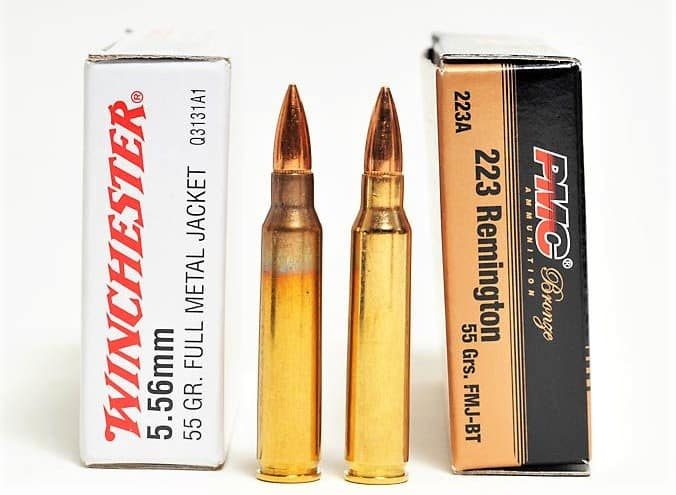
You spot a good price on a case of 5.56 NATO, and the rifle at home is stamped .223 Remington. The two look identical, and plenty of 5.56 ARs have fired thousands of rounds of .223 without a problem. Is the reverse just as safe? It is not always, and the difference matters.
By the end you should understand where the two cartridges actually differ, why one combination is fine and the other is not, how the .223 Wylde chamber fits in, and why .223 sometimes fails to cycle a 5.56 rifle, so you can read your barrel's stamp and know exactly which ammunition belongs in it.
Same outside, different pressure and chamber
From the outside, a .223 Remington cartridge and a 5.56x45mm NATO cartridge look almost identical, and they fit the same magazines. The differences are inside: How much pressure the cartridge is loaded to, and the shape of the chamber built to hold it.
Two terms explain most of it. The leade, also called the throat, is the short stretch just ahead of the chamber where the bullet travels before it meets the rifling, the spiral grooves that spin it. Chamber pressure is the pressure the burning powder creates when the round fires. Military 5.56 NATO ammunition is generally loaded to higher pressure than commercial .223 Remington, and 5.56 NATO chambers have a longer leade, which gives that pressure a little more room to develop before the bullet is forced into the rifling.
Think of the leade as an on-ramp to a highway. A longer on-ramp lets traffic merge smoothly; a short one forces it to squeeze in all at once. A 5.56 round fired in a short-leade .223 chamber is like heavy traffic on a short on-ramp: Pressure builds higher than the design intended.
Key idea: A cartridge and a chamber are a matched pair. A round that fits is not necessarily a round that is safe, because fit says nothing about pressure.
Which combinations are safe
| Ammunition | Barrel marked | Verdict | Why |
|---|---|---|---|
| .223 Remington | 5.56 NATO | Generally fine | Lower-pressure round in a chamber built for higher pressure; may cycle less reliably in some rifles |
| 5.56 NATO | .223 Remington | Do not use | Higher-pressure round in a shorter-leade chamber can raise pressure beyond design limits |
| Either | .223 Wylde | Designed for both | A hybrid chamber built to handle 5.56 pressures with .223-like precision |
Ask one question of each row: Is this round going into a chamber designed for its pressure? The first and third rows say yes. The second says no, and it is the one combination that carries a real safety risk, including damaged parts or injury. The rule is that the stamp on your barrel sets the limit, and the ammunition should never ask more of it.
Common mistake: Assuming that if a round chambers, it is the right round. Fit tells you about outside dimensions; safety depends on pressure and the chamber's design. Compare the box marking with the barrel stamp every time.
The .223 Wylde chamber
The .223 Wylde chamber is a hybrid designed to fire both cartridges safely. It uses a leade long enough to handle 5.56 NATO pressures while keeping dimensions that support good accuracy with .223 Remington match bullets. That is why many precision AR-15 barrels use it.
The practical benefit is freedom: With a Wylde chamber you can buy whichever of the two is available. If your barrel is stamped .223 Remington, you do not have that freedom; stay with .223 ammunition. If you are buying a new rifle and expect to shoot both, a 5.56 or Wylde chamber is the flexible choice. Check the manufacturer's marking and manual rather than assuming, because not every barrel is clearly labeled.
Why .223 can fail to cycle a 5.56 rifle
Firing .223 in a 5.56 chamber is generally safe, but in a semi-automatic rifle it sometimes causes failures to eject or feed. A gas-operated rifle uses gas from each shot to cycle its action. Picture a door on a stiff spring: A firm shove swings it all the way open; a gentle one moves it partway and it swings back. Many 5.56 rifles are set up to run on full-power 5.56 ammunition, and a milder .223 load may not supply quite enough gas to cycle the action fully, especially in rifles with longer gas systems or heavy buffers.
The fixes run in two directions: Give the rifle more push, or let it need less. Start with the inexpensive option, trying other brands and loads of .223, because some cycle more reliably than others. Keep the rifle clean and properly lubricated, which helps a marginal rifle run. If you plan to shoot a lot of milder ammunition, a gunsmith can help you adjust the buffer or gas setup. Change one thing at a time so you know what helped.
Reading the box and the headstamp
The box label is the first place to look, but loose ammunition, range pickups and surplus cans do not always come with one. The headstamp, the lettering stamped around the primer on the base of the case, usually tells you what the cartridge is. Commercial .223 Remington cases are typically marked with the maker's name and ".223 REM." Military-pattern 5.56 cases often carry a two-digit year, a maker code and, on ammunition made to NATO specifications, a small cross inside a circle, the NATO symbol. Some commercial 5.56 is simply marked "5.56" with the maker's name.
If you cannot tell what a cartridge is, do not fire it in a rifle marked .223 Remington. Set questionable ammunition aside rather than guessing; the savings on a few rounds are not worth a damaged rifle. When the marking is unclear, treat the round as 5.56 for safety purposes and only fire it in a 5.56 or .223 Wylde chamber.
What the choice means in practice
For target shooting and practice, the two cartridges perform very similarly when loaded with similar bullets, so your barrel marking should settle the question before price does. For defense, both can serve with appropriate defensive ammunition chosen with over-penetration in mind; see selecting personal and home defense ammunition.
For hunting, the bullet matters far more than whether the box says .223 or 5.56. Varmint bullets suit coyotes and small game, and military-style full metal jacket bullets are a poor choice for hunting because they do not expand. Neither cartridge is legal for deer during Iowa's youth, disabled or shotgun seasons, where rifles must fire an expanding bullet .350 to .500 inch in diameter with at least 500 foot-pounds of muzzle energy. Iowa's January antlerless-only seasons are the exception. They open only in counties with unsold antlerless licenses, and in 2026 (January 11 to 25) the Excess Tag season allowed rifles from .223 to .500 caliber, while the Population Management season allowed rifles .223 caliber and larger along with other weapons. For 2026-27 the Population Management season is limited to Allamakee and Winneshiek counties, and only if more than 100 antlerless licenses remain unsold on the third Monday in December. Dates and counties are set each winter, so confirm them with the Iowa DNR. Check the Iowa DNR's current regulations for what is legal for each animal; our guide to varmint control for rural areas covers predator and pest use.
Choose by your barrel stamp first, then by the bullet the job requires.
Checking your chamber and ammunition
The check takes a few minutes and settles the question for good. With the rifle safe, the muzzle in a safe direction, the magazine out, the action locked open and the chamber confirmed empty by sight and touch, find the marking on the barrel: .223 Remington, 5.56 NATO or .223 Wylde. The owner's manual or the maker's website confirms which ammunition it allows, and comparing the box you plan to shoot with the table above tells you whether it belongs. If your rifle is 5.56 or Wylde and you want to shoot .223, a couple of magazines of each brand at the range will show which loads eject and feed reliably.
Putting it together
The .223 Remington and 5.56 NATO look alike but are loaded to different pressures and fired from chambers with different leades. A 5.56 or .223 Wylde chamber can safely fire either; a chamber marked only .223 Remington should fire only .223. Firing .223 in a 5.56 semi-automatic is safe but may cycle less reliably, which is usually solved by trying another load before changing parts. Read your barrel, read the box, and let the bullet type, not the label, decide what the round is good for.
Check your understanding
Try answering these before you open the answer. If you can decide what to do and explain why, you have it.
1. A friend says 5.56 is fine in your .223 Remington rifle because it fits. What do you tell them?
Fit is not the test. 5.56 is loaded to higher pressure, and a .223 Remington chamber has a shorter leade, so pressure can exceed the design limit. Do not use it.
2. You're building an AR for both cheap 5.56 practice and accurate .223 match loads. Why might a .223 Wylde barrel be the right choice?
Its leade is long enough to handle 5.56 pressures safely, while its other dimensions support good accuracy with .223 bullets, so it fires both well.
3. Your 5.56 AR fails to eject with cheap .223. Is it dangerous, and what do you try first?
It is a function problem, not usually a safety risk. Clear the malfunction safely, then try other .223 loads before considering buffer or gas changes.
4. Can you hunt Iowa deer with a 5.56 rifle during the shotgun seasons?
No. Iowa allows rifles in those seasons only with expanding bullets .350 to .500 inch in diameter and at least 500 foot-pounds of muzzle energy. Check the Iowa DNR's current rules, including the January antlerless seasons.
5. You have a box of 5.56 FMJ and a box of .223 varmint hollow points. Which do you take coyote hunting, and why?
The varmint hollow points. The bullet decides what happens on impact: an expanding varmint bullet makes a clean kill, while full metal jacket doesn't expand and is a poor hunting choice, whatever the box label says.
Where to go next
Once you know which ammunition your chamber accepts, a guide to 5.56mm ammunition helps you choose the right round for your purpose. Federal's 5.56mm ammunition and Hornady's 5.56mm ammunition compare specific product lines, and .308 Winchester and 7.62x51mm NATO explains the same kind of question for larger rifles.
If this article helped you, we invite you to sign up for email notifications of new blog articles.