
Understanding .308 Winchester and 7.62×51mm NATO Rounds: Key Differences and Practical Insights
Joseph McLain Oct 26, 2026
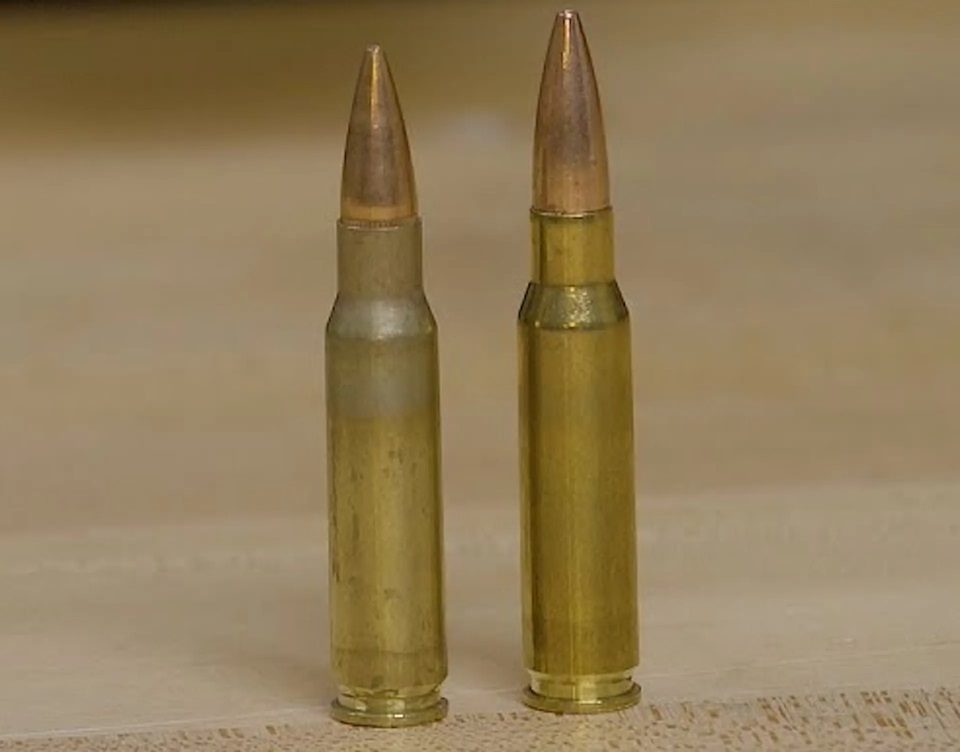
You are shopping for rifle ammunition, and on the shelf you find a box marked .308 Winchester next to a box marked 7.62×51mm NATO. The cartridges look the same size. One friend says they are the same thing; another says never mix them. Are they? Can you shoot either one in your rifle? And if there is a difference, does it matter for deer season or a day at the range? This article explains how the two rounds differ in the chamber, in pressure and inside the case, so you can read your rifle's markings with confidence, choose the right round for your purpose, and know when to stop and ask a gunsmith before you fire.
Two rounds from one family: Where the .308 Winchester and 7.62×51mm NATO came from
The .308 Winchester was introduced in 1952 for the civilian market. It was designed as a versatile, high-performance cartridge that could rival the long-established .30-06 Springfield, with impressive accuracy and manageable recoil. It quickly became popular for its excellent terminal ballistics, which describes how a bullet performs once it reaches the target, and it became a go-to choice for medium to large game hunting.
Just two years later, in 1954, NATO adopted the 7.62×51mm as its standard round. The 7.62 NATO is closely related to the .308 Winchester but was modified to meet military specifications, with a focus on reliability, durability and the ability to function across a range of firearm platforms under adverse conditions. The key military modifications are a slightly longer headspace and thicker case walls, and those two details drive almost everything else in this article.
Here is a simple way to hold the difference in your head. The .308 Winchester was optimized for civilian use, which means precision and terminal performance. The 7.62 NATO was engineered for military reliability, with design tweaks to improve safety and durability under combat conditions. Same family, different priorities.
Why the chamber matters: Headspace, tolerances and the story of a snug boot
The chamber is the part of the barrel that holds the cartridge when you fire. Headspace is the small amount of room a cartridge has to move front to back in that chamber when the bolt is closed. It sounds like a minor detail, but it controls how consistently each round sits and how forgiving the rifle is when conditions are less than perfect.
Think of a boot. A snug boot gives you excellent control, because your foot sits in the same place every step. A looser boot is easier to pull on in the mud, and it still works when your sock is a little thick or your foot a little swollen. Neither is wrong, and each is designed for a different job. The two chambers work the same way.
- 7.62 NATO chambers. Slightly longer headspace, which gives the cartridge extra clearance. That tolerance absorbs minor variations in cartridge dimensions, so the round cycles smoothly in military semi-automatic and fully automatic firearms where reliability is critical.
- .308 Winchester chambers. Tighter tolerances and a shorter headspace. The bullet is seated more uniformly, which can mean better accuracy, and the more controlled dimensions support a more consistent ignition and pressure curve for hunting and competitive shooting.
Cause and effect run in both directions. The snug chamber is why the .308 shoots precisely, and the roomy chamber is why the NATO rifle keeps running when things get dirty. The case follows the same logic. 7.62 NATO cases typically have thicker walls to withstand the rigors of combat use, which also reduces the internal volume slightly while enhancing durability.
Key idea: Precision and reliability pull in opposite directions. Tight tolerances help a rifle shoot small groups, and loose tolerances help it keep running. The .308 Winchester leans toward the first and the 7.62 NATO toward the second.
Pressure: What the numbers mean for performance and wear
Pressure is the force of the expanding gas inside the chamber when the powder burns, and it is measured in pounds per square inch (psi). More pressure pushes the bullet harder and faster, but it also puts more stress on the rifle. The two cartridges are loaded to different maximums.
The .308 Winchester is typically loaded to higher pressures, with a maximum around 62,000 psi. That higher pressure produces greater muzzle velocity and energy, which supports a flatter trajectory and strong terminal ballistics for long-range shooting and larger game. The trade-off is that it can mean a slightly sharper recoil, which most civilian shooters accept for the performance.
The 7.62 NATO is loaded to a lower maximum, around 50,000 psi. That is a deliberate choice to reduce wear on military firearms and keep them working in extreme conditions. The result is a modest reduction in velocity and energy, a recoil that may feel slightly less “punchy,” and improved cycling reliability with less stress on the rifle, which is valuable in high-volume or combat use. For hunters and competitive shooters it can also mean giving up a little long-range performance and terminal energy.
Treat these figures as general. Pressure ratings come from different standards and testing methods, so they are not a precise side-by-side measure, and they are never a substitute for your rifle's markings and manual. For a closer look at how powder, case and primer work together to create pressure, see our guide to cartridge design.
Inside the case: Why internal volume matters
The two cartridges are nearly identical on the outside, but the thicker walls of the 7.62 NATO case reduce its internal volume compared to the .308 Winchester. Picture two coffee mugs of the same outside size, one with thick walls and one with thin. The thick one holds less coffee. The same is true of powder gas, and pressure depends on how much room the burning powder has. Squeeze the same gas into less space and pressure rises.
That has a practical consequence for handloaders. Do not assume NATO-marked and commercial .308 brass can swap one for one at the same powder charge. Always follow published load data for the specific brass and components you are using, and start low. Internal volume differences can also affect how the bullet seats in the case, and for precision shooting even small variations can turn into differences in group size.
Putting the differences side by side
| Feature | .308 Winchester | 7.62×51mm NATO |
|---|---|---|
| Introduced | 1952, civilian market | 1954, adopted as the NATO standard |
| Design priority | Precision and terminal performance | Reliability and durability |
| Chamber | Tighter tolerances, shorter headspace | Slightly longer headspace |
| Case walls and volume | Larger internal volume | Thicker walls, slightly smaller internal volume |
| Typical maximum pressure | Around 62,000 psi | Around 50,000 psi |
| Velocity and energy | Higher | Modest reduction |
| Best fit | Hunting and precision or competition shooting | Tactical use and high-volume practice |
Read the table by asking what each row does for you at the range. The chamber and pressure rows explain why the .308 tends to shoot tighter and harder, while the NATO round keeps cycling and puts less stress on the rifle. The bottom row is the conclusion most shooters care about, and the rest of the article shows how to apply it.
Can you mix them? Interchangeability and the safe way to decide
This is the question behind most searches for these two rounds, and it is where safety matters most. The cartridges look alike, but the chambers they were built for are different, so a general answer is never enough. Your rifle's markings and manual are the final authority.
.308 Winchester ammunition in a 7.62 NATO chamber
Most modern firearms chambered for 7.62 NATO are built to handle the slightly higher pressures of .308 Winchester ammunition, and this is generally considered safe. The trade-off is accuracy. The looser headspace in a NATO chamber can lead to minor reductions in precision, because the bullet may not seat as consistently. Consult your firearm's manual or a qualified gunsmith before you assume it will not compromise safety or performance.
7.62 NATO ammunition in a .308 Winchester chamber
Because 7.62 NATO rounds are loaded to lower pressures, they are generally safe to fire in a .308 Winchester chamber under most conditions. The concern is reliability. The tighter tolerances of a .308 chamber may not accommodate the dimensional differences of NATO rounds as well, which can lead to occasional feeding or cycling issues and poor chambering. Again, check your markings and talk to a gunsmith if you plan to switch.
If you want to use both types, the best answer is a rifle explicitly marked “.308 Winchester/7.62 NATO.” Otherwise, it is wise to stick with one type. The two statements above both say “generally safe,” and that is the important phrase. It describes the usual case, not a guarantee for your particular rifle.
Common mistake: Deciding by the look of the cartridge or by what a friend says. The two rounds are nearly identical on the outside, so appearance tells you nothing. Read the chamber marking on your rifle, check the manual, and ask a qualified gunsmith when the markings are missing or unclear.
Try this: A five-minute rifle and ammunition check
- Make sure the rifle is unloaded, with the action open and no ammunition nearby, and keep the muzzle pointed in a safe direction.
- Find the chamber marking stamped on the barrel and write down exactly what it says (.308 Winchester, 7.62 NATO, or both).
- Open your owner's manual and write down which ammunition it lists for your rifle.
- Read the caliber designation on each box you own and sort the boxes into two piles. The first pile is clearly listed for your rifle, and the second is anything you are unsure about.
- For the second pile, call a qualified gunsmith or bring it to us before you fire any of it.
You will know it worked when you can say, from your own notes, which of your boxes are a clear yes and which need a question answered first.
Choosing for your purpose: Hunting, target shooting and tactical use
Hunting
Imagine a hunter in a ground blind who may have to make one clean shot across a field. The .308 Winchester is often favored here because of its higher velocity and energy, which suit a wide range of game from whitetail deer to larger animals such as elk or even bear. Its tighter chamber tolerances and higher pressure translate into a flatter trajectory and improved terminal performance, with excellent terminal ballistics, deeper penetration and an advantage on longer-range shots at medium to large game.
The 7.62 NATO is well suited to hunters using semi-automatic or military-style rifles, particularly in rugged conditions. Its lower pressure may mean slightly reduced energy, but robust, reliable performance in adverse conditions is a real advantage. Before you hunt, remember that cartridge rules for deer vary by state and season, so check current regulations with the state agency. Our articles on hunting licenses, tags and firearm restrictions in Iowa and neighboring states and straight-walled cartridges for deer hunting explain how those rules can shape your choice.
Target shooting
For competition, consistency is everything, and that is where the snug chamber pays off. The .308 Winchester's tighter tolerances and higher velocities lead to consistent groupings and predictable bullet drop, which makes it the preferred choice for precision shooting and competitions. The 7.62 NATO sacrifices a small amount of precision because it is designed for rugged reliability, but it still performs admirably in informal target practice and military-style matches.
Tactical and defensive use
In tactical applications, the 7.62 NATO is the standard. Its lower pressure and looser chamber tolerances help ensure reliable cycling in adverse conditions and keep it compatible across a range of military firearms. The .308 Winchester can be used for tactical and defensive applications, with more energy and better terminal performance, but its higher operating pressures may increase wear on components in semi-automatic platforms. The 7.62 NATO is favored by military and law enforcement for its reliability under extreme conditions.
Here is the rule of thumb. Choose the .308 Winchester when energy, a flatter trajectory and precision matter most, as in hunting and competition. Choose the 7.62 NATO when you want reliable cycling in a semi-automatic or military-style rifle, or when you are shooting high volume.
Habits that keep you safe and accurate with either round
- Know your rifle. Check the chamber markings so you know whether the rifle is rated for .308 Winchester, 7.62 NATO or both.
- Stay consistent. If you alternate between the two, be aware of the potential for reduced precision or reliability. Sticking with one type is wise unless the rifle is designed for both.
- Use quality ammunition. For precision, choose high-quality, match-grade ammunition, since inconsistencies in bullet weight, powder charge or case dimensions cause variations in velocity and accuracy.
- Clean and inspect. Routine cleaning minimizes fouling, keeps chamber pressure consistent and prolongs barrel life. Inspect the action, bolt and chamber for wear, especially if you often switch ammunition.
Of these four, the first is the one that protects you, so make it your first habit. The next two protect your accuracy, and the last protects your rifle. In semi-automatic rifles, the 7.62 NATO's lower pressure may reduce wear and improve cycling, especially in older or heavily used firearms. If you are weighing how much to spend on ammunition, our article on ammunition quality explains where match-grade ammunition earns its place.
Putting it together
Both friends are partly right. The two cartridges share dimensions and are closely related, and in many rifles they work together safely. But chambers and pressure standards differ, so the safe answer depends on your rifle's markings and manufacturer guidance, not on a general rule. Read the barrel, read the manual, choose the ammunition marked for your chamber, and ask a gunsmith whenever the markings or manual leave you unsure.
Check your understanding
Try answering these before you open the answer. If you can explain it in your own words, you understand it.
1. Why does a tighter chamber help accuracy, while a looser one helps reliability?
A tighter chamber with a shorter headspace seats the bullet more uniformly, so each shot starts from the same place. A looser chamber with longer headspace tolerates dirt, heat and small variations in cartridge dimensions, so the round feeds and cycles smoothly under harsh conditions.
2. Your rifle is marked .308 Winchester only, and a friend offers you 7.62 NATO ammunition. What do you do?
Do not decide by looks. Check the chamber marking and manual, and ask a qualified gunsmith. In general, NATO rounds are considered safe in .308 chambers, but tighter tolerances can cause feeding or cycling problems, and you should confirm for your own rifle first.
3. You want one rifle for long-range deer hunting. Which cartridge leans in your favor, and why?
The .308 Winchester. Its higher pressure gives more velocity and energy, a flatter trajectory and strong terminal performance, and its tighter chamber supports precision. Check the cartridge rules for your state and season first.
4. Why shouldn't a handloader assume NATO and commercial brass hold the same powder charge?
Thicker case walls give the 7.62 NATO case less internal volume. Pressure depends on how much room the burning powder has, so the same charge can behave differently. Always follow published load data for the specific brass.
5. Which cartridge tends to cycle more reliably in an older or heavily used semi-automatic rifle, and why?
The 7.62 NATO. Its lower pressure reduces wear and stress, and its looser chamber tolerances help it keep cycling.
Where to go next
If you want to see how weight and shape change what a .308 does downrange, read understanding bullet weight in rifle rounds, then understanding bullet shapes for rifle rounds. For the reasoning behind consistent groups, how ammunition affects your accuracy explains why uniform pressure and velocity matter. Once you have chosen a load, sighting in rifles at different distances shows you how to zero it.
We can get you just about any firearm you want. Explore a list of what we've had in stock in the past or that folks have expressed interest in, and text to let us know if you don't see what you're looking for.
If you found this informative, we invite you to sign up for email notifications of new blog articles.