
.17 HMR vs .22 WMR vs .22 LR: Choosing a Rimfire for Iowa Varmints and Small Game
Joseph McLain Nov 06, 2026
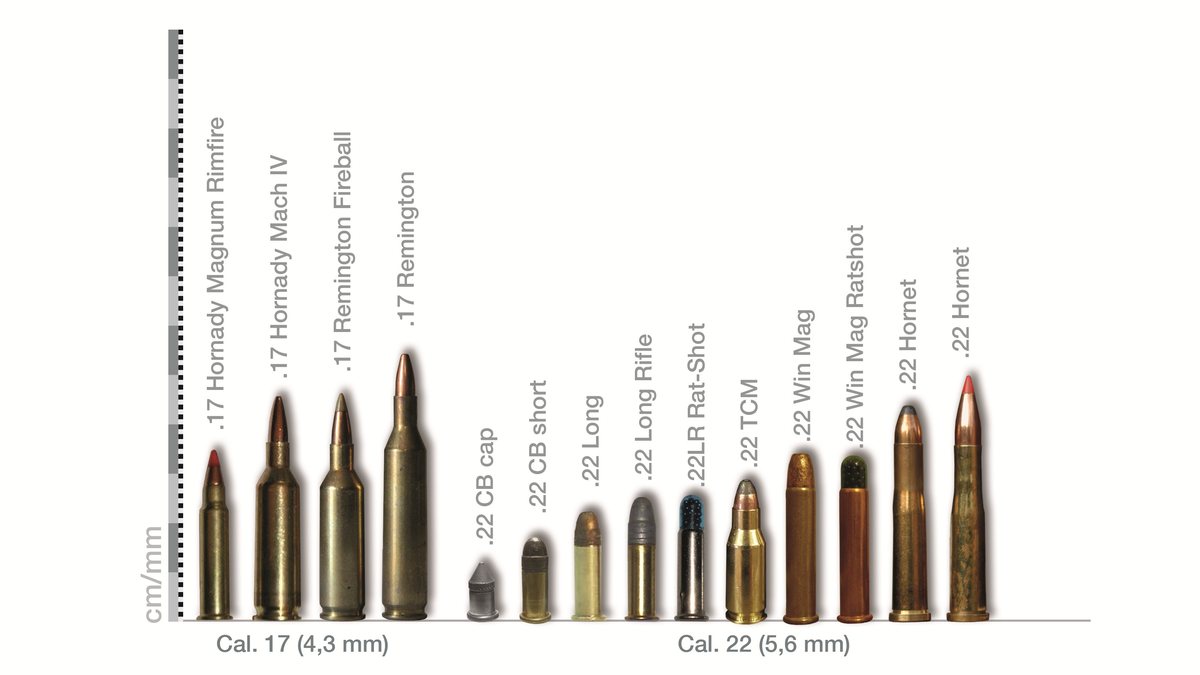
Groundhogs are digging under your machine shed, rabbits are working on the garden and a coyote has started showing up at the edge of the pasture. You'd like one rimfire rifle to handle it, and three cartridges compete for the job: the .22 LR, the .17 HMR and the .22 Magnum.
They aren't three versions of the same thing. Each is excellent over its own range of animals and distances and weak outside it, so the right one depends on which problem you actually have.
By the end you should be able to match a rimfire to the animals and distances you actually deal with, and know when a rimfire isn't the right tool at all.
The three cartridges at a glance
All three are rimfire cartridges, meaning the priming compound is spun into the rim of the case instead of sitting in a separate primer. Our article on rimfire vs. centerfire explains how that works. Beyond that, they are quite different.
| Cartridge | Typical bullet | Typical muzzle velocity | Muzzle energy (calculated) |
|---|---|---|---|
| .22 LR (high velocity) | 40 gr | about 1,200 fps | about 130 ft-lb |
| .22 WMR | 40 gr | about 1,900 fps | about 320 ft-lb |
| .17 HMR | 17 gr | about 2,550 fps | about 245 ft-lb |
The .17 HMR is by far the fastest, but its bullet weighs less than half as much as the others. The .22 WMR is slower than the .17 but carries more energy because its bullet is much heavier. The .22 LR is the slowest and lightest-hitting by a wide margin. Exact figures vary by load and barrel length, which our article on reading an ammunition box explains.
Look at velocity, bullet weight and energy together, because each cartridge wins on a different one.
The .22 LR: The do-almost-everything rimfire
The .22 Long Rifle has been around since 1887, and for good reason. Ammunition is inexpensive and comes in an enormous range of loads, from quiet subsonic rounds to high-velocity hollow points. Recoil is almost nonexistent, and it's the quietest of the three. Rifles chambered for it are everywhere and often very accurate. Our guide to .22 LR ammunition selection covers the loads.
For rabbits, squirrels and similar small game, the .22 LR is hard to beat. It kills cleanly with good shot placement and doesn't destroy much meat. For pests such as rats or pigeons around buildings, its low noise and modest power are advantages.
Its limits show up with distance and larger animals. The bullet is slow and drops quickly, so most hunters keep shots on small game inside about 75 yards. It lacks the energy for reliable, humane kills on coyotes except at very close range with precise placement.
Choose the .22 LR for small game and close-range pests, especially when you'll shoot a lot.
The .22 WMR: The heaviest hitter of the three
The .22 Winchester Magnum Rimfire, introduced in 1959, uses a longer, stronger case than the .22 LR and drives a similar-weight bullet much faster. That gives it more than twice the energy of a .22 LR.
The .22 WMR stretches practical rimfire range to around 125 yards for many shooters and hits noticeably harder on medium-sized pests such as groundhogs and raccoons. Of the three, it is the most capable on coyotes at close range, though it's still a marginal coyote cartridge by most hunters' standards. Shot placement has to be precise, and distance should be short.
It costs more per round than .22 LR and is louder. The bullets are heavier and tend to hold together better than the .17's tiny, fragile bullets, which is why some hunters prefer it on tougher animals.
Choose the .22 WMR when you need more punch than a .22 LR at moderate distances, especially on tougher medium-sized pests.
The .17 HMR: Flat, fast and fragile
The .17 Hornady Magnum Rimfire arrived in 2002. It is a .22 WMR case necked down to hold a tiny 17-grain bullet, which it launches at around 2,550 feet per second. The result is a remarkably flat trajectory. Inside 150 yards, a well-zeroed .17 HMR needs far less holdover than either .22, and its light, fast bullet drifts less in the wind at 100 yards than a .22 LR. Many .17 HMR rifles are also very accurate.
Those 17-grain bullets are usually polymer-tipped varmint bullets designed to fragment rapidly on impact. That makes them very effective on small varmints such as groundhogs and prairie dogs, where you want the bullet to deliver all its energy fast. It also means shallow penetration on larger animals and heavy meat damage on small game you plan to eat.
Key idea: The .17 HMR's flat trajectory makes hitting easier at distance, but its tiny bullet doesn't make a 150-yard shot on a coyote a good idea. Being able to hit something and being able to kill it cleanly are two separate questions.
Choose the .17 HMR for small varmints at moderate distances, not for small game you'll eat and not for coyotes at distance.
Coyotes: When a rimfire is the wrong tool
Many Iowa landowners first think about a rimfire when a coyote starts hanging around. Coyotes are tough, and they are often seen at distances beyond comfortable rimfire range. A wounded coyote that runs off is a bad outcome for everyone.
Among the three, the .22 WMR is the most capable at close range, and the .17 HMR and .22 LR are generally considered marginal. For reliable kills on coyotes beyond close range, most hunters move to a centerfire varmint cartridge such as the .223 Remington or .204 Ruger. Our article on varmint and predator ammunition covers those loads.
Use a rimfire on coyotes only at close range with precise shot placement, and use a centerfire for anything farther.
What Iowa rules mean for rimfires
Rimfires are not legal for deer in Iowa. As of 2025, Iowa Code 481A.48 limits rifles and handguns to cartridges meeting specific diameter and energy minimums, and no rimfire comes close.
For coyotes and other furbearers, rifles are allowed, but rules apply. The Iowa DNR's coyote guidance says hunters must never shoot over a road right-of-way, and rules on hunting at night and on special restrictions during deer seasons have changed over the years. Check the current Iowa Hunting and Trapping Regulations, or ask the DNR, before you hunt. Small game such as rabbits and squirrels have their own seasons and license requirements.
Check the current regulations for the animal, season and time of day before you shoot.
Safety: Small cartridges, long reach
It's easy to treat a rimfire casually because it's small. Don't. Many .22 LR boxes carry a printed warning that the bullet can travel more than a mile. The faster .22 WMR and .17 HMR can also reach well beyond the farthest shot you'd take. And rimfire bullets ricochet readily off water, frozen ground, rocks and hard surfaces.
Around farms and acreages, there are buildings, livestock and neighbors in every direction. Know what's behind your target before every shot, and favor shots with the ground as a backstop.
Common mistake: Shooting at an animal standing on a hilltop or the edge of a terrace with nothing but sky behind it. A rimfire bullet that misses or passes through keeps going toward whatever is over the rise.
These cartridges also must not be mixed up. A .22 LR can chamber in a .22 WMR rifle and split when fired, and SAAMI lists that combination as unsafe. Our article on cartridges that can and can't share a gun explains more.
Treat every rimfire shot as if it could travel a mile, and confirm a safe backstop before you shoot.
Loads that suit each job
Bullet choice matters as much as cartridge choice, because the same rimfire can be gentle on meat or explosive on a varmint depending on the load.
- .22 LR for small game. A 40-grain round-nose load such as CCI Mini-Mag kills rabbits and squirrels cleanly without ruining meat. For rats and pigeons around buildings, a hollow point such as CCI Stinger expands faster.
- .22 WMR for groundhogs and raccoons. A 40-grain jacketed hollow point such as CCI Maxi-Mag is the standard choice. Where you'll eat what you shoot, CCI GamePoint's 40-grain soft point expands without fragmenting. Federal Game-Shok's 50-grain hollow point gives a little more penetration on tougher animals.
- .17 HMR for small varmints. The 17-grain Hornady V-Max, loaded by Hornady, CCI and Federal, fragments fast and is what makes the .17's reputation on groundhogs and prairie dogs. If you want to use a .17 on rabbits for the pot, the 20-grain CCI GamePoint soft point is built to hold together.
Rimfire accuracy also varies from rifle to rifle with the same load, so if one brand groups poorly in your gun, another of the same type may group much better.
Putting it together
The .22 LR is the economical, quiet, versatile choice for small game and close-range pests. The .22 WMR hits hardest and reaches farther, which makes it the best of the three for tougher medium-sized pests and close-range coyotes. The .17 HMR shoots the flattest and is excellent for small varmints at moderate distances, but its fragile bullet is a poor match for coyotes at distance or for small game you plan to eat. None of them is legal for Iowa deer, and coyotes beyond close range call for a centerfire.
If you can own only one, let the problem animal decide. On most Iowa acreages the trouble is groundhogs, raccoons and rabbits inside 100 yards, and the .22 WMR covers all of them with the most margin. If you mainly shoot small game for the table or simply shoot a lot, the .22 LR is the better buy. If your problem is small varmints in open ground out to 150 yards and you don't plan to eat them, the .17 HMR makes those hits easiest. Whichever you choose, keep coyotes past close range for a centerfire.
Check your understanding
Try answering these before you open the answer. If you can decide what to do and explain why, you have it.
1. Groundhogs are digging under your shed 60 to 90 yards from the house, and a raccoon has been raiding the sweet corn. You want one rimfire for both. Which one, and why?
The .22 WMR. It carries the most energy of the three, about 320 ft-lb, because its 40-grain bullet is more than twice the weight of the .17's, and its bullets hold together better on tougher animals like raccoons. A .22 LR is marginal on a groundhog at 90 yards.
2. You want to hunt rabbits for the table. Which cartridge fits best, and which would you avoid?
The .22 LR fits best: It's cheap, quiet and doesn't destroy much meat. Avoid the .17 HMR, whose fragmenting bullet causes heavy meat damage.
3. A coyote is standing 140 yards away. Your .17 HMR can hit it easily. Should you take the shot?
Generally no. Hitting it isn't the same as killing it cleanly. The .17's tiny, fragile bullet is marginal for coyotes, especially at distance. A centerfire varmint cartridge is the better tool.
4. Your nephew has a deer license and plans to take his .22 WMR to the stand because a doe at 40 yards seems easy. What do you tell him?
It isn't legal and it isn't humane. Iowa allows only rifles and handguns firing cartridges that meet minimum bullet diameter and energy requirements for deer, and no rimfire comes close. He needs a legal deer firearm for the season he's hunting.
5. A friend wants to save money by shooting .22 LR in his .22 WMR rifle. What do you tell him?
Don't. A .22 LR can chamber in a .22 WMR and split when fired, and SAAMI lists it as unsafe. Use only the cartridge the rifle is marked for.
Where to go next
You can find .22 WMR and .17 HMR ammunition and rifles on our website, including CCI Maxi-Mag and GamePoint, Hornady V-Max and Federal Game-Shok, and anything listed there can be ordered if it isn't in stock.
For choosing among .22 LR loads, read .22 LR ammunition selection and CCI's .22 product line. If coyotes are your main concern, see varmint and predator ammunition and the Ruger American Predator. And to understand the rimfire design itself, read rimfire vs. centerfire cartridges.
Image: "Kaliber KleinKaliber Display 01" by various Wikimedia Commons authors, via Wikimedia Commons, licensed CC BY-SA 4.0; background extended.

If this article helped you, we invite you to sign up for email notifications of new blog articles.